Jensen Brian C, OʼConnell Timothy D, Simpson Paul C
*Division of Cardiology and McAllister Heart Institute, University of North Carolina, Chapel Hill, NC; †Department of Integrative Biology and Physiology, University of Minnesota, Minneapolis, MN; and ‡Division of Cardiology, VA Medical Center, Cardiovascular Research Institute, and Department of Medicine, University of California, San Francisco, CA.
J Cardiovasc Pharmacol. 2014 Apr;63(4):291-301. doi: 10.1097/FJC.0000000000000032.
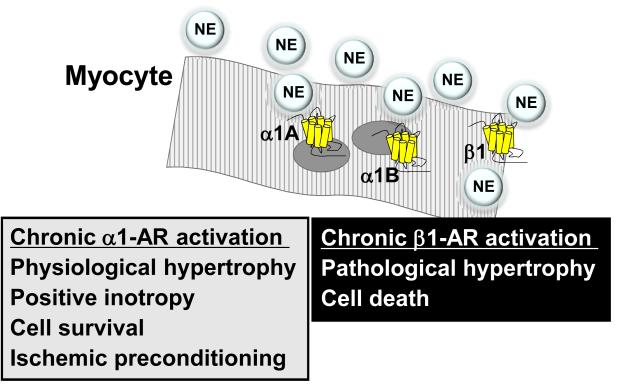
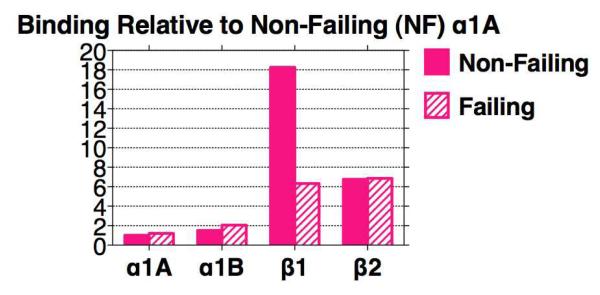
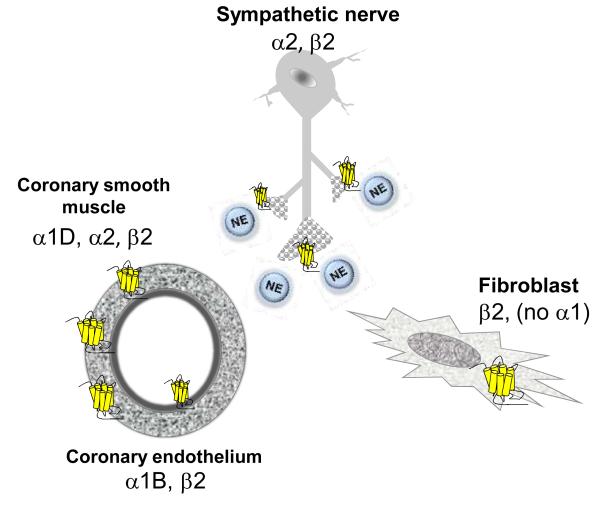
Alpha-1-adrenergic receptors (ARs) are G protein-coupled receptors activated by catecholamines. The alpha-1A and alpha-1B subtypes are expressed in mouse and human myocardium, whereas the alpha-1D protein is found only in coronary arteries. There are far fewer alpha-1-ARs than beta-ARs in the nonfailing heart, but their abundance is maintained or increased in the setting of heart failure, which is characterized by pronounced chronic elevation of catecholamines and beta-AR dysfunction. Decades of evidence from gain and loss-of-function studies in isolated cardiac myocytes and numerous animal models demonstrate important adaptive functions for cardiac alpha-1-ARs to include physiological hypertrophy, positive inotropy, ischemic preconditioning, and protection from cell death. Clinical trial data indicate that blocking alpha-1-ARs is associated with incident heart failure in patients with hypertension. Collectively, these findings suggest that alpha-1-AR activation might mitigate the well-recognized toxic effects of beta-ARs in the hyperadrenergic setting of chronic heart failure. Thus, exogenous cardioselective activation of alpha-1-ARs might represent a novel and viable approach to the treatment of heart failure.
α1肾上腺素能受体(ARs)是由儿茶酚胺激活的G蛋白偶联受体。α1A和α1B亚型在小鼠和人类心肌中表达,而α1D蛋白仅在冠状动脉中发现。在未衰竭的心脏中,α1-ARs的数量远少于β-ARs,但在心力衰竭的情况下,它们的数量会维持或增加,心力衰竭的特征是儿茶酚胺长期显著升高和β-AR功能障碍。数十年来,在分离的心肌细胞和众多动物模型中进行的功能获得和功能丧失研究的证据表明,心脏α1-ARs具有重要的适应性功能,包括生理性肥大、正性肌力作用、缺血预处理以及防止细胞死亡。临床试验数据表明,阻断α1-ARs与高血压患者发生心力衰竭有关。总体而言,这些发现表明,在慢性心力衰竭的高肾上腺素能环境中,α1-AR激活可能减轻β-ARs众所周知的毒性作用。因此,外源性心脏选择性激活α1-ARs可能代表一种治疗心力衰竭的新的可行方法。