Klug Maren, van den Buuse Maarten
Behavioural Neuroscience Laboratory, Mental Health Research Institute Melbourne, VIC, Australia ; Department of Psychology, Swinburne University of Technology Hawthorn, VIC, Australia.
Front Behav Neurosci. 2013 Oct 21;7:149. doi: 10.3389/fnbeh.2013.00149. eCollection 2013.
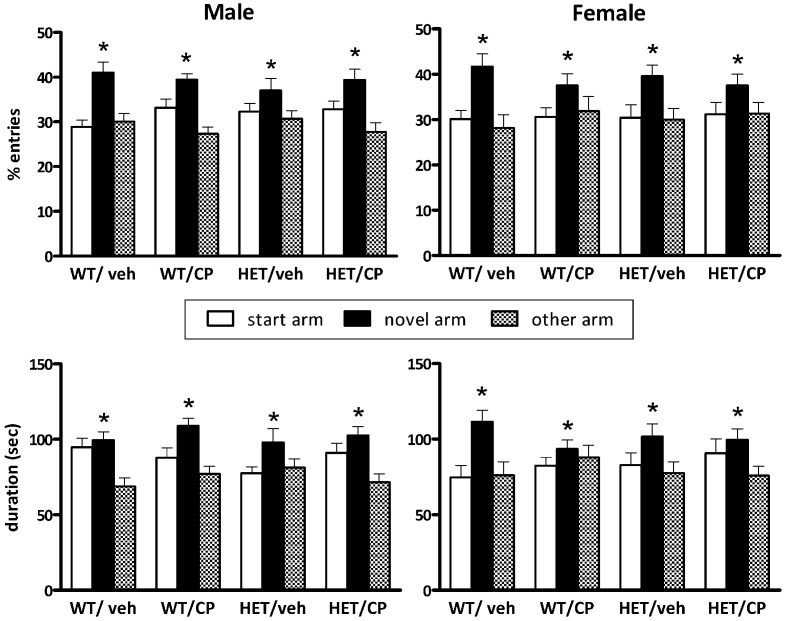
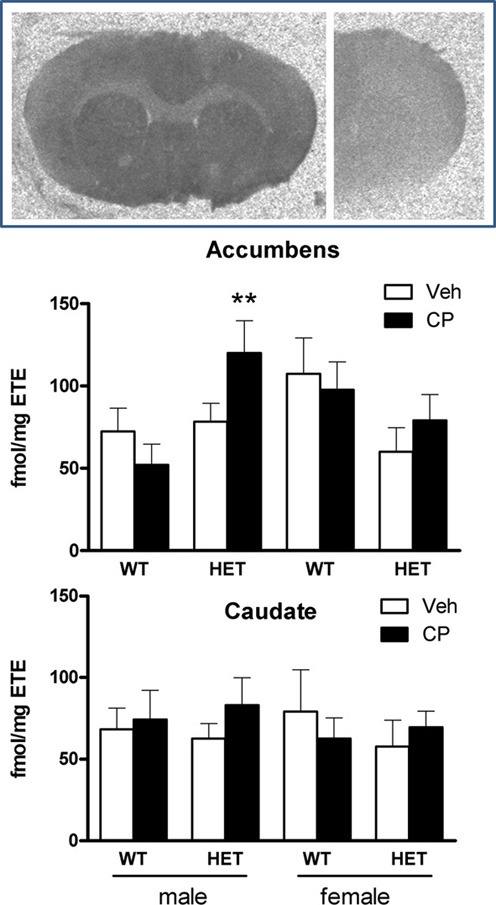
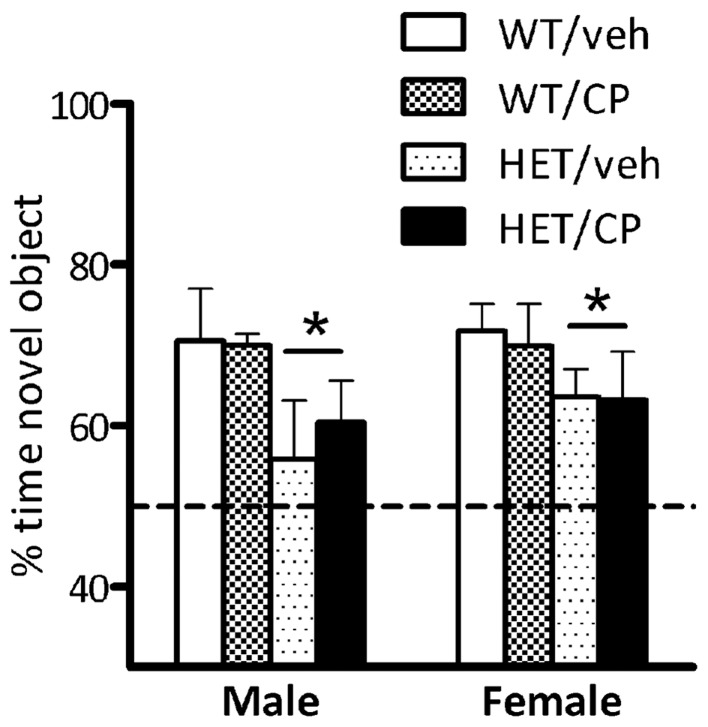
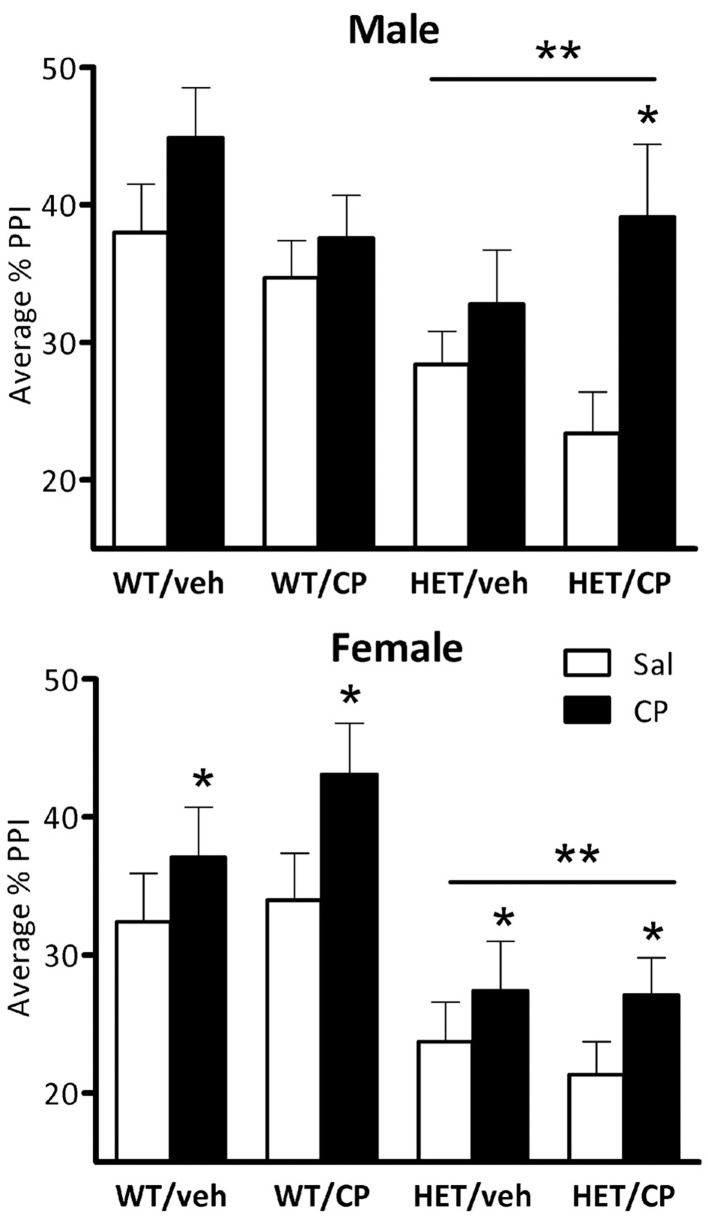
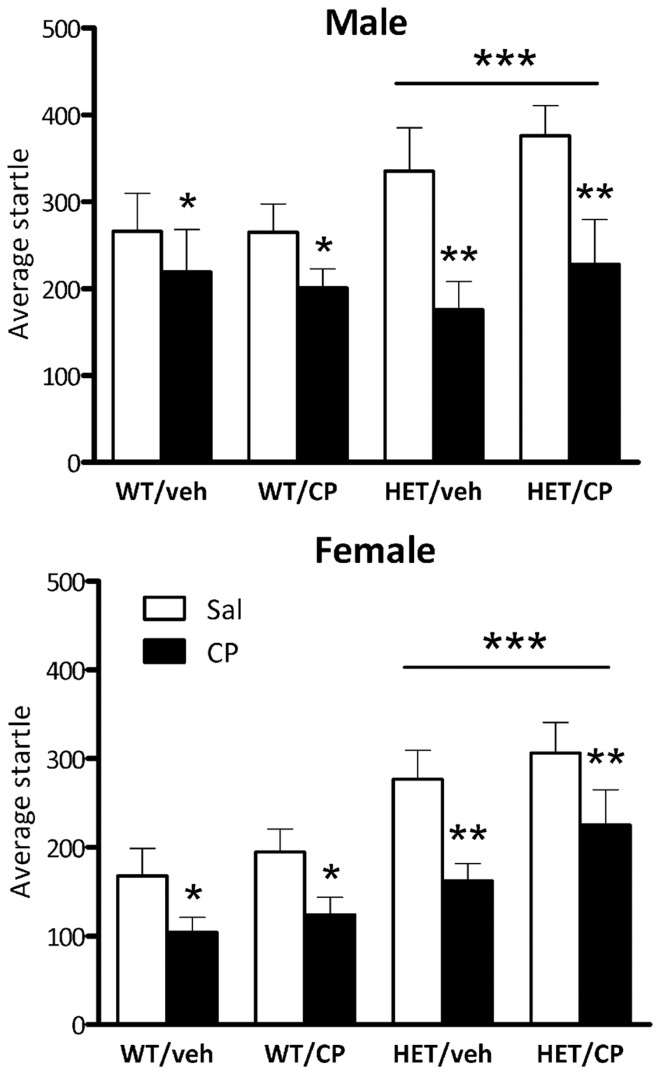
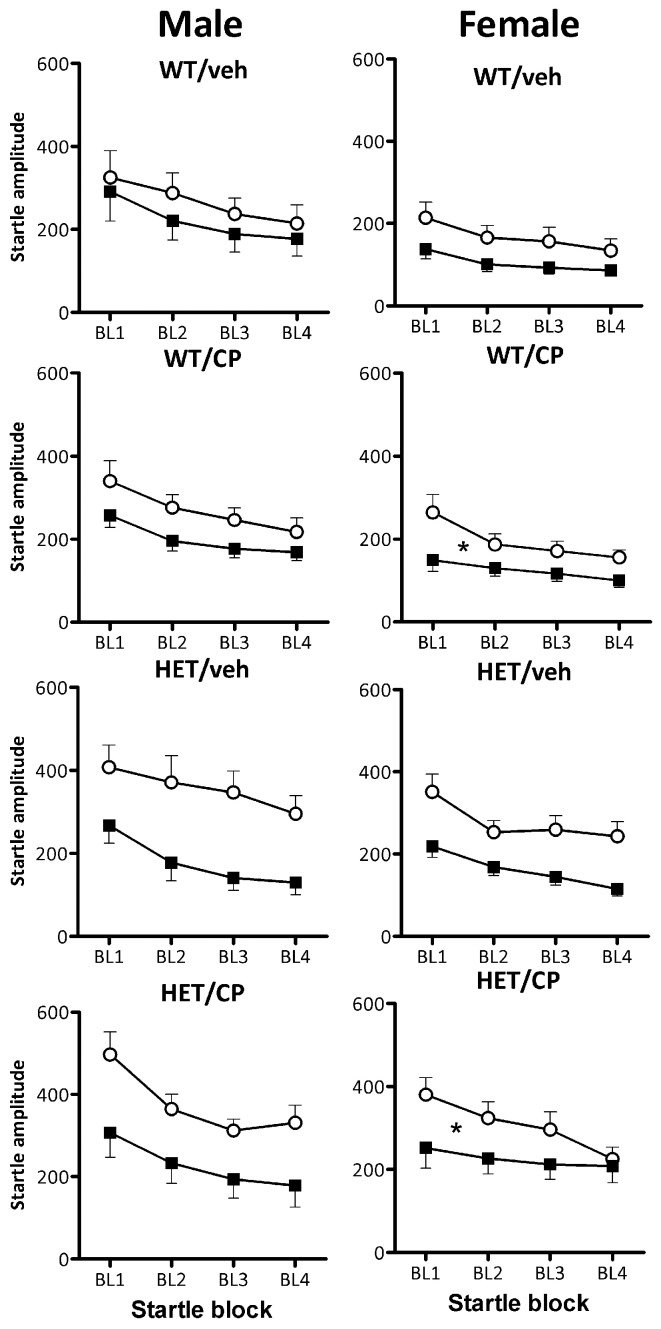
Reduced brain-derived neurotrophic factor (BDNF) signaling has been shown in the frontal cortex and hippocampus in schizophrenia. The aim of the present study was to investigate whether a BDNF deficit would modulate effects of chronic cannabis intake, a well-described risk factor for schizophrenia development. BDNF heterozygous mice (HET) and wild-type controls were chronically treated during weeks 6, 7, and 8 of life with the cannabinoid receptor agonist, CP55,940 (CP). After a 2-week delay, there were no CP-induced deficits in any of the groups in short-term spatial memory in a Y-maze task or novel object recognition memory. Baseline prepulse inhibition (PPI) was lower but average startle was increased in BDNF HET compared to wild-type controls. Acute CP administration before the PPI session caused a marked increase in PPI in male HET mice pre-treated with CP but not in any of the other male groups. In females, there were small increases of PPI in all groups upon acute CP administration. Acute CP administration furthermore reduced startle and this effect was greater in HET mice irrespective of chronic CP pre-treatment. Analysis of the levels of [(3)H]CP55,940 binding by autoradiography revealed a significant increase in the nucleus accumbens of male BDNF HET mice previously treated with CP but not in any of the other groups or in the caudate nucleus. These results show that BDNF deficiency and chronic young-adult cannabinoid receptor stimulation do not interact in this model on learning and memory later in life. In contrast, male "two hit" mice, but not females, were hypersensitive to the effect of acute CP on sensorimotor gating. These effects may be related to a selective increase of [(3)H]CP55,940 binding in the nucleus accumbens, reflecting up-regulation of CB1 receptor density in this region. These data could be of relevance to our understanding of differential "two hit" neurodevelopmental mechanisms in schizophrenia.
精神分裂症患者的额叶皮质和海马体中已发现脑源性神经营养因子(BDNF)信号传导减少。本研究的目的是调查BDNF缺乏是否会调节长期摄入大麻的影响,长期摄入大麻是精神分裂症发展的一个已明确的风险因素。在生命的第6、7和8周,用大麻素受体激动剂CP55,940(CP)对BDNF杂合小鼠(HET)和野生型对照进行长期治疗。延迟2周后,在Y迷宫任务中的短期空间记忆或新物体识别记忆方面,任何一组均未出现CP诱导的缺陷。与野生型对照相比,BDNF HET小鼠的基线前脉冲抑制(PPI)较低,但平均惊吓反应增加。在PPI测试前急性给予CP,导致预先用CP处理的雄性HET小鼠的PPI显著增加,但其他任何雄性组均未出现这种情况。在雌性小鼠中,急性给予CP后所有组的PPI均有小幅增加。此外,急性给予CP可降低惊吓反应,并且无论是否进行慢性CP预处理,这种效应在HET小鼠中都更大。通过放射自显影分析[(3)H]CP55,940结合水平,发现先前用CP处理的雄性BDNF HET小鼠伏隔核中的结合显著增加,但其他任何组或尾状核中均未出现这种情况。这些结果表明,在该模型中,BDNF缺乏和成年早期长期大麻素受体刺激在生命后期的学习和记忆方面没有相互作用。相反,雄性“双打击”小鼠(而非雌性)对急性CP对感觉运动门控的影响高度敏感。这些效应可能与伏隔核中[(3)H]CP55,940结合的选择性增加有关,反映了该区域CB1受体密度的上调。这些数据可能与我们对精神分裂症中不同“双打击”神经发育机制的理解有关。