Lee Jibak
Laboratory of Developmental Biotechnology, Graduate School of Agricultural Science, Kobe University, Kobe 657-8501, Japan.
J Reprod Dev. 2013 Oct;59(5):431-6. doi: 10.1262/jrd.2013-068.
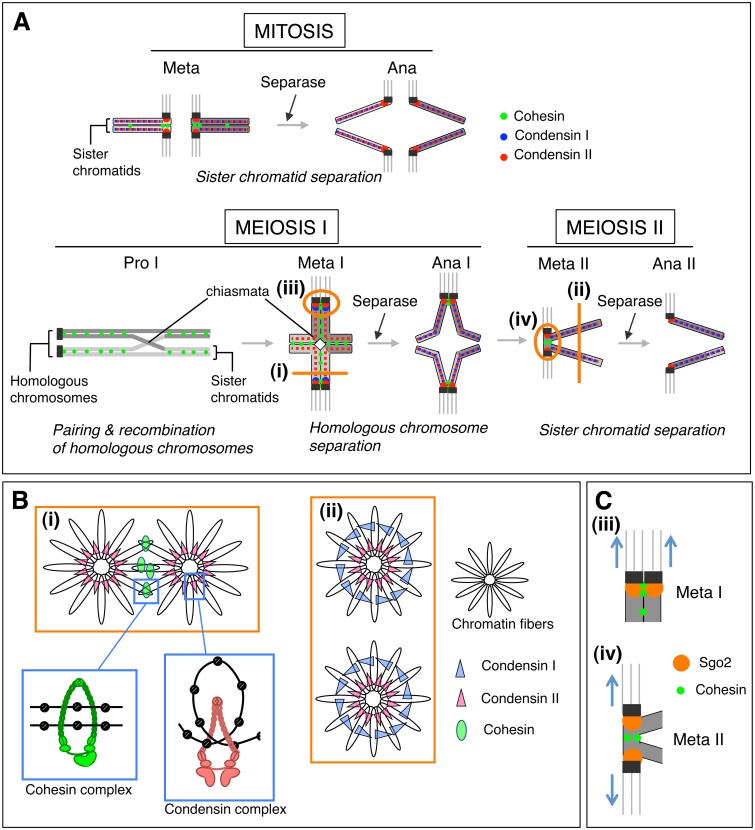
Meiosis is a key step for sexual reproduction in which chromosome number is halved by two successive meiotic divisions after a single round of DNA replication. In the first meiotic division (meiosis I), homologous chromosomes pair, synapse, and recombine with their partners in prophase I. As a result, homologous chromosomes are physically connected until metaphase I and then segregated from each other at the onset of anaphase I. In the subsequent second meiotic division (meiosis II), sister chromatids are segregated. Chromosomal abnormality arising during meiosis is one of the major causes of birth defects and congenital disorders in mammals including human and domestic animals. Hence understanding of the mechanism underlying these unique chromosome behavior in meiosis is of great importance. This review focuses on the roles of cohesin and condensin, and their regulation in chromosome dynamics during mammalian meiosis.
减数分裂是有性生殖的关键步骤,在这一过程中,经过一轮DNA复制后,通过连续两次减数分裂使染色体数目减半。在第一次减数分裂(减数分裂I)中,同源染色体在前期I配对、联会并与其配对伙伴发生重组。因此,同源染色体在物理上相互连接直至中期I,然后在后期I开始时彼此分离。在随后的第二次减数分裂(减数分裂II)中,姐妹染色单体分离。减数分裂过程中出现的染色体异常是包括人类和家畜在内的哺乳动物出生缺陷和先天性疾病的主要原因之一。因此,了解减数分裂中这些独特染色体行为的潜在机制非常重要。本综述重点关注黏连蛋白和凝聚蛋白的作用及其在哺乳动物减数分裂过程中对染色体动态变化的调控。