Zheng X Q, Guo J P, Yang H, Kanai M, He L L, Li Y Y, Koomen J M, Minton S, Gao M, Ren X B, Coppola D, Cheng J Q
1] Department of Molecular Oncology, H. Lee Moffitt Cancer Center & Research Institute, Tampa, FL, USA [2] Departments of Thyroid and Neck Tumour, Tianjin Medical University Cancer Institute and Hospital, Oncology Key Laboratory of cancer prevention and therapy, National Clinical Research Center of Cancer, Tianjin, PR China [3] Department of Immunology, Tianjin Medical University Cancer Institute and Hospital, Oncology Key Laboratory of cancer prevention and therapy, National Clinical Research Center of Cancer, Tianjin, PR China.
Department of Molecular Oncology, H. Lee Moffitt Cancer Center & Research Institute, Tampa, FL, USA.
Oncogene. 2014 Oct 16;33(42):4985-96. doi: 10.1038/onc.2013.444. Epub 2013 Oct 28.
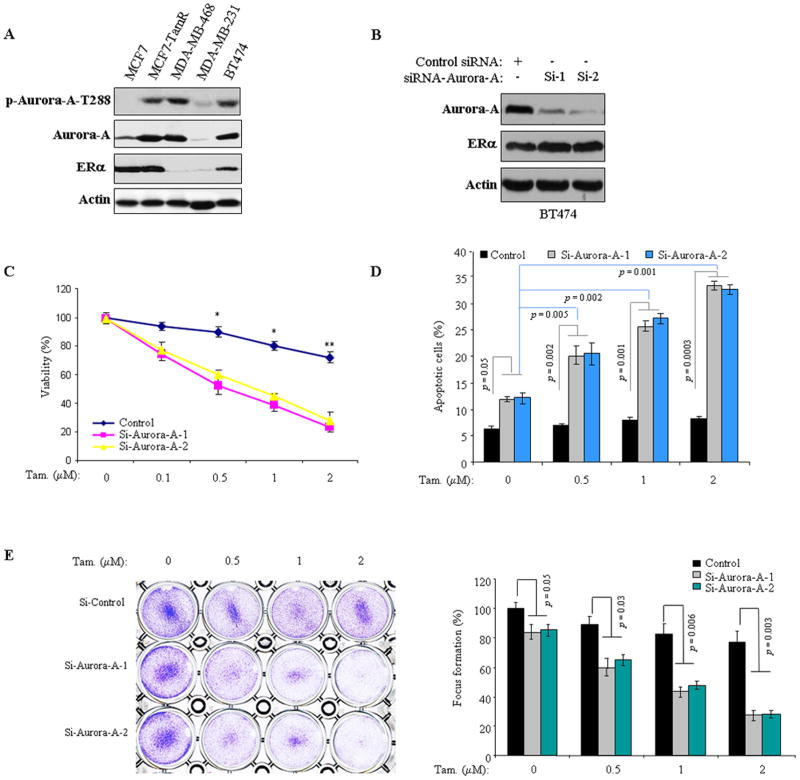
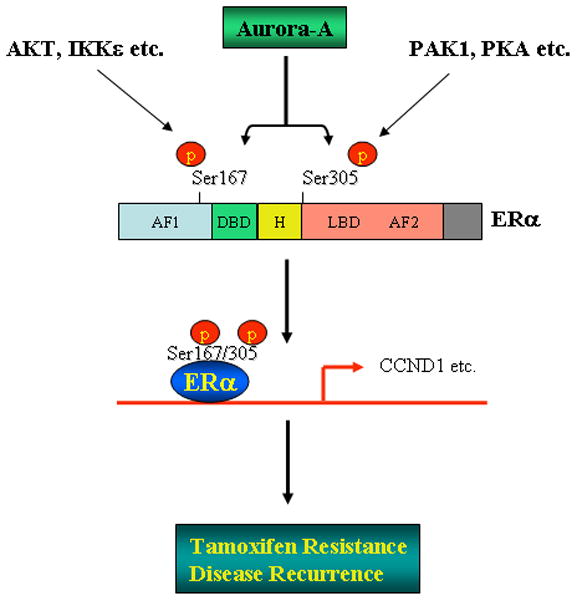
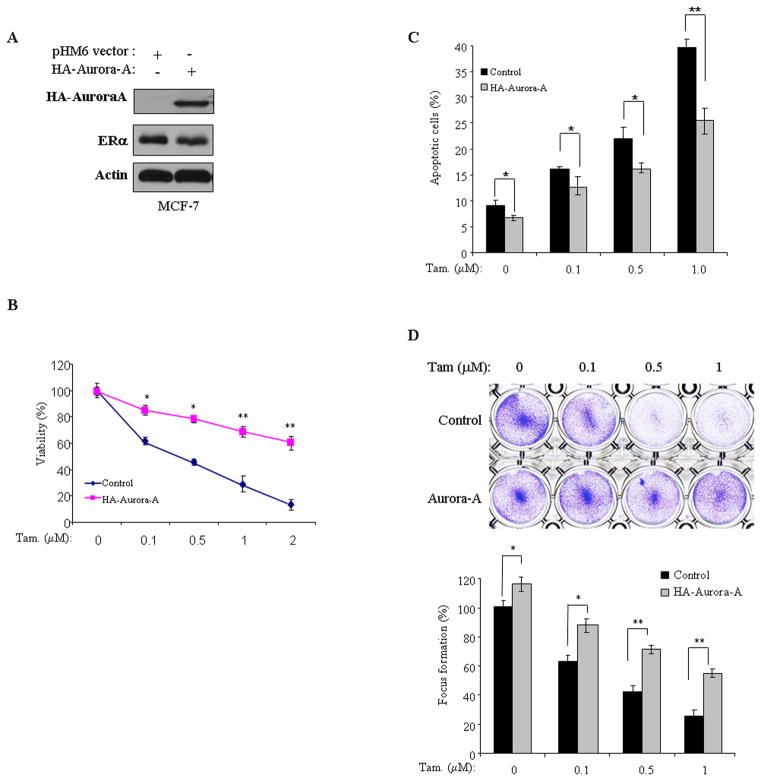
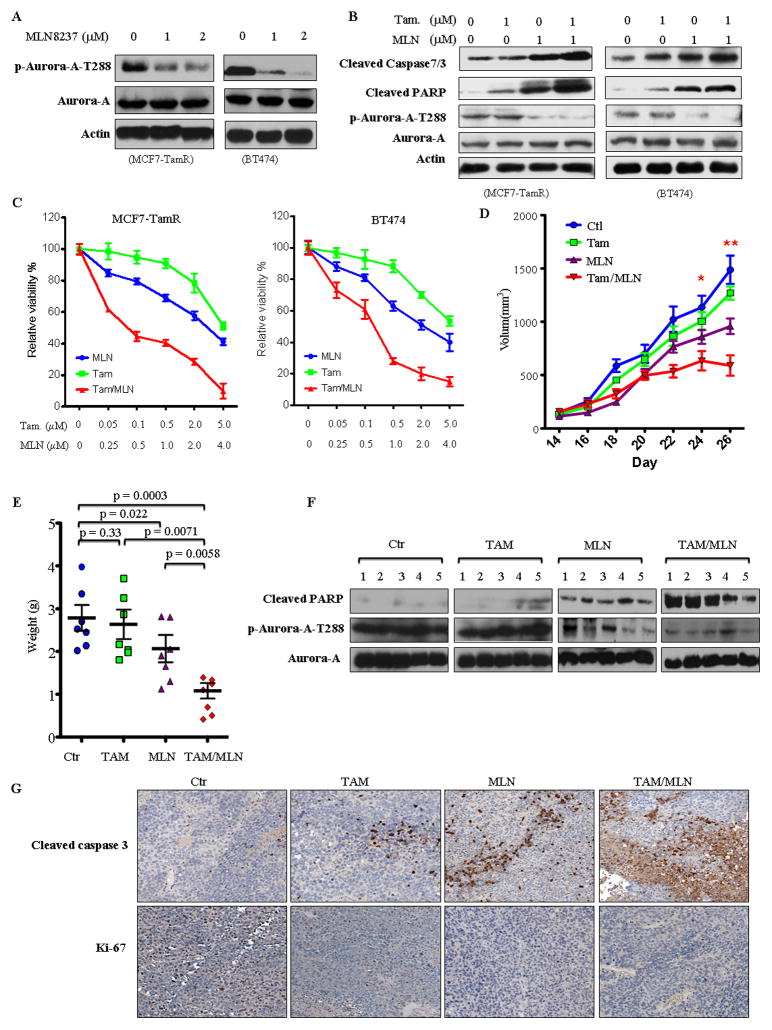
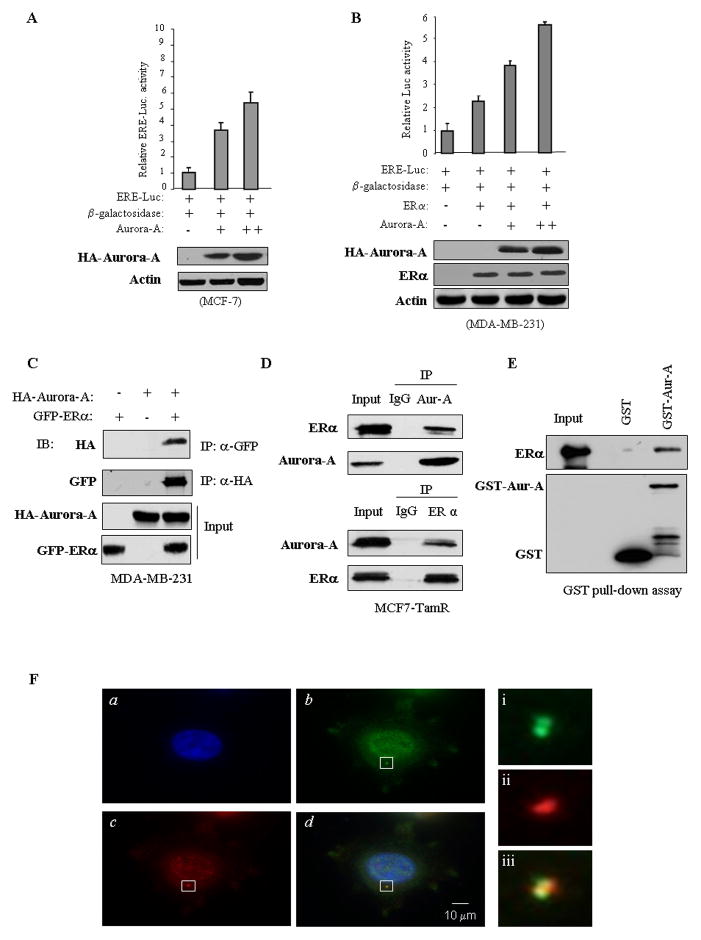
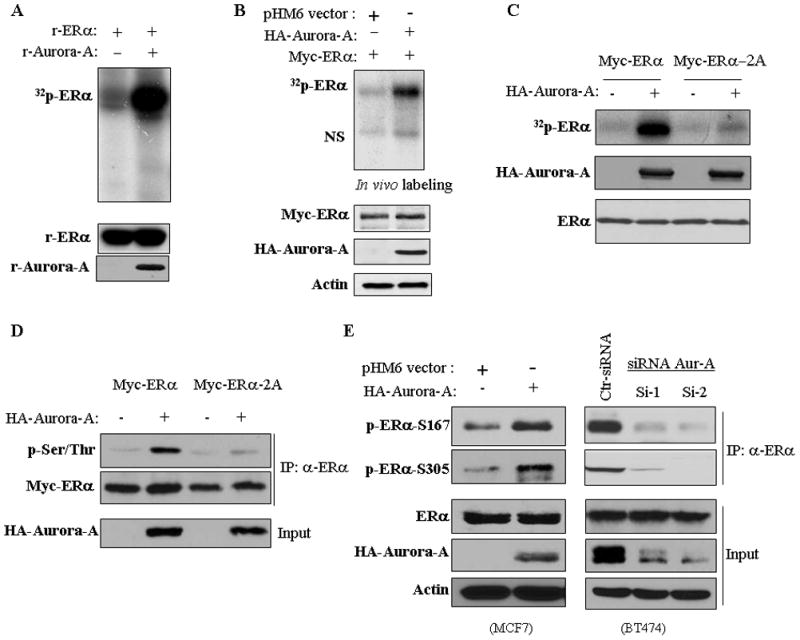
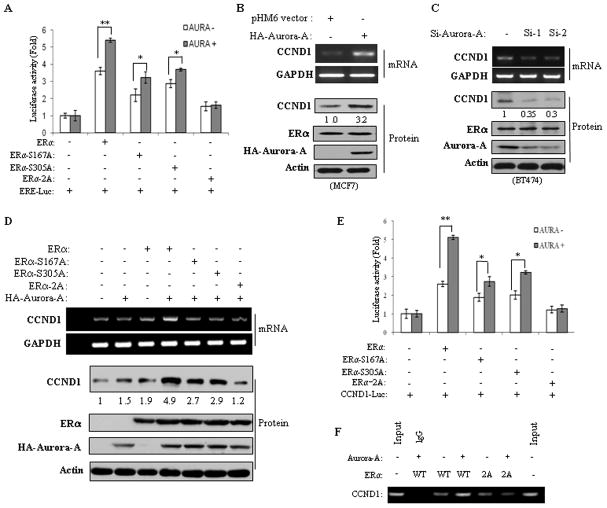
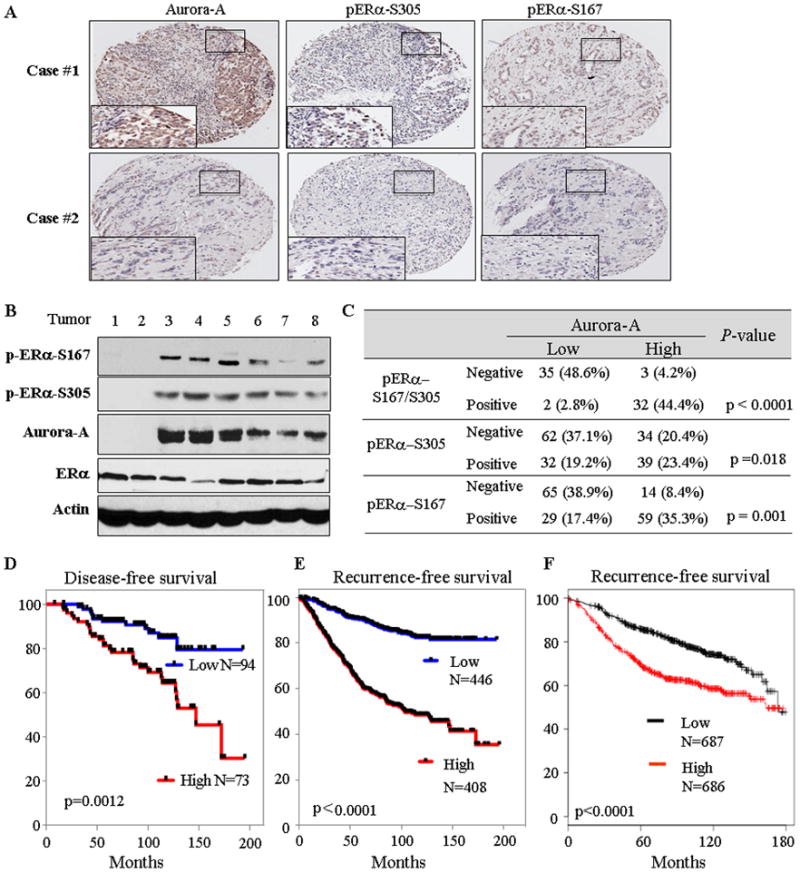
Despite the clinical success of tamoxifen, its resistance remains a major challenge in breast cancer. Here we show that Aurora-A determines tamoxifen sensitivity by regulation of oestrogen receptor (ER)α. Ectopic expression of Aurora-A decreases and depletion of Aurora-A enhances tamoxifen sensitivity in ERα-positive breast cancer. Elevated Aurora-A was significantly associated with the recurrence of ERα-positive tumours. Notably, Aurora-A inhibitor MLN8237, which is currently in clinical trial, synergizes with tamoxifen and overcomes tamoxifen resistance. Furthermore, Aurora-A interacts with and phosphorylates ERα on serine-167 and -305, leading to increase in ERα DNA-binding and transcriptional activity. Elevated levels of Aurora-A are significantly associated with disease-free survival in ERα-positive but not ERα-negative breast cancers. These data suggest that Aurora-A has a pivotal role in tamoxifen resistance and ERα is a bona fide substrate of Aurora-A. Thus, Aurora-A represents a prognostic marker in ERα-positive tumour and a critical therapeutic target in tamoxifen-resistant breast cancer, and Aurora-A inhibitor could be used as either an independent or concurrent agent in tamoxifen-resistant tumour.
尽管他莫昔芬在临床上取得了成功,但其耐药性仍然是乳腺癌治疗中的一个主要挑战。在此,我们表明极光激酶A(Aurora-A)通过调节雌激素受体(ER)α来决定他莫昔芬的敏感性。在ERα阳性乳腺癌中,异位表达Aurora-A会降低他莫昔芬敏感性,而敲低Aurora-A则会增强其敏感性。Aurora-A水平升高与ERα阳性肿瘤的复发显著相关。值得注意的是,目前正在进行临床试验的Aurora-A抑制剂MLN8237与他莫昔芬协同作用,可克服他莫昔芬耐药性。此外,Aurora-A与ERα相互作用并使其丝氨酸167和305位点磷酸化,导致ERα的DNA结合和转录活性增加。Aurora-A水平升高与ERα阳性而非ERα阴性乳腺癌的无病生存期显著相关。这些数据表明,Aurora-A在他莫昔芬耐药中起关键作用,且ERα是Aurora-A的真正底物。因此,Aurora-A是ERα阳性肿瘤的一个预后标志物,也是他莫昔芬耐药乳腺癌的一个关键治疗靶点,Aurora-A抑制剂可作为他莫昔芬耐药肿瘤的独立或联合治疗药物。