Zheng Dayong, Li Jun, Yan Han, Zhang Gang, Li Wei, Chu Edward, Wei Ning
School of Pharmacy, North China University of Science and Technology, Tangshan 063210, China.
Basic Medical Science College, Liaoning University of Traditional Chinese Medicine, Shenyang 110032, China.
Acta Pharm Sin B. 2023 Jul;13(7):2826-2843. doi: 10.1016/j.apsb.2023.03.013. Epub 2023 Mar 15.
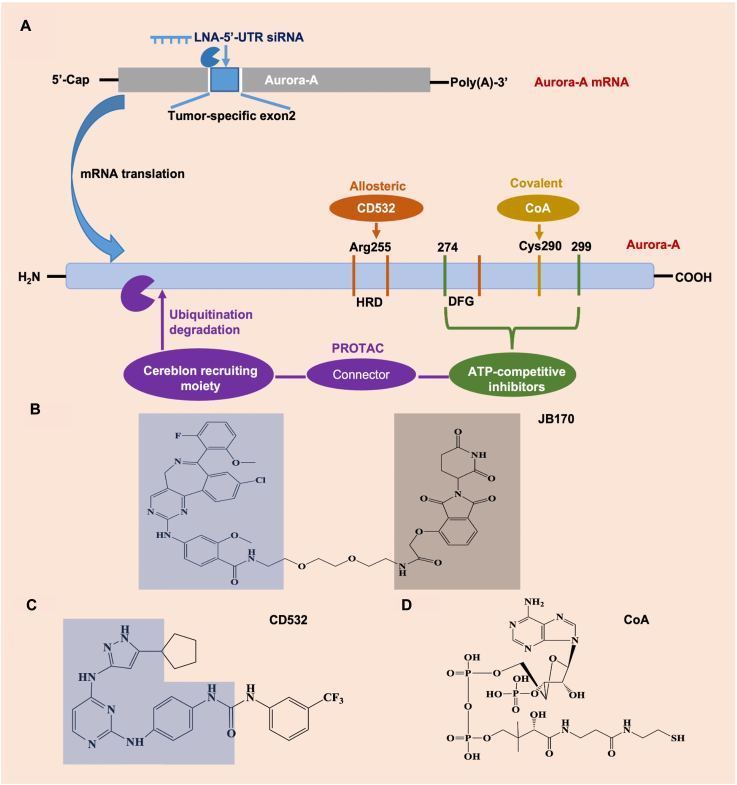
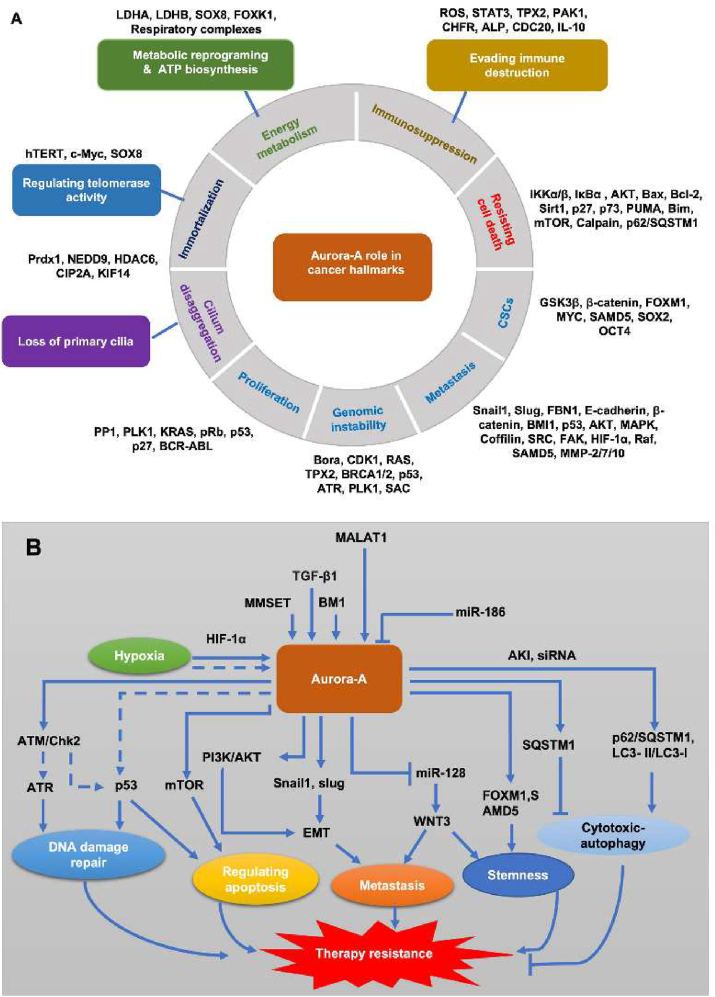
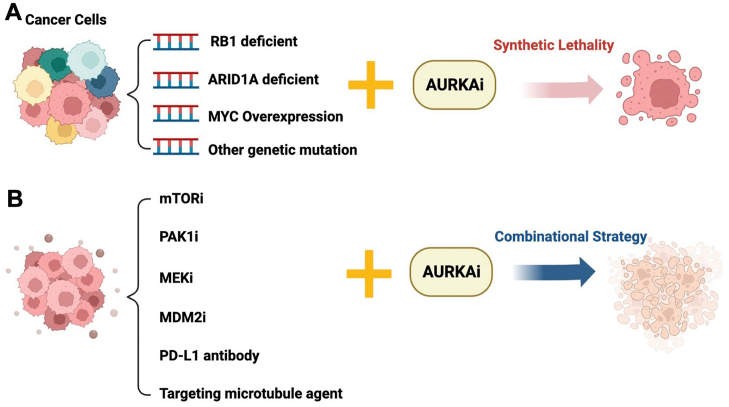
Aurora kinase A (Aurora-A), a serine/threonine kinase, plays a pivotal role in various cellular processes, including mitotic entry, centrosome maturation and spindle formation. Overexpression or gene-amplification/mutation of Aurora-A kinase occurs in different types of cancer, including lung cancer, colorectal cancer, and breast cancer. Alteration of Aurora-A impacts multiple cancer hallmarks, especially, immortalization, energy metabolism, immune escape and cell death resistance which are involved in cancer progression and resistance. This review highlights the most recent advances in the oncogenic roles and related multiple cancer hallmarks of Aurora-A kinase-driving cancer therapy resistance, including chemoresistance (taxanes, cisplatin, cyclophosphamide), targeted therapy resistance (osimertinib, imatinib, sorafenib, etc.), endocrine therapy resistance (tamoxifen, fulvestrant) and radioresistance. Specifically, the mechanisms of Aurora-A kinase promote acquired resistance through modulating DNA damage repair, feedback activation bypass pathways, resistance to apoptosis, necroptosis and autophagy, metastasis, and stemness. Noticeably, our review also summarizes the promising synthetic lethality strategy for Aurora-A inhibitors in , and gene mutation tumors, and potential synergistic strategy for mTOR, PAK1, MDM2, MEK inhibitors or PD-L1 antibodies combined with targeting Aurora-A kinase. In addition, we discuss the design and development of the novel class of Aurora-A inhibitors in precision medicine for cancer treatment.
极光激酶A(Aurora-A)是一种丝氨酸/苏氨酸激酶,在包括有丝分裂进入、中心体成熟和纺锤体形成在内的各种细胞过程中发挥关键作用。Aurora-A激酶的过表达或基因扩增/突变发生在不同类型的癌症中,包括肺癌、结直肠癌和乳腺癌。Aurora-A的改变影响多种癌症特征,特别是与癌症进展和耐药性相关的永生化、能量代谢、免疫逃逸和细胞死亡抵抗。本综述重点介绍了Aurora-A激酶驱动癌症治疗耐药性的致癌作用和相关多种癌症特征的最新进展,包括化疗耐药性(紫杉烷类、顺铂、环磷酰胺)、靶向治疗耐药性(奥希替尼、伊马替尼、索拉非尼等)、内分泌治疗耐药性(他莫昔芬、氟维司群)和放射抗性。具体而言,Aurora-A激酶通过调节DNA损伤修复、反馈激活旁路途径、对凋亡、坏死性凋亡和自噬的抗性、转移和干性来促进获得性耐药。值得注意的是,我们的综述还总结了针对Aurora-A抑制剂在 、 和 基因突变肿瘤中的有前景的合成致死策略,以及mTOR、PAK1、MDM2、MEK抑制剂或PD-L1抗体与靶向Aurora-A激酶联合使用的潜在协同策略。此外,我们还讨论了在癌症治疗的精准医学中新型Aurora-A抑制剂的设计和开发。