Patzke Nina, Spocter Muhammad A, Karlsson Karl Æ, Bertelsen Mads F, Haagensen Mark, Chawana Richard, Streicher Sonja, Kaswera Consolate, Gilissen Emmanuel, Alagaili Abdulaziz N, Mohammed Osama B, Reep Roger L, Bennett Nigel C, Siegel Jerry M, Ihunwo Amadi O, Manger Paul R
School of Anatomical Sciences, University of the Witwatersrand, 7 York Road, Parktown, Johannesburg, 2193, South Africa.
Brain Struct Funct. 2015 Jan;220(1):361-83. doi: 10.1007/s00429-013-0660-1. Epub 2013 Nov 1.
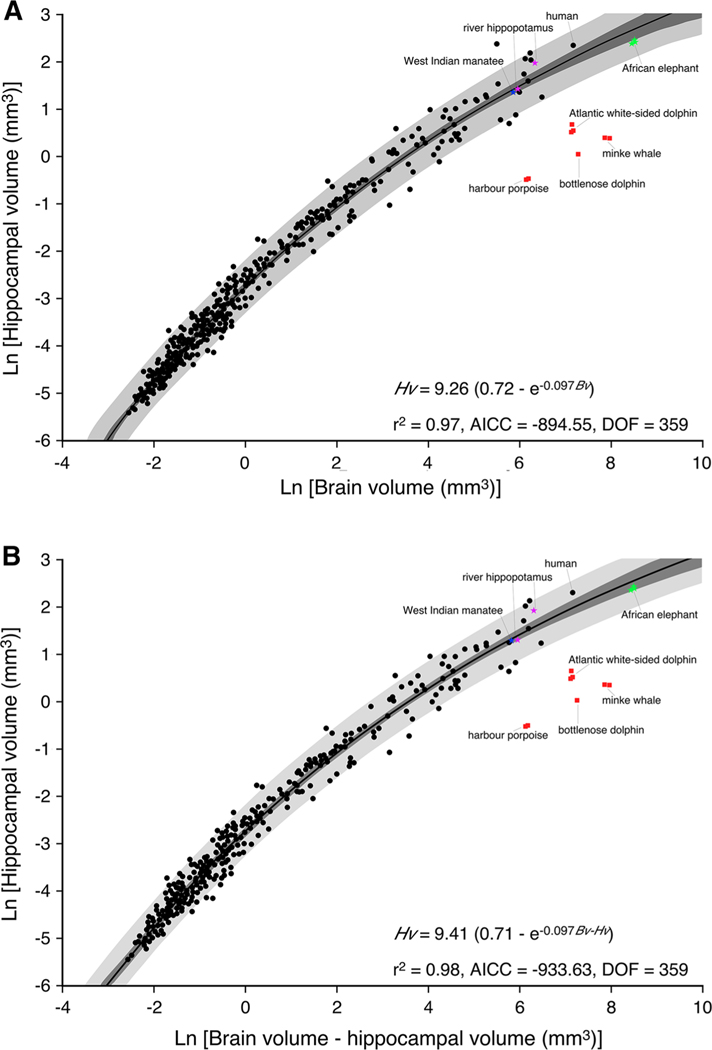
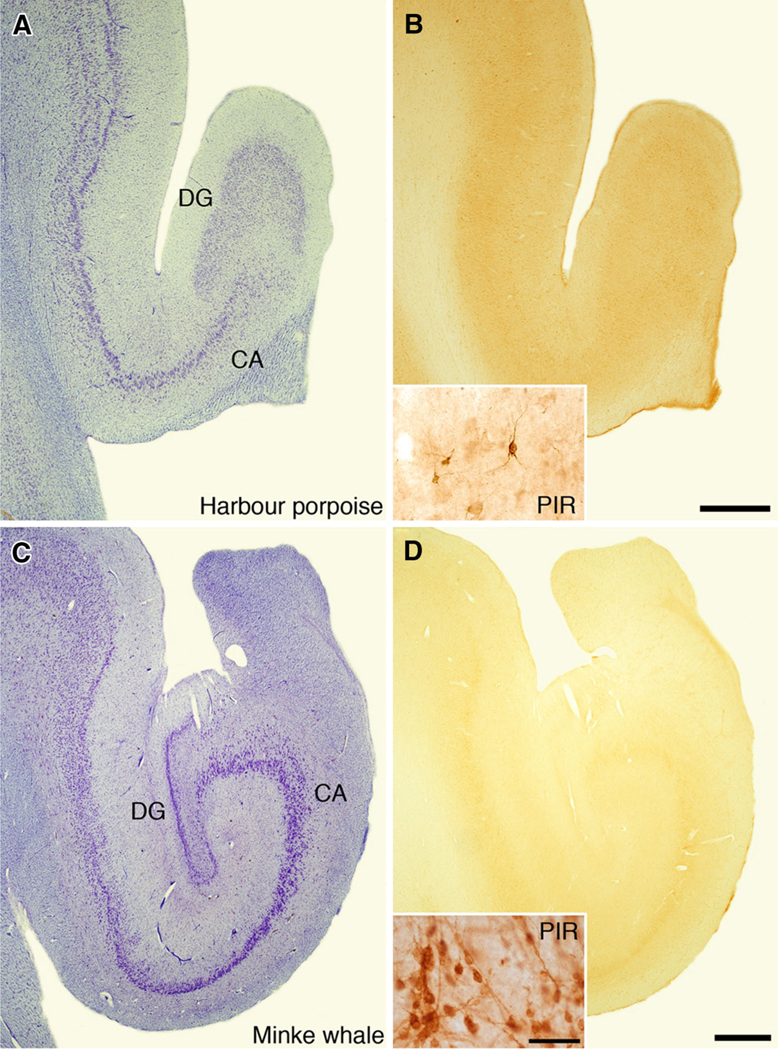
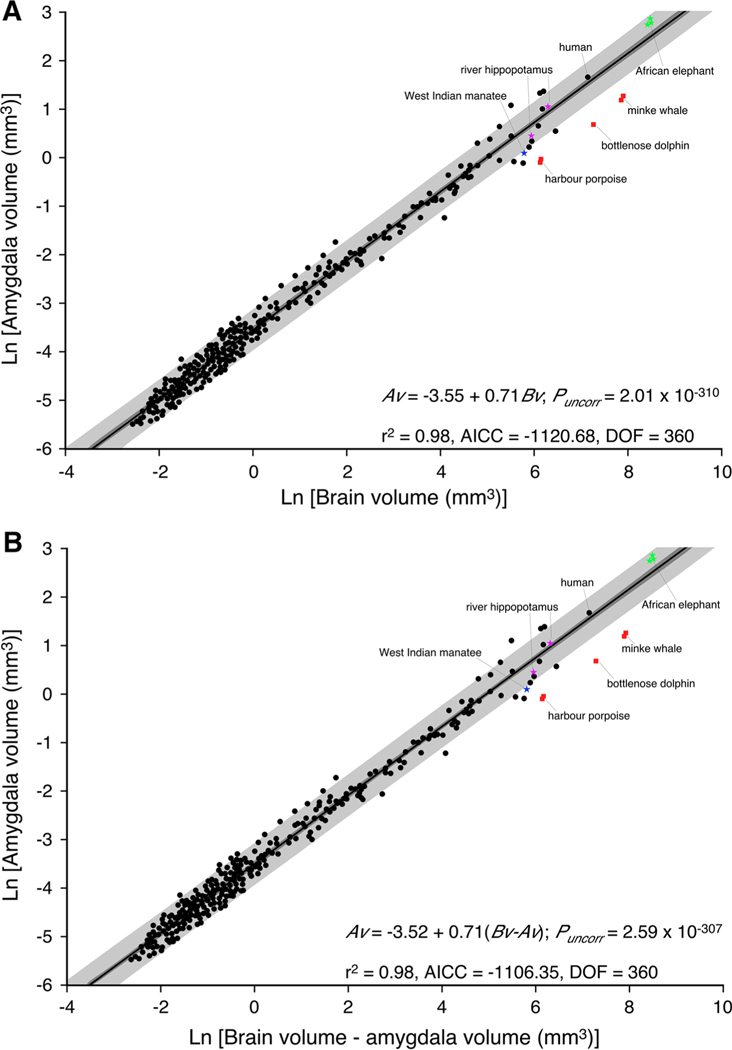
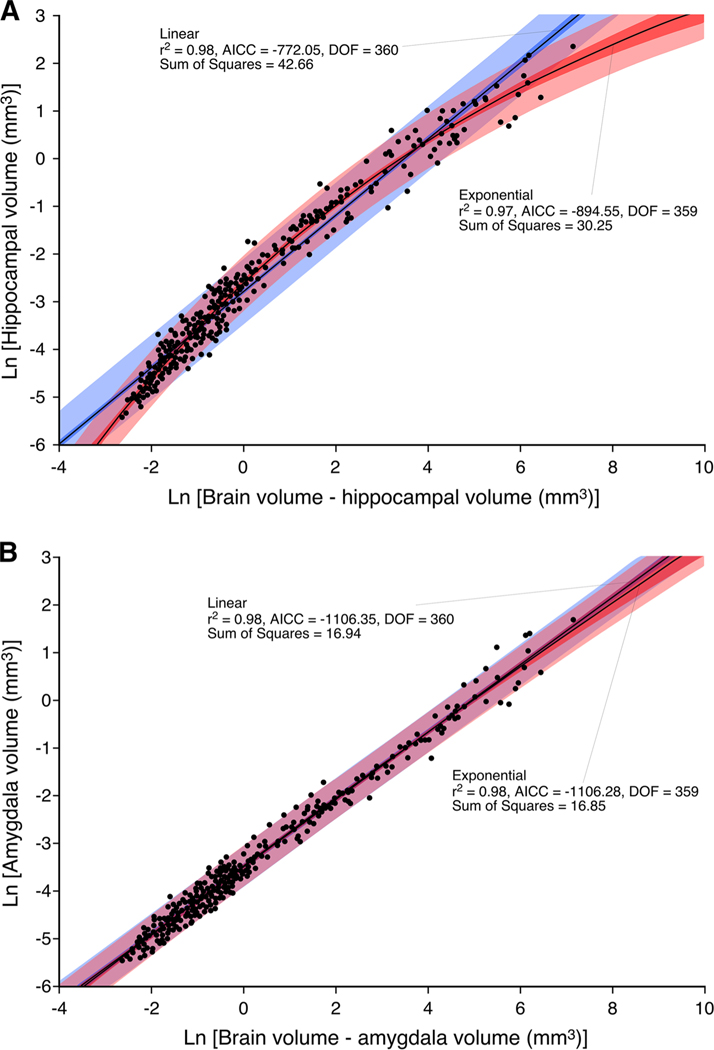
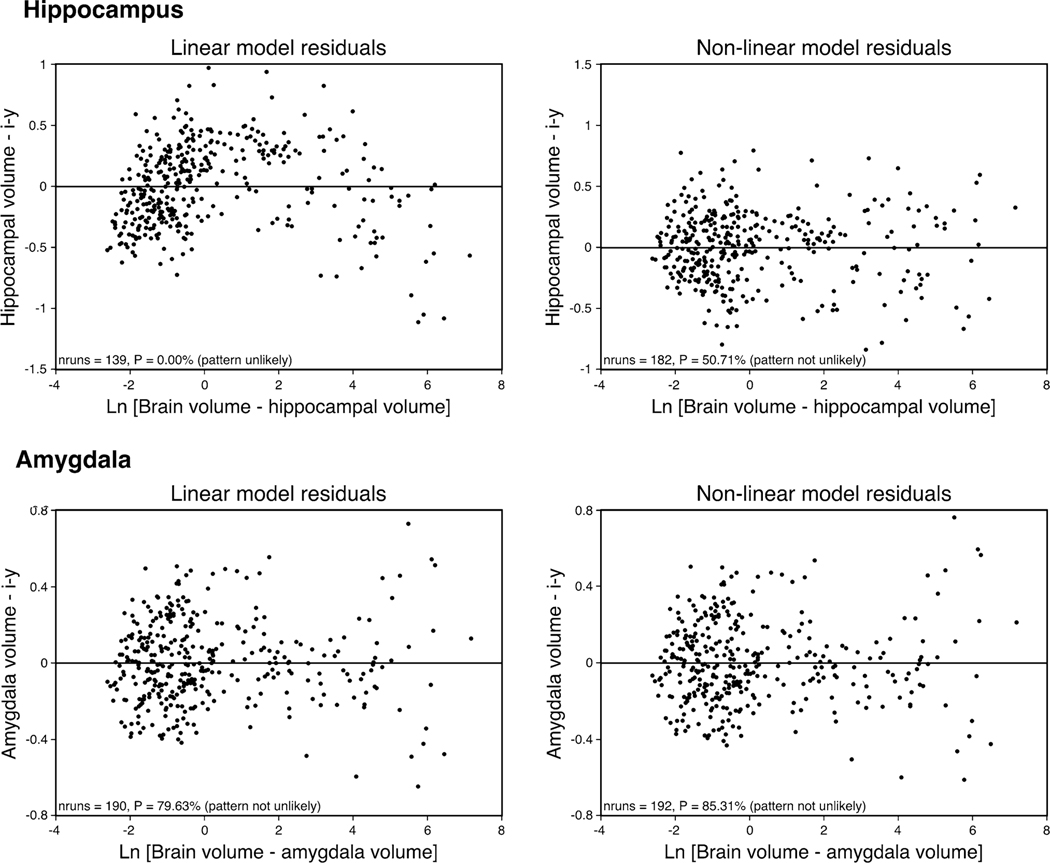
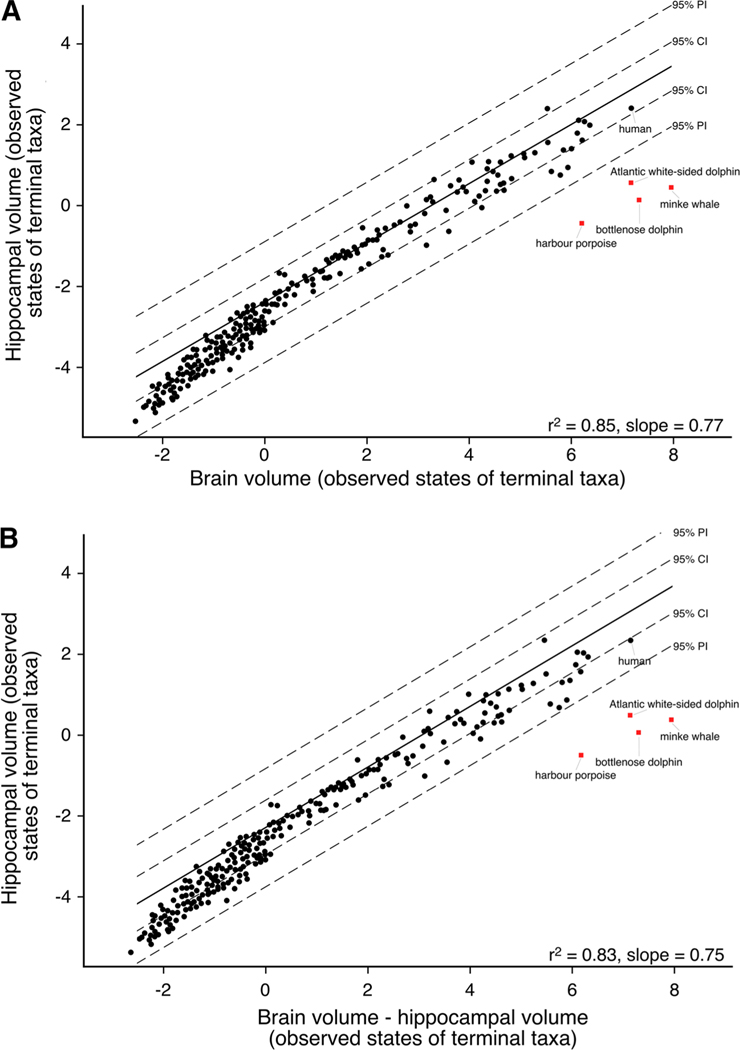
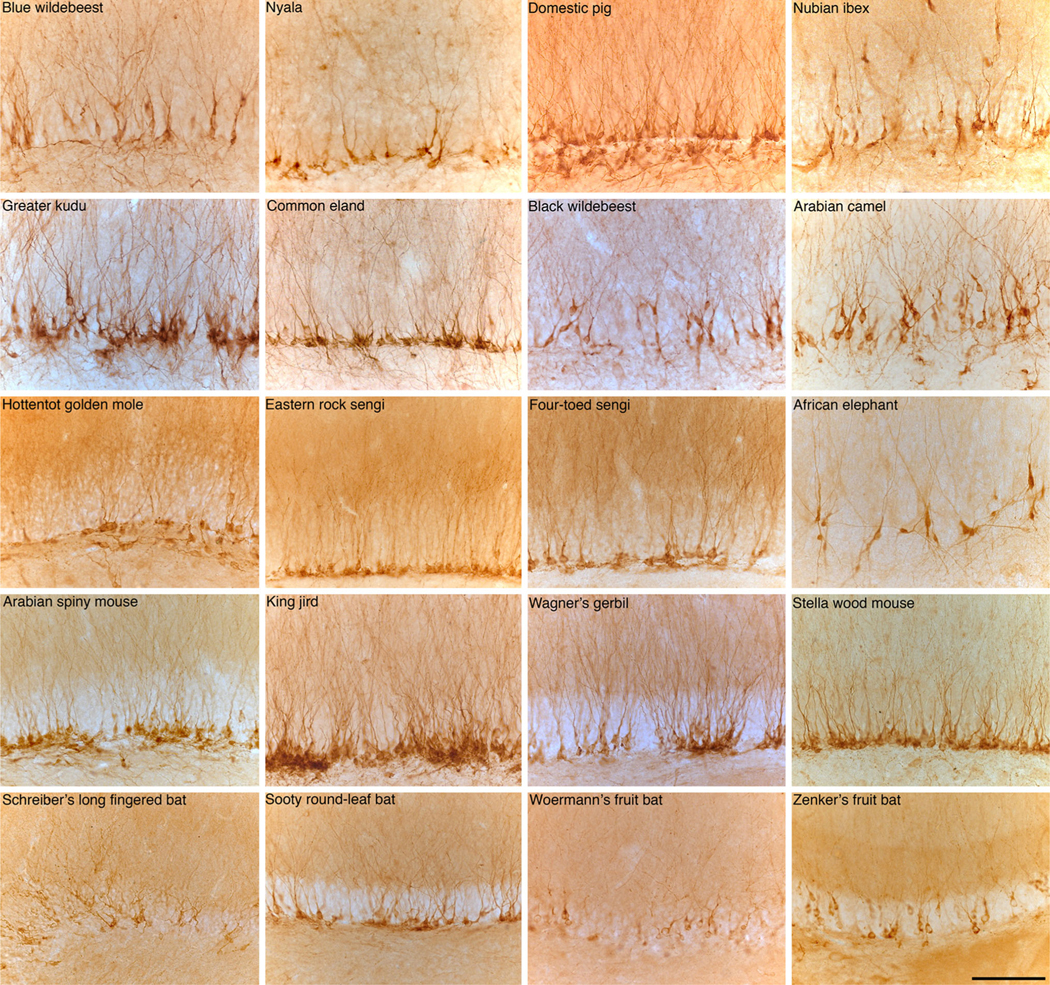
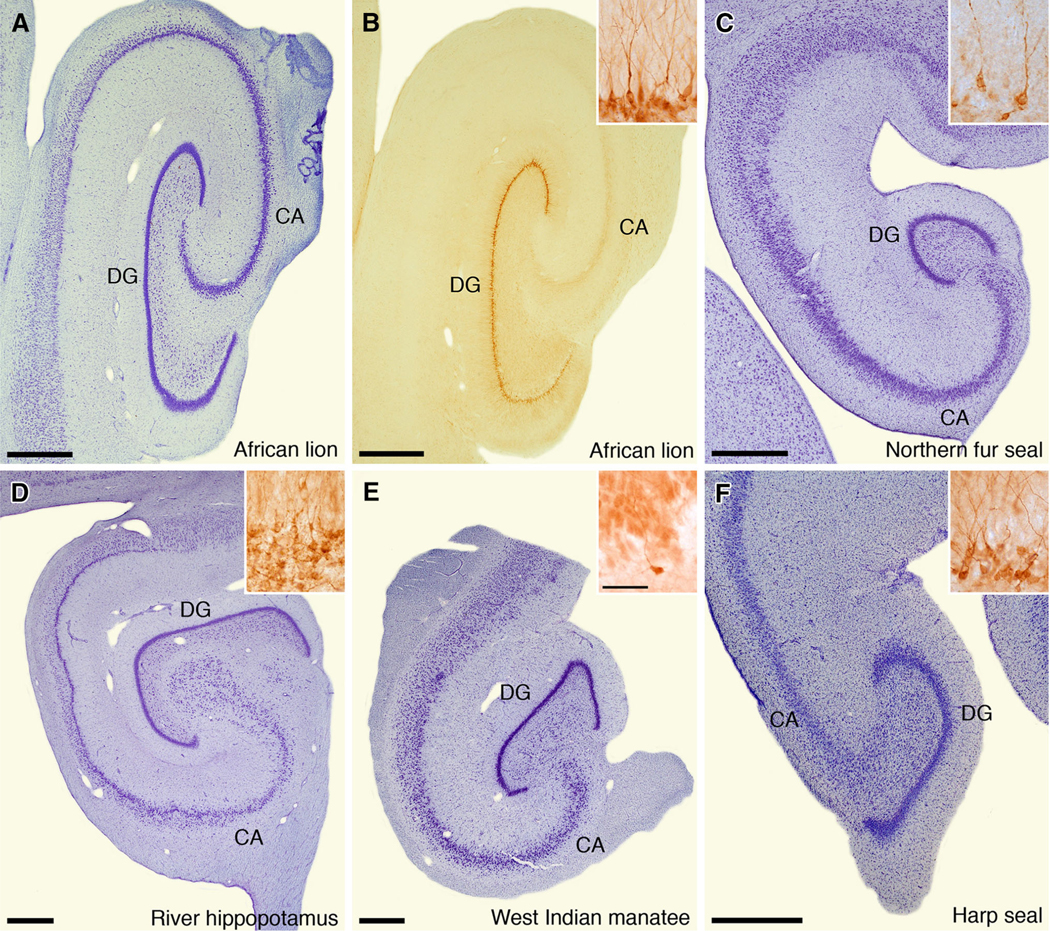
The hippocampus is essential for the formation and retrieval of memories and is a crucial neural structure sub-serving complex cognition. Adult hippocampal neurogenesis, the birth, migration and integration of new neurons, is thought to contribute to hippocampal circuit plasticity to augment function. We evaluated hippocampal volume in relation to brain volume in 375 mammal species and examined 71 mammal species for the presence of adult hippocampal neurogenesis using immunohistochemistry for doublecortin, an endogenous marker of immature neurons that can be used as a proxy marker for the presence of adult neurogenesis. We identified that the hippocampus in cetaceans (whales, dolphins and porpoises) is both absolutely and relatively small for their overall brain size, and found that the mammalian hippocampus scaled as an exponential function in relation to brain volume. In contrast, the amygdala was found to scale as a linear function of brain volume, but again, the relative size of the amygdala in cetaceans was small. The cetacean hippocampus lacks staining for doublecortin in the dentate gyrus and thus shows no clear signs of adult hippocampal neurogenesis. This lack of evidence of adult hippocampal neurogenesis, along with the small hippocampus, questions current assumptions regarding cognitive abilities associated with hippocampal function in the cetaceans. These anatomical features of the cetacean hippocampus may be related to the lack of postnatal sleep, causing a postnatal cessation of hippocampal neurogenesis.
海马体对于记忆的形成和提取至关重要,是服务于复杂认知的关键神经结构。成年海马体神经发生,即新神经元的产生、迁移和整合,被认为有助于海马体回路可塑性以增强功能。我们评估了375种哺乳动物物种中海马体体积与脑体积的关系,并使用针对双皮质素的免疫组织化学方法检查了71种哺乳动物物种是否存在成年海马体神经发生,双皮质素是未成熟神经元的内源性标志物,可作为成年神经发生存在的替代标志物。我们发现,鲸类动物(鲸鱼、海豚和鼠海豚)的海马体相对于其整体脑大小而言,在绝对和相对上都较小,并且发现哺乳动物的海马体与脑体积呈指数函数关系。相比之下,杏仁核与脑体积呈线性函数关系,但同样,鲸类动物中杏仁核的相对大小较小。鲸类动物的海马体在齿状回中缺乏双皮质素染色,因此没有明显的成年海马体神经发生迹象。成年海马体神经发生缺乏证据,再加上海马体较小,这对当前关于鲸类动物与海马体功能相关认知能力的假设提出了质疑。鲸类动物海马体的这些解剖学特征可能与出生后缺乏睡眠有关,导致出生后海马体神经发生停止。