Liquid Crystal Institute and Chemical Physics Interdisciplinary Program, Kent State University, Kent, Ohio 44242, USA.
Nat Commun. 2013;4:2635. doi: 10.1038/ncomms3635.
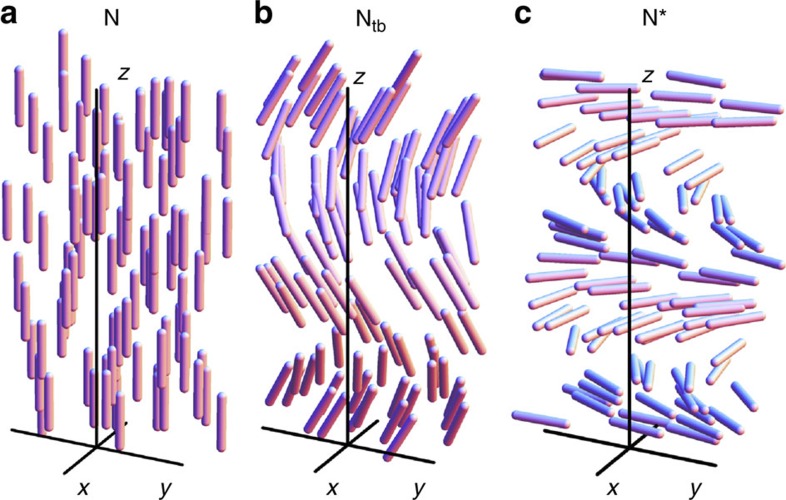
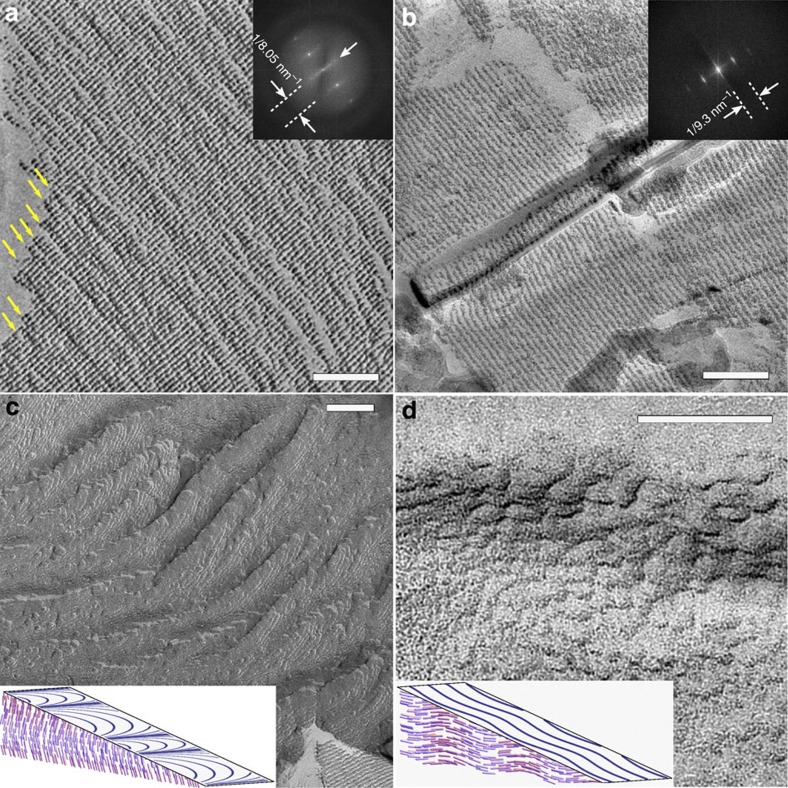
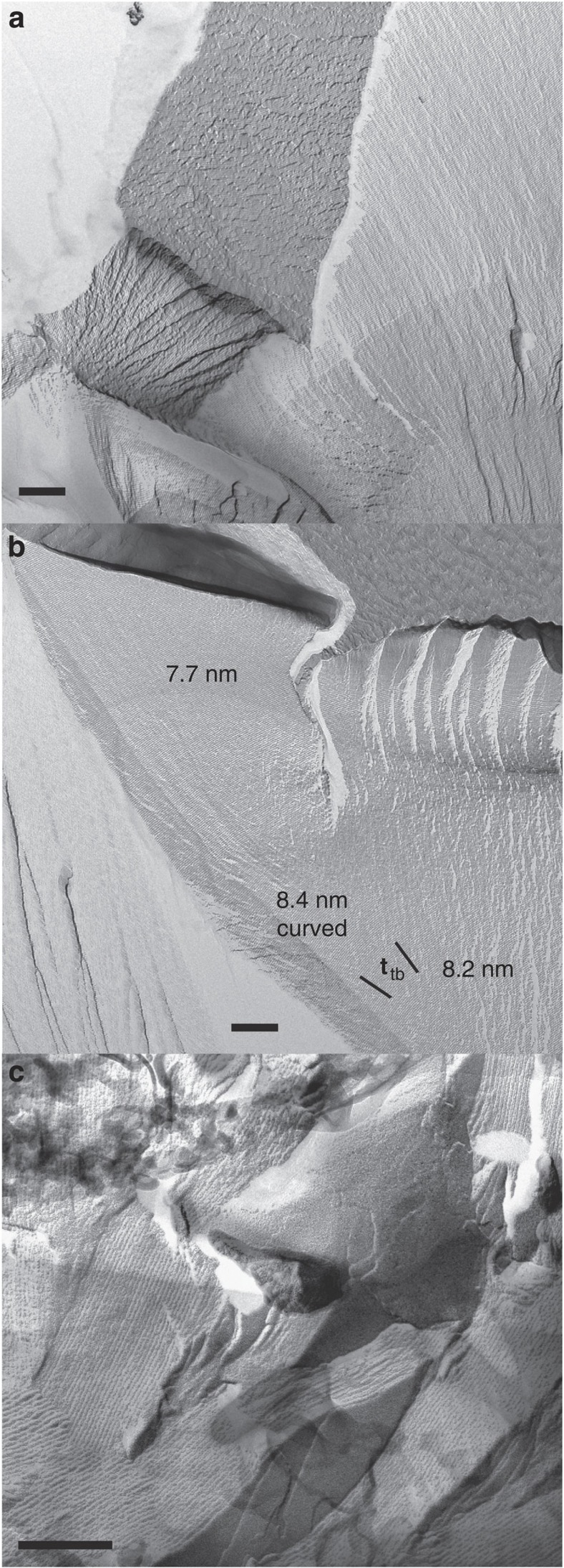
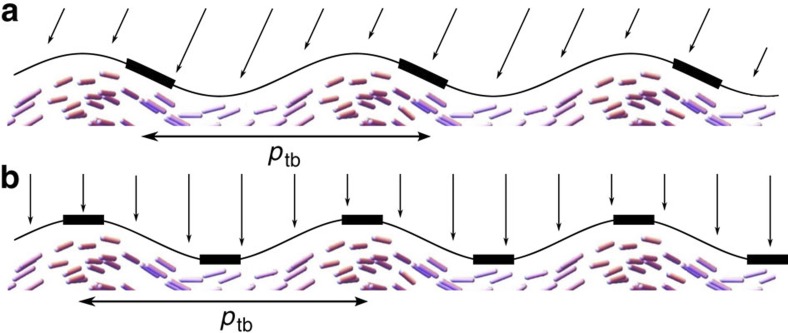
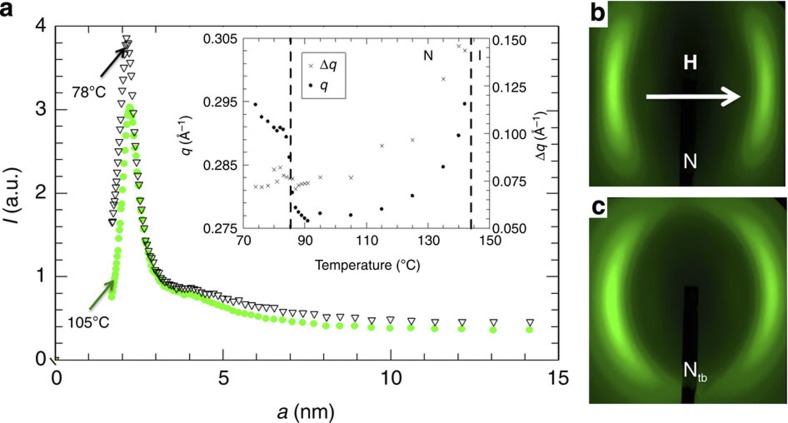
A state of matter in which molecules show a long-range orientational order and no positional order is called a nematic liquid crystal. The best known and most widely used (for example, in modern displays) is the uniaxial nematic, with the rod-like molecules aligned along a single axis, called the director. When the molecules are chiral, the director twists in space, drawing a right-angle helicoid and remaining perpendicular to the helix axis; the structure is called a chiral nematic. Here using transmission electron and optical microscopy, we experimentally demonstrate a new nematic order, formed by achiral molecules, in which the director follows an oblique helicoid, maintaining a constant oblique angle with the helix axis and experiencing twist and bend. The oblique helicoids have a nanoscale pitch. The new twist-bend nematic represents a structural link between the uniaxial nematic (no tilt) and a chiral nematic (helicoids with right-angle tilt).
一种物质状态,其中分子表现出长程取向有序,而没有位置有序,称为向列液晶。最著名和最广泛使用的(例如,在现代显示器中)是单轴向列相,棒状分子沿单个轴对齐,称为指向矢。当分子手性时,指向矢在空间中扭曲,绘制出一个直角螺旋,并保持垂直于螺旋轴;这种结构称为手性向列相。在这里,我们使用透射电子显微镜和光学显微镜实验证明了一种新的向列有序,由非手性分子形成,其中指向矢遵循斜螺旋,与螺旋轴保持恒定的斜角,并经历扭曲和弯曲。斜螺旋具有纳米级螺距。新的扭曲-弯曲向列相在单轴向列相(无倾斜)和手性向列相(具有直角倾斜的螺旋)之间代表了结构联系。