1] Hefei National Laboratory for Physical Sciences at Microscale and School of Life Sciences, University of Science and Technology of China, Anhui, China [2] Department of Immunology, Anhui Medical University, Anhui, China.
Cell Death Dis. 2013 Nov 7;4(11):e914. doi: 10.1038/cddis.2013.441.
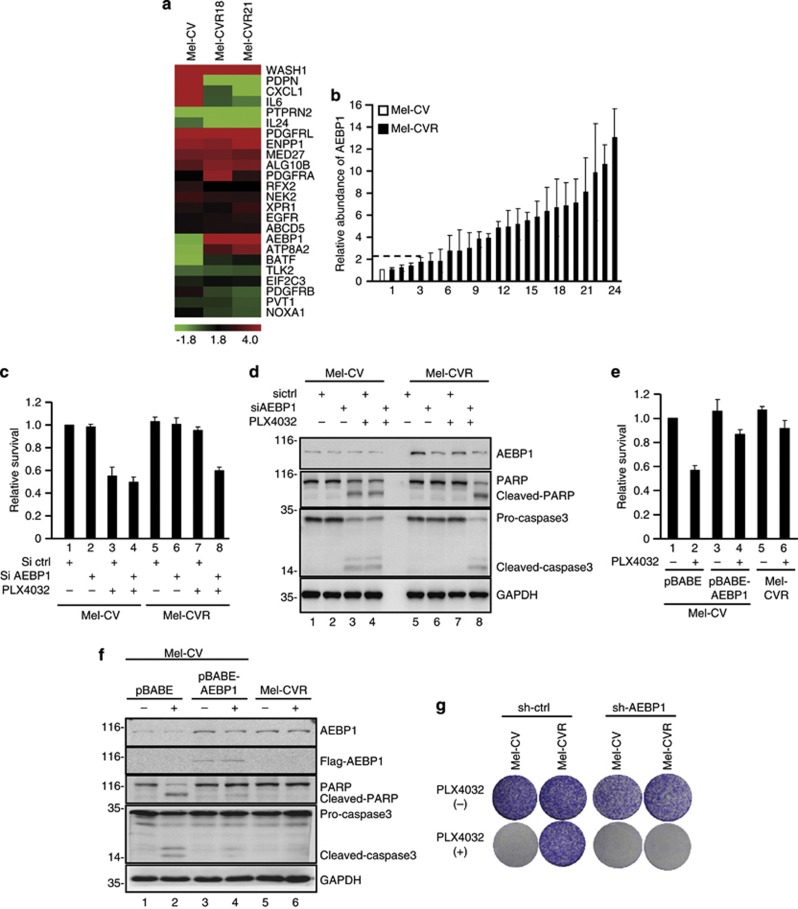
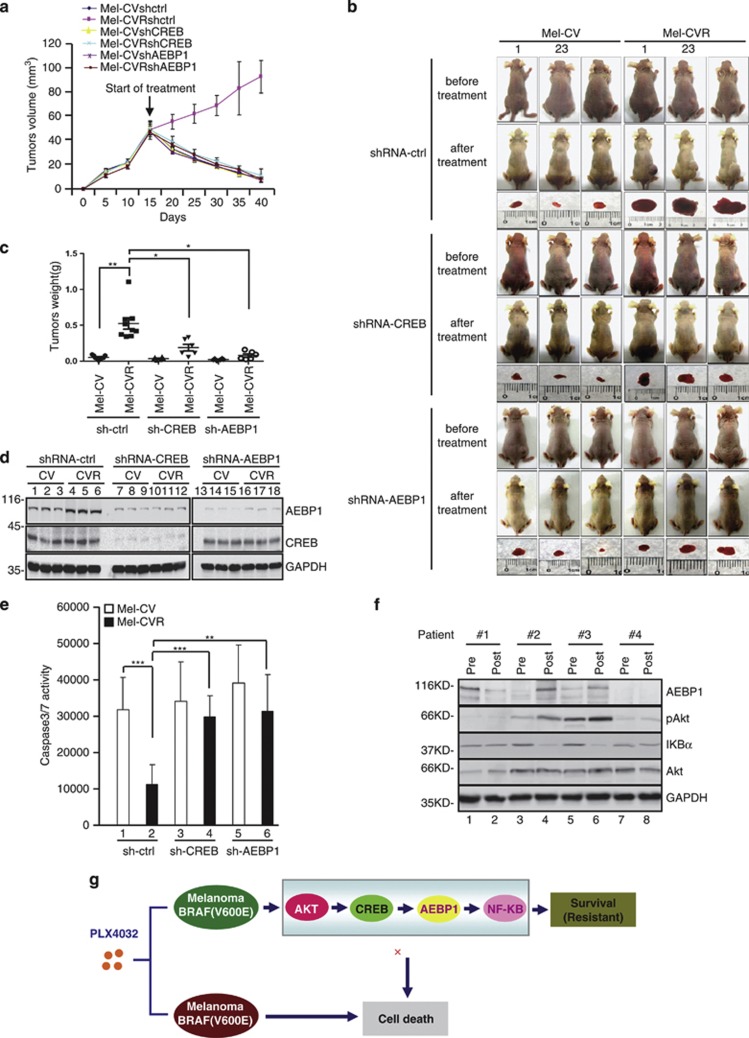
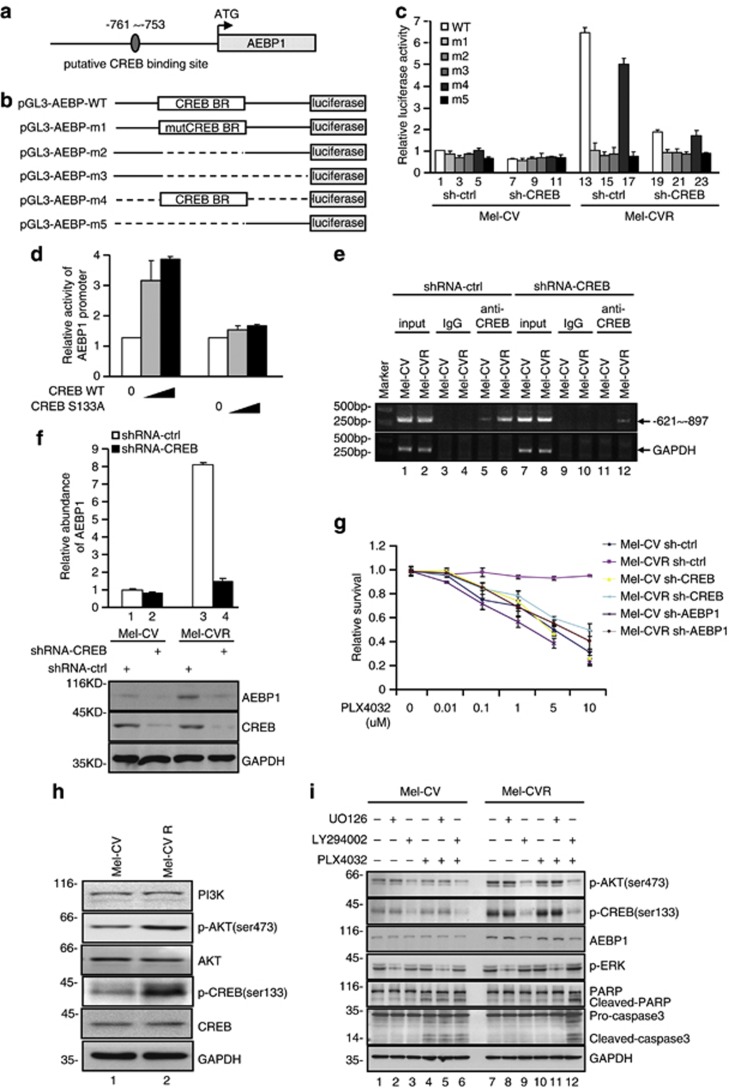
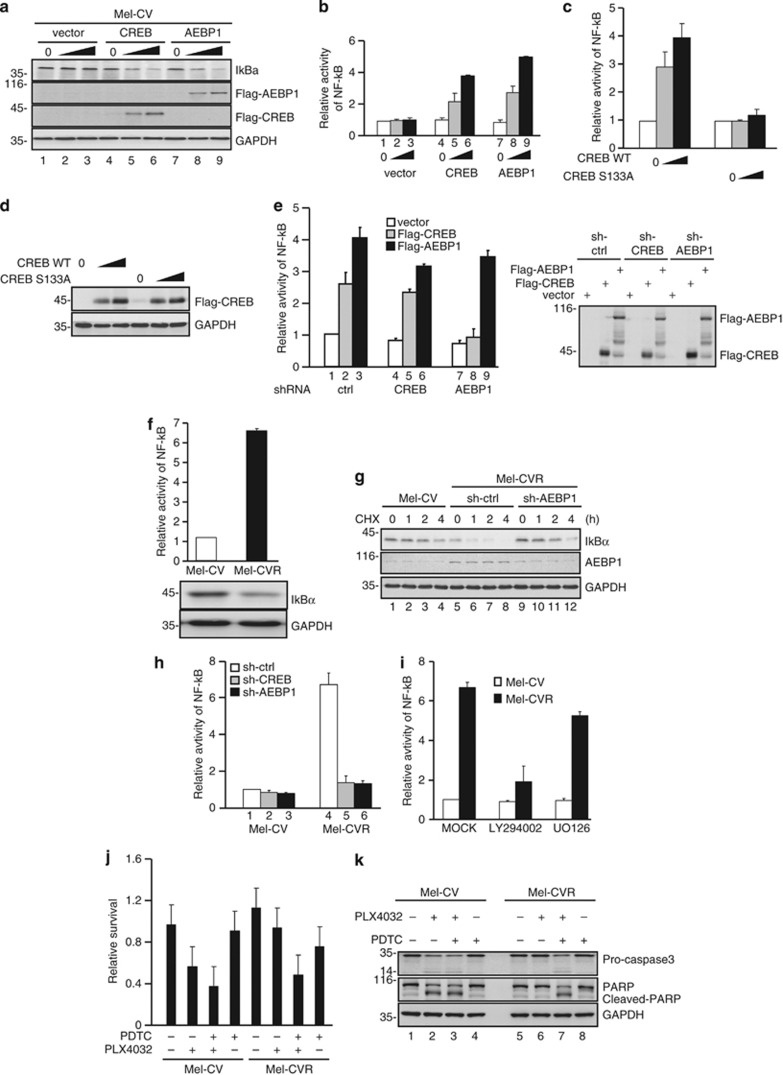
An activating BRAF (V600E) kinase mutation occurs in approximately half of melanomas. Recent clinical studies have demonstrated that vemurafenib (PLX4032) and dabrafenib, potent and selective inhibitors of mutant v-raf murine sarcoma viral oncogene homolog B1 (BRAF), exhibit remarkable activities in patients with V600 BRAF mutant melanomas. However, acquired drug resistance invariably develops after the initial treatment. Identification of acquired resistance mechanisms may inform the development of new therapies that elicit long-term responses of melanomas to BRAF inhibitors. Here we report that increased expression of AEBP1 (adipocyte enhancer-binding protein 1) confers acquired resistance to BRAF inhibition in melanoma. AEBP1 is shown to be highly upregulated in PLX4032-resistant melanoma cells because of the hyperactivation of the PI3K/Akt-cAMP response element-binding protein (CREB) signaling pathway. This upregulates AEBP1 expression and thus leads to the activation of NF-κB via accelerating IκBa degradation. In addition, inhibition of the PI3K/Akt-CREB-AEBP1-NF-κB pathway greatly reverses the PLX4032-resistant phenotype of melanoma cells. Furthermore, increased expression of AEBP1 is validated in post-treatment tumors in patients with acquired resistance to BRAF inhibitor. Therefore, these results reveal a novel PI3K/Akt-CREB-AEBP1-NF-κB pathway whose activation contributes to acquired resistance to BRAF inhibition, and suggest that this pathway, particularly AEBP1, may represent a novel therapeutic target for treating BRAF inhibitor-resistant melanoma.
激活的 BRAF (V600E) 激酶突变发生在大约一半的黑色素瘤中。最近的临床研究表明,vemurafenib (PLX4032) 和 dabrafenib,一种突变 v-raf 鼠肉瘤病毒癌基因同源物 B1 (BRAF) 的有效和选择性抑制剂,在 V600 BRAF 突变黑色素瘤患者中表现出显著的疗效。然而,初始治疗后不可避免地会出现获得性耐药。鉴定获得性耐药机制可能会为开发新的治疗方法提供信息,从而使黑色素瘤对 BRAF 抑制剂产生长期反应。在这里,我们报告说,AEBP1(脂肪细胞增强结合蛋白 1)的表达增加赋予黑色素瘤对 BRAF 抑制的获得性耐药性。由于 PI3K/Akt-cAMP 反应元件结合蛋白 (CREB) 信号通路的过度激活,AEBP1 在 PLX4032 耐药性黑色素瘤细胞中高度上调。这上调了 AEBP1 的表达,从而通过加速 IκBa 降解来激活 NF-κB。此外,抑制 PI3K/Akt-CREB-AEBP1-NF-κB 通路极大地逆转了黑色素瘤细胞对 PLX4032 的耐药表型。此外,在对 BRAF 抑制剂获得性耐药的患者的治疗后肿瘤中验证了 AEBP1 的表达增加。因此,这些结果揭示了一种新的 PI3K/Akt-CREB-AEBP1-NF-κB 通路,其激活有助于获得性 BRAF 抑制耐药,表明该通路,特别是 AEBP1,可能代表治疗 BRAF 抑制剂耐药性黑色素瘤的一种新的治疗靶点。