Department of Health Economics und Health Care Management, University of Wuppertal, Wuppertal, Germany.
BMJ Open. 2013 Nov 7;3(11):e003471. doi: 10.1136/bmjopen-2013-003471.
Visual impairment and blindness (VI&B) cause a considerable and increasing economic burden in all high-income countries due to population ageing. Thus, we conducted a review of the literature to better understand all relevant costs associated with VI&B and to develop a multiperspective overview.
Systematic review: Two independent reviewers searched the relevant literature and assessed the studies for inclusion and exclusion criteria as well as quality.
Interventional, non-interventional and cost of illness studies, conducted prior to May 2012, investigating direct and indirect costs as well as intangible effects related to visual impairment and blindness were included.
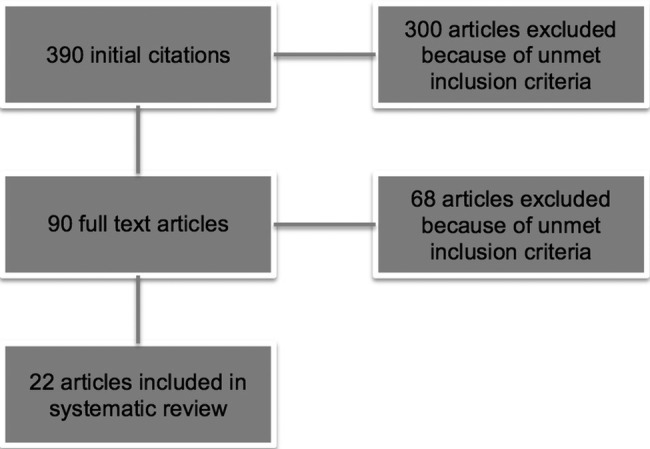
We followed the Preferred Reporting Items for Systematic Reviews and Meta-Analyses statement approach to identify the relevant studies. A meta-analysis was not performed due to the variability of the reported cost categories and varying definition of visual impairment.
A total of 22 studies were included. Hospitalisation and use of medical services around diagnosis and treatment at the onset of VI&B were the largest contributor to direct medical costs. The mean annual expenses per patient were found to be US$ purchasing power parities (PPP) 12 175-14 029 for moderate visual impairment, US$ PPP 13 154-16 321 for severe visual impairment and US$ PPP 14 882-24 180 for blindness, almost twofold the costs for non-blind patients. Informal care was the major contributor to other direct costs, with the time spent by caregivers increasing from 5.8 h/week (or US$ PPP 263) for persons with vision >20/32 up to 94.1 h/week (or US$ PPP 55 062) for persons with vision ≤20/250. VI&B caused considerable indirect costs due to productivity losses, premature mortality and dead-weight losses.
VI&B cause a considerable economic burden for affected persons, their caregivers and society at large, which increases with the degree of visual impairment. This review provides insight into the distribution of costs and the economic impact of VI&B.
由于人口老龄化,视力障碍和失明(VI&B)在所有高收入国家造成了相当大且不断增加的经济负担。因此,我们对文献进行了综述,以更好地了解与 VI&B 相关的所有相关成本,并进行多角度概述。
系统评价:两名独立审查员搜索了相关文献,并根据纳入和排除标准以及质量评估研究。
包括在 2012 年 5 月之前进行的干预性、非干预性和疾病成本研究,这些研究调查了与视力障碍和失明相关的直接和间接成本以及无形影响。
我们遵循系统评价和荟萃分析报告的首选项目声明方法来确定相关研究。由于报告的成本类别和视力障碍的不同定义存在差异,因此未进行荟萃分析。
共纳入 22 项研究。在 VI&B 诊断和治疗开始时,住院和医疗服务的使用是直接医疗费用的最大贡献者。每例患者的平均年度费用为中度视力障碍为 12175 至 14029 美元,严重视力障碍为 13154 至 16321 美元,失明为 14882 至 24180 美元,几乎是非盲患者的两倍。非正规护理是其他直接成本的主要贡献者,护理人员每周花费的时间从视力>20/32 的人每周 5.8 小时(或 PPP 263 美元)增加到视力≤20/250 的人每周 94.1 小时(或 PPP 55062 美元)。VI&B 由于生产力损失、过早死亡和净损失导致相当大的间接成本。
VI&B 给受影响者、他们的照顾者和整个社会带来了相当大的经济负担,随着视力障碍程度的增加而增加。本综述提供了对成本分布和 VI&B 经济影响的深入了解。