Emerg Infect Dis. 2013 Nov;19(11):1784-90. doi: 10.3201/eid1911.130865.
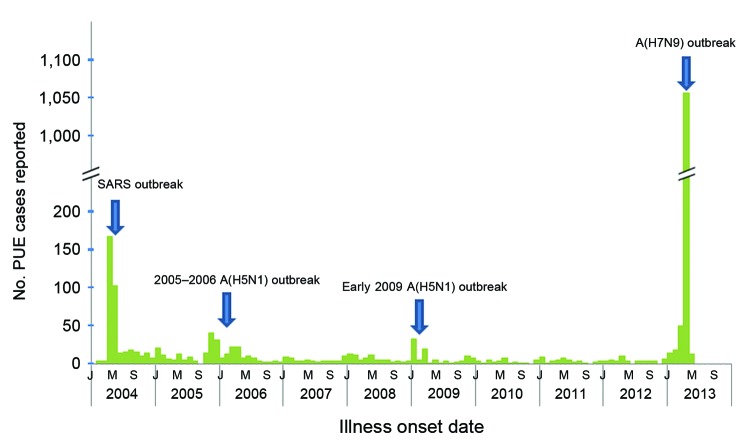
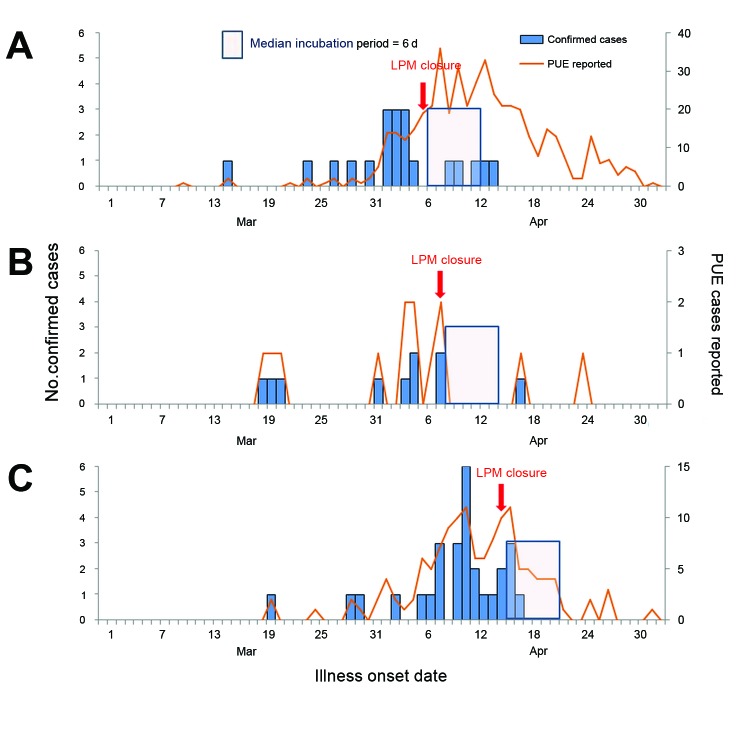
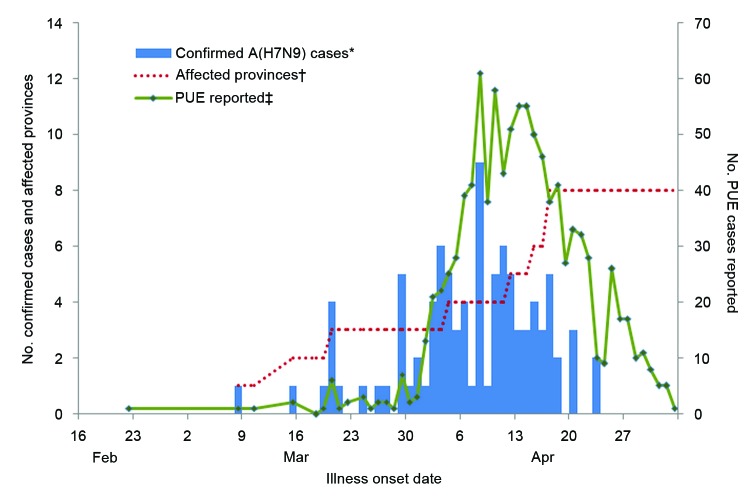
In mainland China, most avian influenza A(H7N9) cases in the spring of 2013 were reported through the pneumonia of unknown etiology (PUE) surveillance system. To understand the role of possible underreporting and surveillance bias in assessing the epidemiology of subtype H7N9 cases and the effect of live-poultry market closures, we examined all PUE cases reported from 2004 through May 3, 2013. Historically, the PUE system was underused, reporting was inconsistent, and PUE reporting was biased toward A(H7N9)-affected provinces, with sparse data from unaffected provinces; however, we found no evidence that the older ages of persons with A(H7N9) resulted from surveillance bias. The absolute number and the proportion of PUE cases confirmed to be A(H7N9) declined after live-poultry market closures (p<0.001), indicating that market closures might have positively affected outbreak control. In China, PUE surveillance needs to be improved.
在中国内地,2013 年春季大多数人感染甲型 H7N9 禽流感病例是通过不明原因肺炎(PUE)监测系统报告的。为了了解可能的漏报和监测偏倚在评估 H7N9 亚型病例的流行病学和活禽市场关闭的效果方面的作用,我们检查了 2004 年至 2013 年 5 月 3 日报告的所有 PUE 病例。从历史上看,PUE 系统使用率低,报告不一致,而且 PUE 报告偏向受 H7N9 影响的省份,不受影响的省份数据稀疏;然而,我们没有发现证据表明年龄较大的人感染 H7N9 是由于监测偏差所致。活禽市场关闭后,PUE 确诊病例的绝对数量和比例下降(p<0.001),表明市场关闭可能对疫情控制产生了积极影响。在中国,PUE 监测需要改进。