Cumberland Campus, The University of Sydney, Lidcombe, Sydney, NSW 2141, Australia.
J Ovarian Res. 2013 Nov 9;6(1):78. doi: 10.1186/1757-2215-6-78.
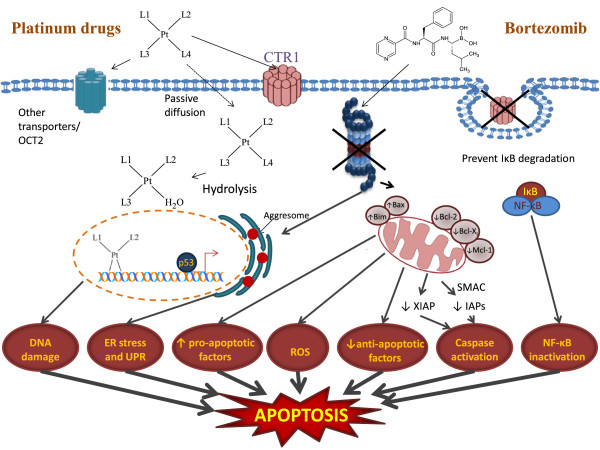
Ovarian cancer remains an on-going challenge mainly due to the development of drug resistance and also because the cancer is likely to have metastasized at the time of diagnosis. Currently, chemotherapy based on platinum drugs such as cisplatin is the primary treatment for the disease. Copper transporter 1 is involved in the transport of cisplatin into the cell, but is also down-regulated by the drug. Bortezomib, a proteasome inhibitor, has been reported to block this platinum-induced down-regulation of CTR1, so that in the presence of bortezomib, the cellular uptake of platinum drugs may be increased. Increased platinum accumulation may result in increased platinum - DNA binding so that the platinum drug in combination with bortezomib may produce enhanced cell kill.
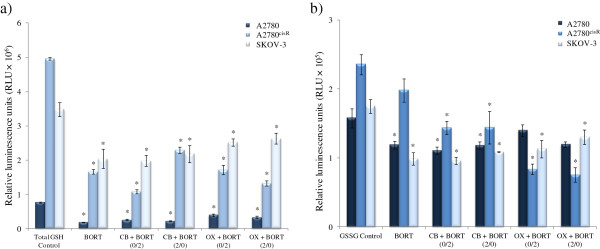
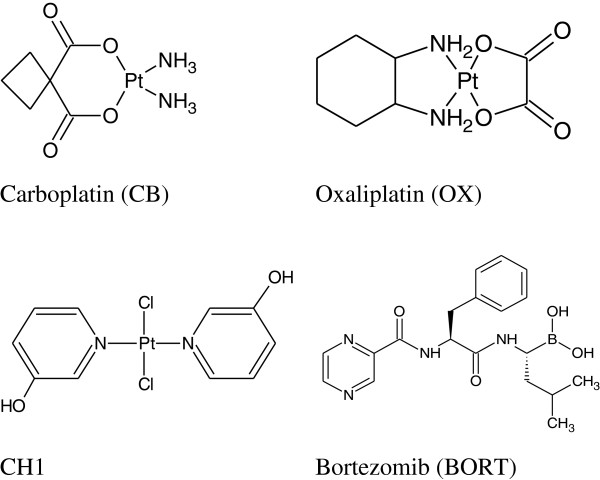
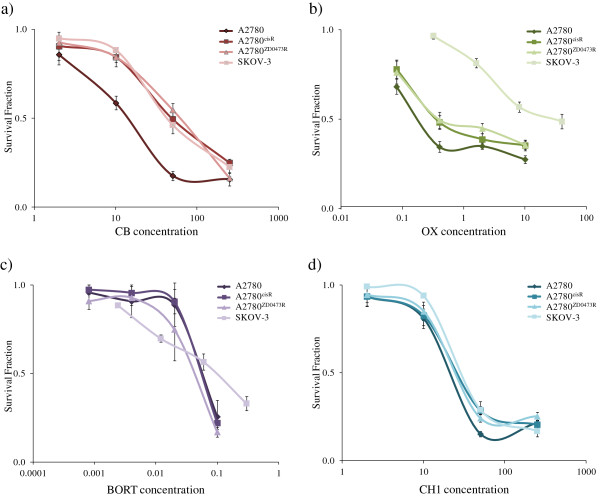
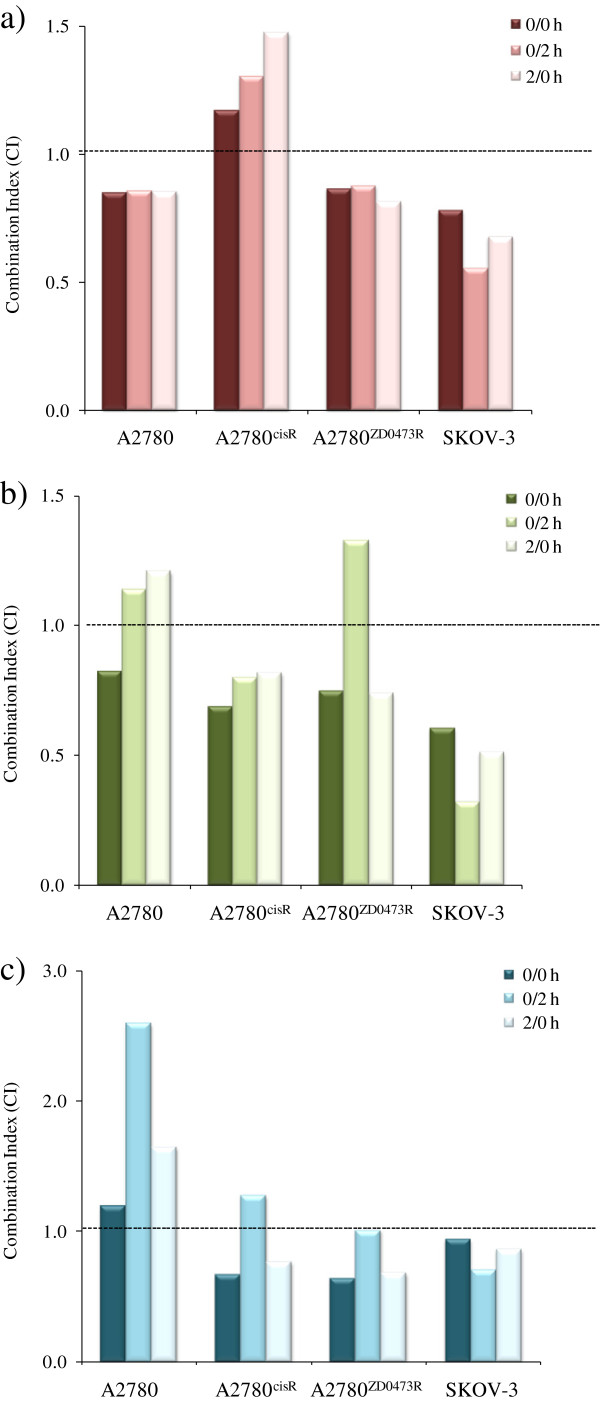
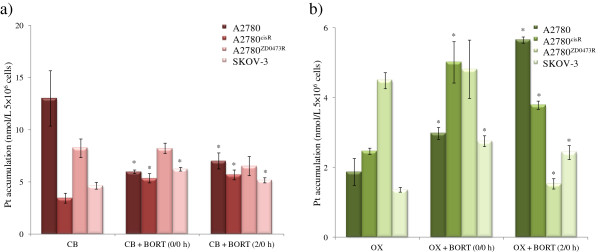
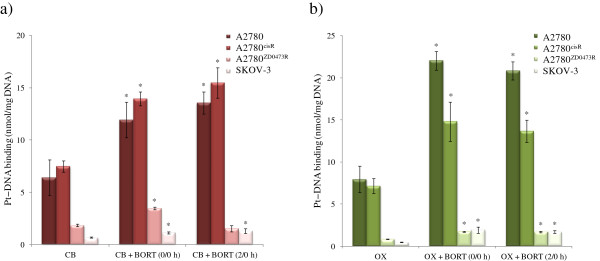
In this study the efficacy of the sequential combinations of carboplatin, oxaliplatin and a trans-platinum compound coded as CH1 with BORT on the human ovarian A2780, A2780cisR, A2780ZD0473R and SKOV-3 cancer cell lines was evaluated. The levels of cellular platinum accumulation and platinum-DNA binding were determined following the treatment with these combinations. In order to investigate the effect of the combinations of the formation of ROS, the total and oxidized glutathione levels were also determined.
Prevention of copper transporter 1 degradation by bortezomib is found to enhance the cellular accumulation of platinum, the level of Platinum - DNA binding and increases oxidative stress especially in the resistant cell lines.
The results suggest that the prevention of CTR1 degradation by bortezomib may be playing a major role in increasing the cellular uptake of platinum drugs and platinum-DNA binding level. Furthermore, the generation of oxidative stress appears to be a major contributor to the enhanced cell kill.
卵巢癌仍然是一个持续存在的挑战,主要是由于耐药性的发展,也因为癌症在诊断时可能已经转移。目前,基于顺铂等铂类药物的化疗是该病的主要治疗方法。铜转运蛋白 1 参与顺铂进入细胞的转运,但也被药物下调。蛋白酶体抑制剂硼替佐米已被报道可阻断这种铂诱导的 CTR1 下调,从而在硼替佐米存在的情况下,铂类药物的细胞摄取可能增加。增加的铂积累可能导致增加的铂-DNA 结合,从而使铂药物与硼替佐米联合使用可能产生增强的细胞杀伤。
在这项研究中,评估了顺铂、奥沙利铂和一种代号为 CH1 的反式铂化合物与硼替佐米序贯联合应用于人卵巢 A2780、A2780cisR、A2780ZD0473R 和 SKOV-3 癌细胞系的疗效。用这些组合处理后,测定细胞内铂积累和铂-DNA 结合水平。为了研究组合对 ROS 形成的影响,还测定了总谷胱甘肽和氧化型谷胱甘肽的水平。
硼替佐米抑制铜转运蛋白 1 的降解被发现可增强铂的细胞积累、铂-DNA 结合水平,并增加氧化应激,特别是在耐药细胞系中。
结果表明,硼替佐米对 CTR1 降解的抑制可能在增加铂类药物的细胞摄取和铂-DNA 结合水平方面起着重要作用。此外,氧化应激的产生似乎是增强细胞杀伤的主要原因。