Zhou Jiabei, Kang Yu, Chen Lu, Wang Hua, Liu Junqing, Zeng Su, Yu Lushan
Institute of Drug Metabolism and Pharmaceutical Analysis, College of Pharmaceutical Sciences, Zhejiang University, Hangzhou, China.
Department of Urology, Cancer Hospital of Zhejiang Province, Hangzhou, China.
Front Pharmacol. 2020 Mar 20;11:343. doi: 10.3389/fphar.2020.00343. eCollection 2020.
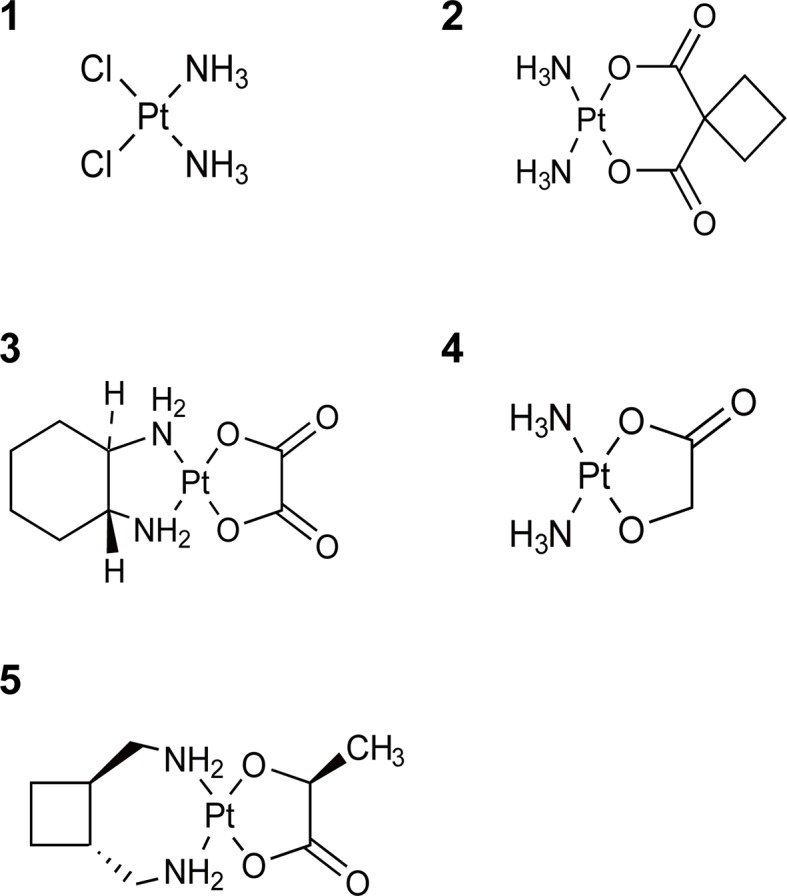
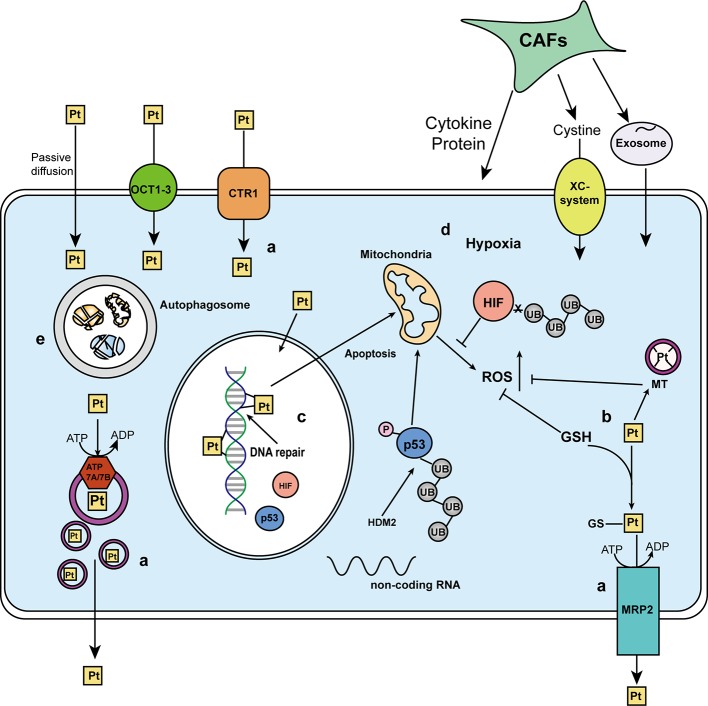
Platinum-based anticancer drugs, including cisplatin, carboplatin, oxaliplatin, nedaplatin, and lobaplatin, are heavily applied in chemotherapy regimens. However, the intrinsic or acquired resistance severely limit the clinical application of platinum-based treatment. The underlying mechanisms are incredibly complicated. Multiple transporters participate in the active transport of platinum-based antitumor agents, and the altered expression level, localization, or activity may severely decrease the cellular platinum accumulation. Detoxification components, which are commonly increasing in resistant tumor cells, can efficiently bind to platinum agents and prevent the formation of platinum-DNA adducts, but the adducts production is the determinant step for the cytotoxicity of platinum-based antitumor agents. Even if adequate adducts have formed, tumor cells still manage to survive through increased DNA repair processes or elevated apoptosis threshold. In addition, autophagy has a profound influence on platinum resistance. This review summarizes the critical participators of platinum resistance mechanisms mentioned above and highlights the most potential therapeutic targets or predicted markers. With a deeper understanding of the underlying resistance mechanisms, new solutions would be produced to extend the clinical application of platinum-based antitumor agents largely.
包括顺铂、卡铂、奥沙利铂、奈达铂和洛铂在内的铂类抗癌药物在化疗方案中被大量应用。然而,内在性或获得性耐药严重限制了铂类治疗的临床应用。其潜在机制极其复杂。多种转运蛋白参与铂类抗肿瘤药物的主动转运,而表达水平、定位或活性的改变可能会严重降低细胞内铂的蓄积。解毒成分在耐药肿瘤细胞中通常会增加,它们能有效结合铂类药物并阻止铂 - DNA加合物的形成,但加合物的产生是铂类抗肿瘤药物细胞毒性的决定性步骤。即使形成了足够的加合物,肿瘤细胞仍能通过增强DNA修复过程或提高凋亡阈值来存活。此外,自噬对铂耐药有深远影响。本综述总结了上述铂耐药机制的关键参与者,并突出了最具潜力的治疗靶点或预测标志物。随着对潜在耐药机制的更深入理解,将产生新的解决方案,以大幅扩展铂类抗肿瘤药物的临床应用。