Centre for Experimental Radiation Oncology, St George Cancer Care Centre, Gray St, Kogarah, 2217, Australia.
Cancers (Basel). 2011 Apr 1;3(2):1821-43. doi: 10.3390/cancers3021821.
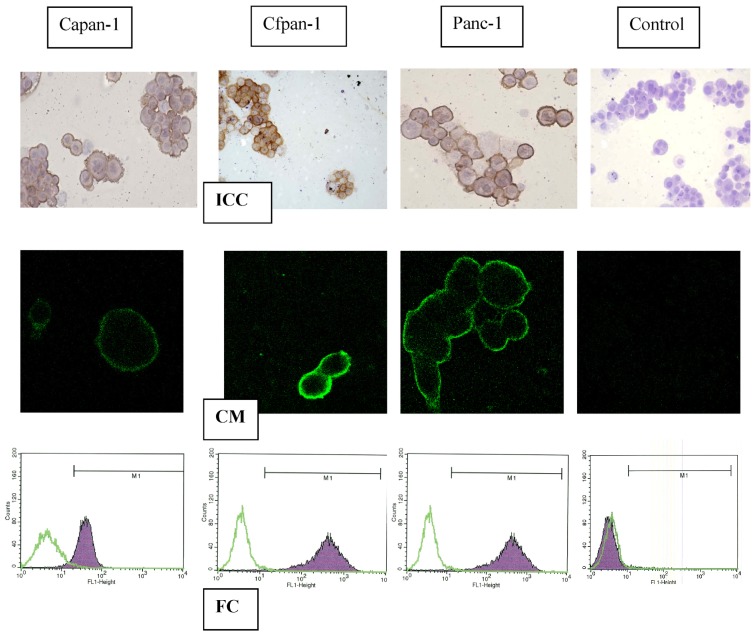
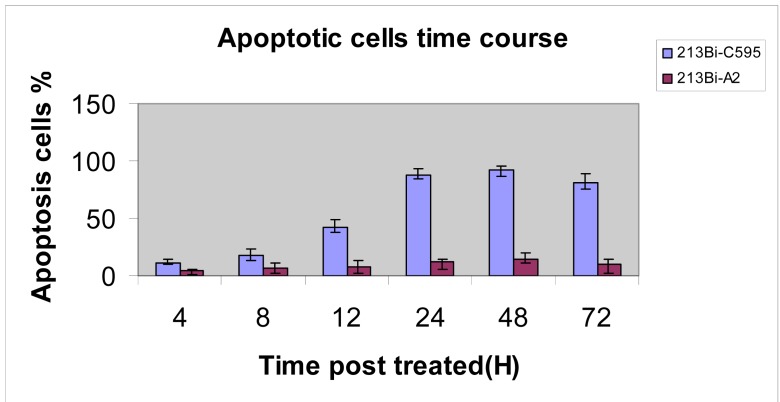
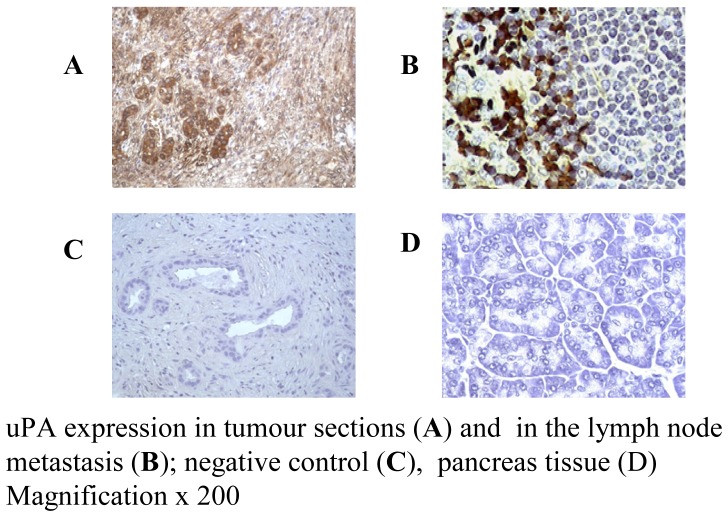
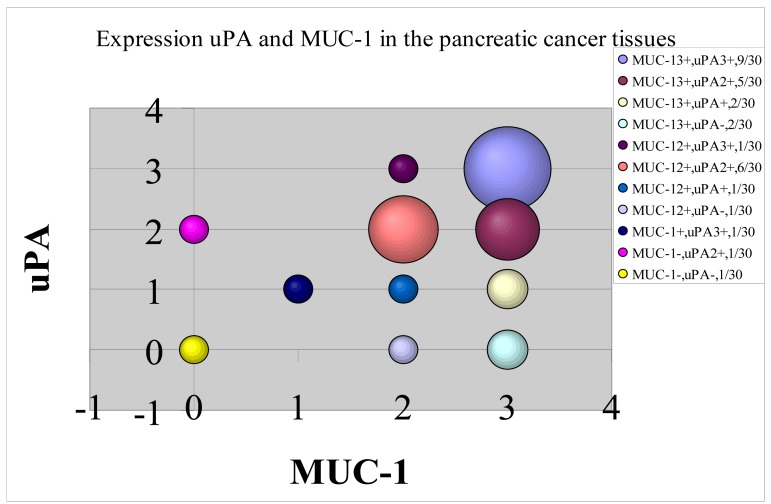
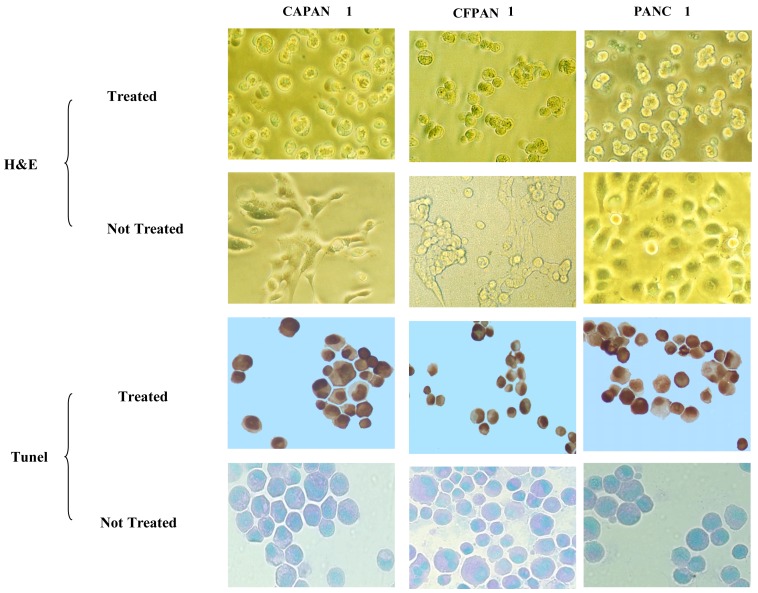
Evidence for the efficacy of targeted alpha therapy for the control of pancreatic cancer in preclinical models is reviewed. Results are given for in vitro pancreatic cancer cells and clusters and micro-metastatic cancer lesions in vivo. Two complementary targeting vectors are examined. These are the C595 monoclonal antibody that targets the MUC1 antigen and the PAI2 ligand that targets the uPA receptor. The expression of the tumor-associated antigen MUC-1 and the uPA receptor on three pancreatic cancer cell lines is reported for cell clusters, human mouse xenografts and lymph node metastases, as well as for human pancreatic cancer tissues, using immuno-histochemistry, confocal microscopy and flow cytometry. The targeting vectors C595 and PAI2 were labeled with the alpha emitting radioisotope 213Bi using the chelators cDTPA and CHX-A″ to form the alpha-conjugates (AC). Cell clusters were incubated with the AC and examined at 48 hours. Apoptosis was documented using the TUNEL assay. In vivo, the anti-proliferative effect for tumors was tested at two days post-subcutaneous cell inoculation. Mice were injected with different concentrations of AC by local or systemic administration. Changes in tumor progression were assessed by tumor size. MUC-1 and uPA are strongly expressed on CFPAC-1, PANC-1 and moderate expression was found CAPAN-1 cell clusters and tumor xenografts. The ACs can target pancreatic cells and regress cell clusters (~100 µm diameter), causing apoptosis in some 70-90 % of cells. At two days post-cell inoculation in mice, a single local injection of 74 MBq/kg of AC causes complete inhibition of tumor growth. Systemic injections of 111, 222 and 333 MBq/kg of alpha-conjugate caused significant tumor growth delay in a dose dependent manner after 16 weeks, compared with the non-specific control at 333 MBq/kg. Cytotoxicity was assessed by the MTS and TUNEL assays. The C595 and PAI2-alpha conjugates are indicated for the treatment of micro-metastatic pancreatic cancer with over-expression of MUC1 and uPA receptors in post-surgical patients with minimal residual disease. The observation of tumor regression in a Phase I clinical trial of targeted alpha therapy for metastatic melanoma indicates that alpha therapy can regress tumors by a process called tumor anti-vascular alpha therapy (TAVAT). As a consequence, this therapy could be indicated for the management of non-surgical pancreatic cancer tumors.
本文回顾了靶向 alpha 治疗在临床前模型中控制胰腺癌的疗效证据。结果来自体外胰腺癌细胞和细胞簇以及体内微转移癌病变。研究了两种互补的靶向载体,即靶向 MUC1 抗原的 C595 单克隆抗体和靶向 uPA 受体的 PAI2 配体。使用免疫组织化学、共聚焦显微镜和流式细胞术报告了三种胰腺癌细胞系的肿瘤相关抗原 MUC-1 和 uPA 受体在细胞簇、人鼠异种移植物和淋巴结转移以及人胰腺癌细胞组织中的表达。使用螯合剂 cDTPA 和 CHX-A"将放射性同位素 213Bi 标记到靶向载体 C595 和 PAI2 上,形成 alpha 缀合物 (AC)。将 AC 孵育细胞簇 48 小时,并用 TUNEL 检测凋亡。在体内,在皮下细胞接种后两天测试肿瘤的抗增殖作用。通过局部或全身给药向小鼠注射不同浓度的 AC。通过肿瘤大小评估肿瘤进展的变化。CFPAC-1、PANC-1 和 CAPAN-1 细胞簇和肿瘤异种移植物中强烈表达 MUC-1 和 uPA,而中等表达。AC 可以靶向胰腺细胞并使细胞簇退化(~100 µm 直径),导致约 70-90%的细胞凋亡。在小鼠接种细胞后两天,单次局部注射 74 MBq/kg 的 AC 可完全抑制肿瘤生长。在 16 周后,与非特异性对照(333 MBq/kg)相比,系统注射 111、222 和 333 MBq/kg 的 alpha 缀合物可导致肿瘤生长明显延迟。通过 MTS 和 TUNEL 检测评估细胞毒性。C595 和 PAI2-alpha 缀合物适用于治疗手术后有微小残留疾病的患者中过度表达 MUC1 和 uPA 受体的微转移胰腺癌。在转移性黑色素瘤的靶向 alpha 治疗的 I 期临床试验中观察到肿瘤消退表明 alpha 治疗可以通过一种称为肿瘤抗血管 alpha 治疗(TAVAT)的过程使肿瘤消退。因此,这种治疗方法可用于非手术胰腺癌的治疗。