Li Shu-Na, Yu Wei, Lai Clare Tik-Man, Wong Sophia J, Cheung Yiu-Fai
Division of Paediatric Cardiology, Department of Paediatrics and Adolescent Medicine, Queen Mary Hospital, The University of Hong Kong, Hong Kong, China.
PLoS One. 2013 Nov 6;8(11):e78826. doi: 10.1371/journal.pone.0078826. eCollection 2013.
Altered septal curvature and left ventricular (LV) geometry secondary to right ventricular (RV) dilation render two-dimensional assessment of LV mechanics difficult in repaired tetralogy of Fallot (TOF) patients. The novel three-dimensional (3D) speckle tracking echocardiography enables comprehensive evaluation of true 3D LV mechanics.
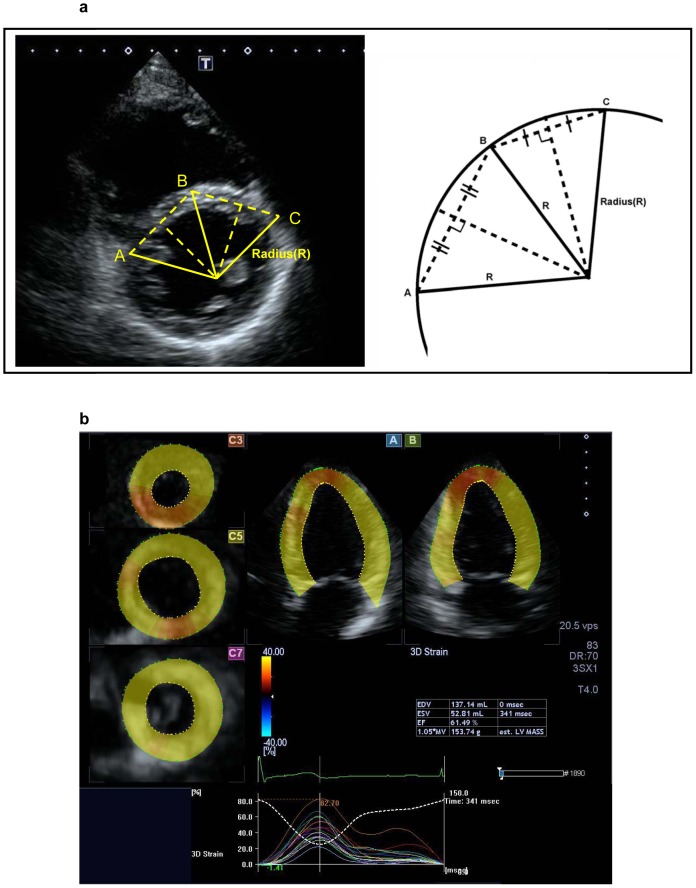
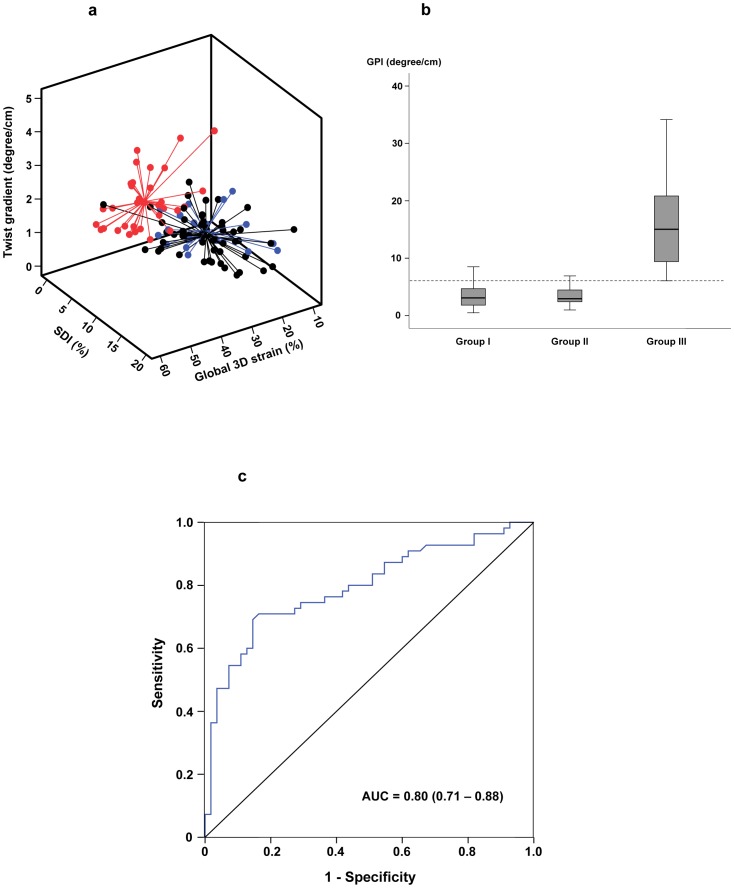
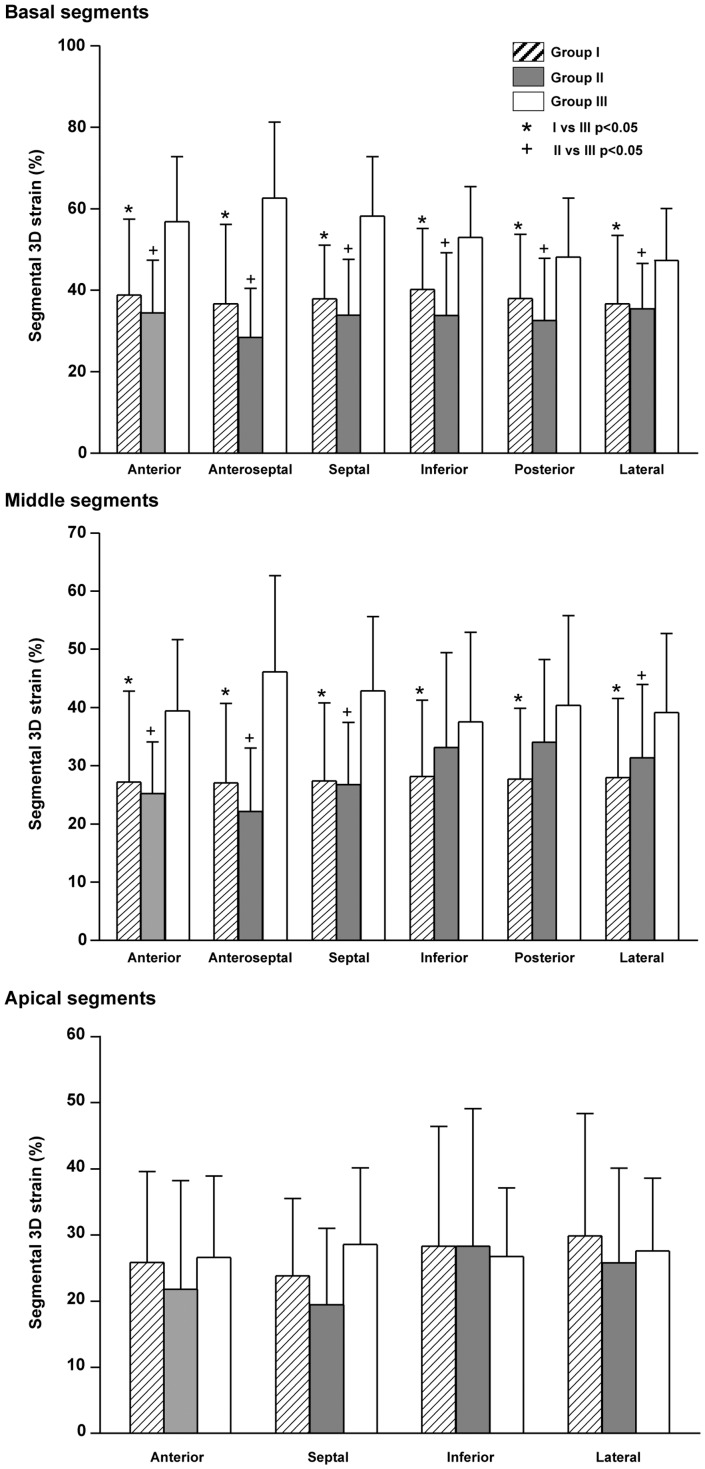
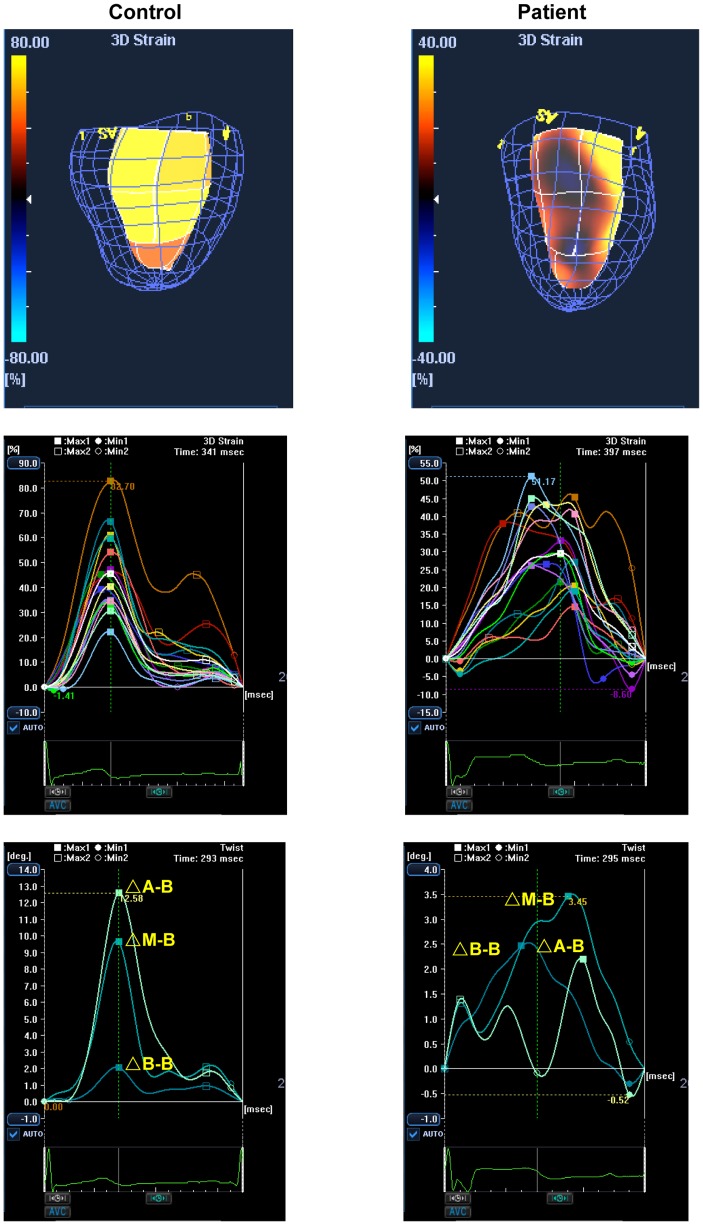
Seventy-six patients aged 23.6 ± 8.3 years, 55 with isolated repair (group I) and 21 with subsequent pulmonary valve replacement (group II), and 34 healthy controls were studied. Three-dimensional volume datasets were acquired for assessment of LV global and regional 3D strain, systolic dyssynchrony index (SDI), twist, twist gradient (twist/LV length), and ejection fraction. A global performance index was calculated as (global 3D strain•twist gradient)/SDI. The septal curvature and LV eccentricity were determined from the mid-ventricular short-axis. Compared with controls, group I and II patients had significantly reduced LV global 3D strain, LV twist, twist gradient, septal curvature, and global performance index, and greater LV systolic and diastolic eccentricity and SDI (all p<0.05). All but the four apical LV segments in patients had reduced regional 3D strain compared with controls (all p<0.05). Septal curvature correlated with LV global 3D strain (r=0.41, p<0.001), average septal strain (r=0.38, p<0.001), twist (r=0.32, p<0.001), twist gradient (r=0.33, p<0.001), and global performance index (r=0.43, p<0.001).
Adverse 3D LV mechanics as characterized by impaired global and regional 3D systolic strain, mechanical dyssynchrony, and reduced twist is related to reduced septal curvature in repaired TOF patients with and without pulmonary valve replacement.
继发于右心室扩张的中隔曲率改变和左心室(LV)几何形态变化,使得法洛四联症(TOF)修复术后患者左心室力学的二维评估变得困难。新型三维(3D)斑点追踪超声心动图能够全面评估真正的三维左心室力学。
研究了76例年龄为23.6±8.3岁的患者,其中55例为单纯修复(I组),21例为随后进行了肺动脉瓣置换(II组),并纳入34名健康对照者。采集三维容积数据集以评估左心室整体和局部的三维应变、收缩不同步指数(SDI)、扭转、扭转梯度(扭转/左心室长度)和射血分数。计算整体性能指数为(整体三维应变•扭转梯度)/SDI。从中心室短轴确定中隔曲率和左心室偏心度。与对照组相比,I组和II组患者的左心室整体三维应变、左心室扭转、扭转梯度、中隔曲率和整体性能指数显著降低,左心室收缩期和舒张期偏心度及SDI更大(均p<0.05)。与对照组相比,患者除四个心尖左心室节段外,其余局部三维应变均降低(均p<0.05)。中隔曲率与左心室整体三维应变(r=0.41,p<0.001)、平均中隔应变(r=0.38,p<0.001)、扭转(r=0.32,p<0.001)、扭转梯度(r=0.33,p<0.001)和整体性能指数(r=0.43,p<0.001)相关。
在有或没有肺动脉瓣置换的TOF修复术后患者中,以整体和局部三维收缩应变受损、机械不同步和扭转减少为特征的不良三维左心室力学与中隔曲率降低有关。