Department of Psychology and Neuroscience, University of Colorado, Boulder, Colorado, United States of America.
PLoS One. 2013 Nov 4;8(11):e78258. doi: 10.1371/journal.pone.0078258. eCollection 2013.
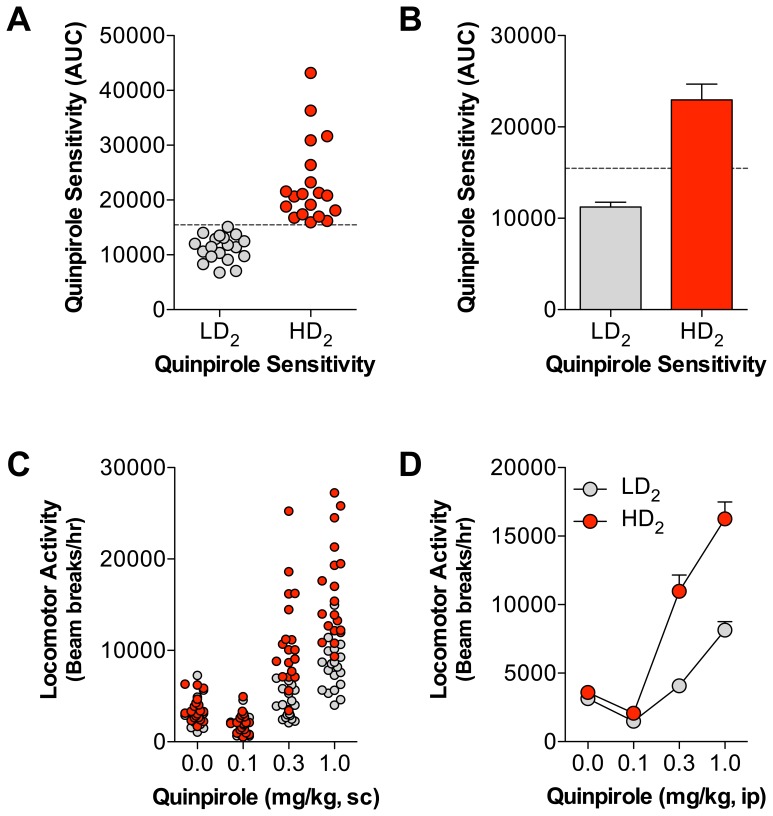
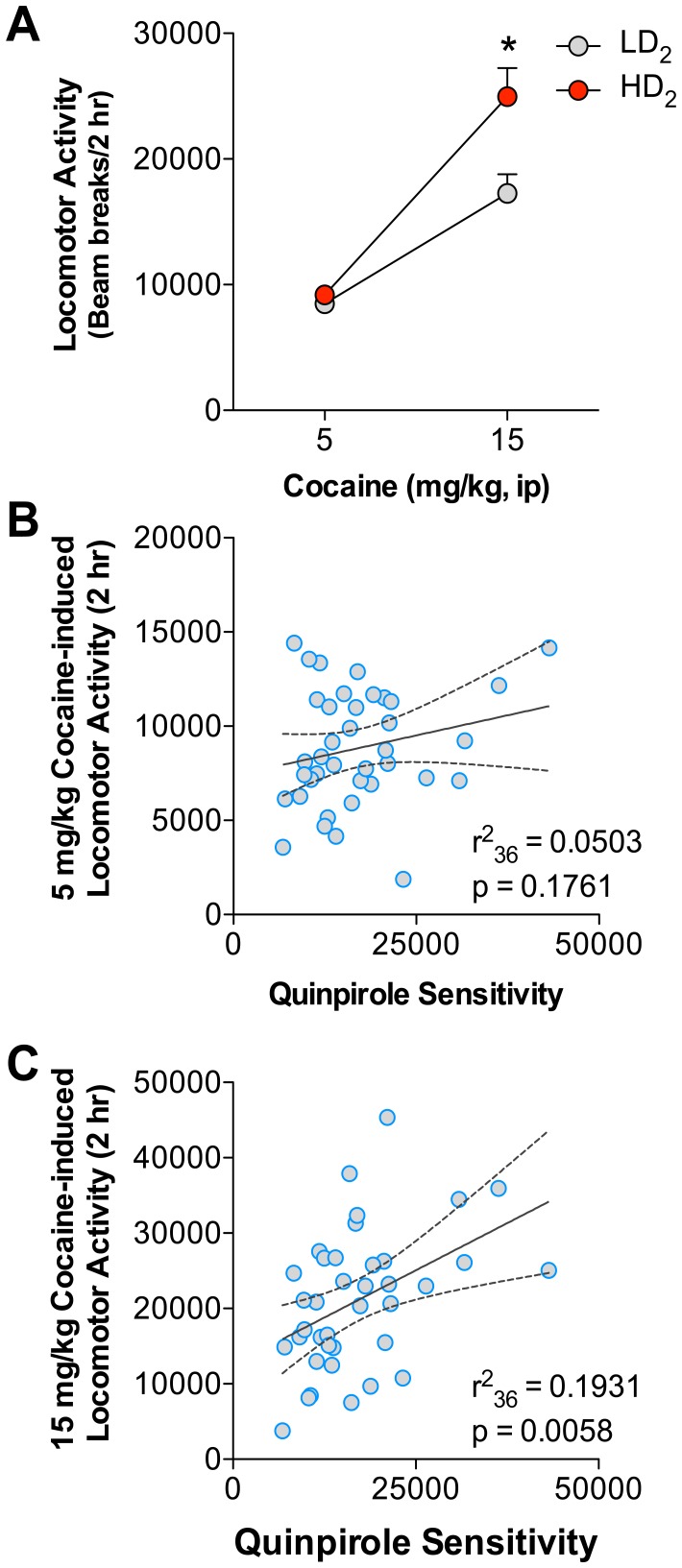
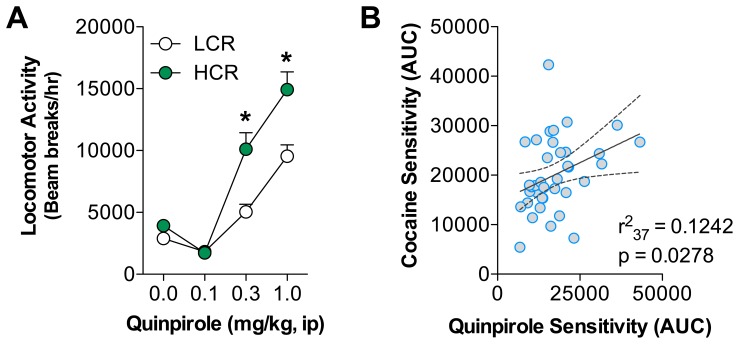
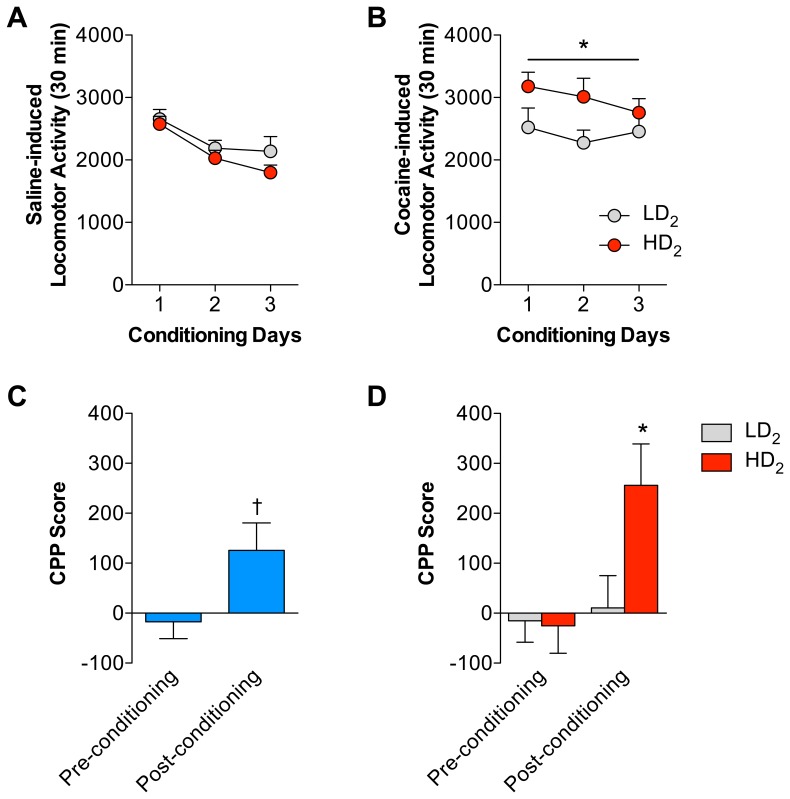
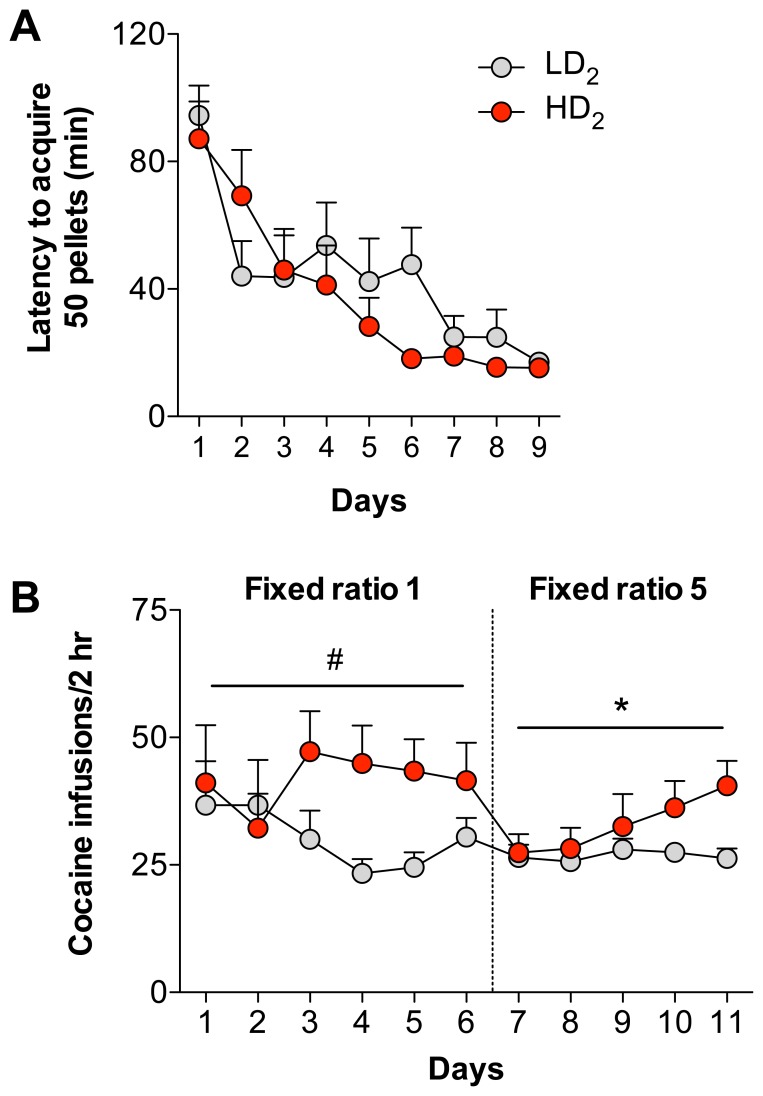
The activation of dopamine receptors within the mesolimbic dopamine system is known to be involved in the initiation and maintenance of cocaine use. Expression of the D2 dopamine receptor subtype has been implicated as both a predisposing factor and consequence of chronic cocaine use. It is unclear whether there is a predictive relationship between D2 dopamine receptor function and cocaine sensitivity that would enable cocaine abuse. Therefore, we exploited individual differences in behavioral responses to D2 dopamine receptor stimulation to test its relationship with cocaine-mediated behaviors. Outbred, male Sprague-Dawley rats were initially characterized by their locomotor responsiveness to the D2 dopamine receptor agonist, quinpirole, in a within-session ascending dose-response regimen (0, 0.1, 0.3 & 1.0 mg/kg, sc). Rats were classified as high or low quinpirole responders (HD2 and LD2, respectively) by a median split of their quinpirole-induced locomotor activity. Rats were subsequently tested for differences in the psychostimulant effects of cocaine by measuring changes in cocaine-induced locomotor activity (5 and 15 mg/kg, ip). Rats were also tested for differences in the development of conditioned place preference to a low dose of cocaine (7.5 mg/kg, ip) that does not reliably produce a cocaine conditioned place preference. Finally, rats were tested for acquisition of cocaine self-administration and maintenance responding on fixed ratio 1 and 5 schedules of reinforcement, respectively. Results demonstrate that HD2 rats have enhanced sensitivity to the locomotor stimulating properties of cocaine, display greater cocaine conditioned place preference, and self-administer more cocaine compared to LD2 animals. These findings suggest that individual differences in D2 dopamine receptor sensitivity may be predictive of cocaine sensitivity and reward.
中脑边缘多巴胺系统中的多巴胺受体的激活被认为与可卡因使用的开始和维持有关。D2 多巴胺受体亚型的表达被认为既是慢性可卡因使用的一个倾向因素,也是其结果。目前尚不清楚 D2 多巴胺受体功能与可卡因敏感性之间是否存在预测关系,这种关系是否能够导致可卡因滥用。因此,我们利用个体对 D2 多巴胺受体刺激的行为反应差异来测试其与可卡因介导的行为之间的关系。通过在一个单次会话的递增剂量反应方案(0、0.1、0.3 和 1.0mg/kg,sc)中测量 D2 多巴胺受体激动剂喹吡罗对其运动反应的初始特征,对雄性 Sprague-Dawley 大鼠进行了分类。根据喹吡罗诱导的运动活动的中位数分割,将大鼠分为高或低喹吡罗反应者(HD2 和 LD2)。随后通过测量可卡因诱导的运动活动(5 和 15mg/kg,ip)的变化来测试大鼠对可卡因的精神兴奋剂作用的差异。大鼠还被测试了对低剂量可卡因(7.5mg/kg,ip)的条件性位置偏好的差异,该剂量不能可靠地产生可卡因条件性位置偏好。最后,通过测试大鼠对可卡因自我给药的获得和固定比率 1 和 5 的强化维持反应,来测试它们的差异。结果表明,HD2 大鼠对可卡因的运动刺激特性更敏感,对可卡因的条件性位置偏好更大,并且与 LD2 动物相比,自我给药的可卡因更多。这些发现表明,D2 多巴胺受体敏感性的个体差异可能是可卡因敏感性和奖励的预测因素。