Department of Biomedical Sciences, University of Illinois College of Medicine, Rockford, Illinois, United States.
PLoS One. 2013 Nov 4;8(11):e78398. doi: 10.1371/journal.pone.0078398. eCollection 2013.
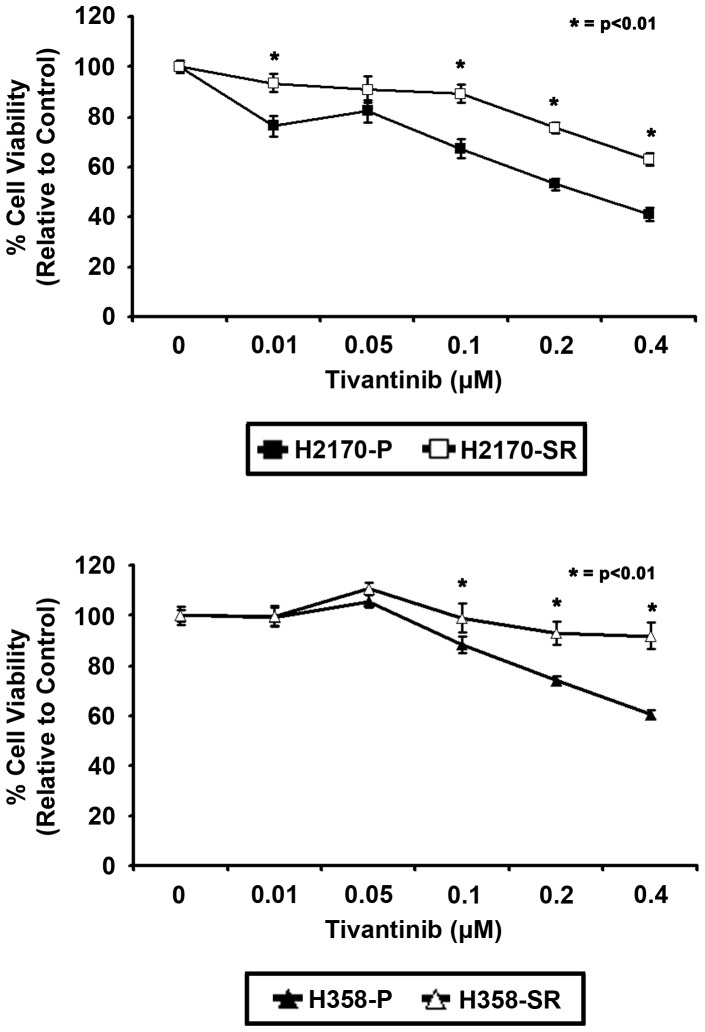
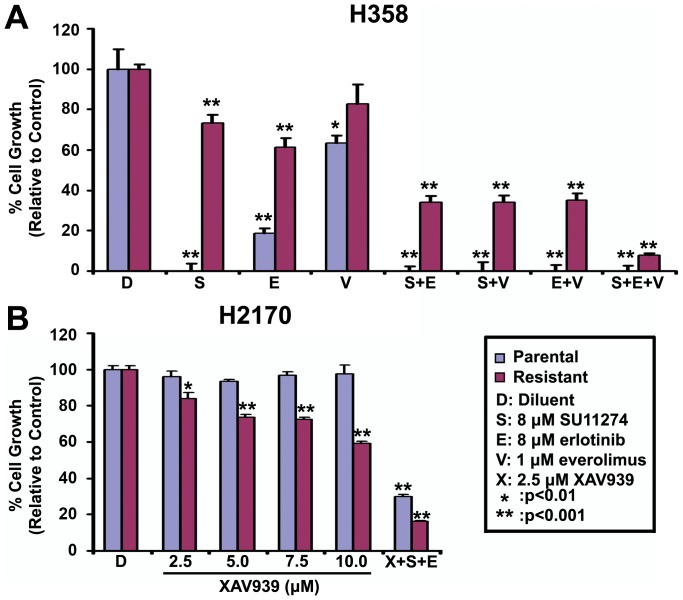
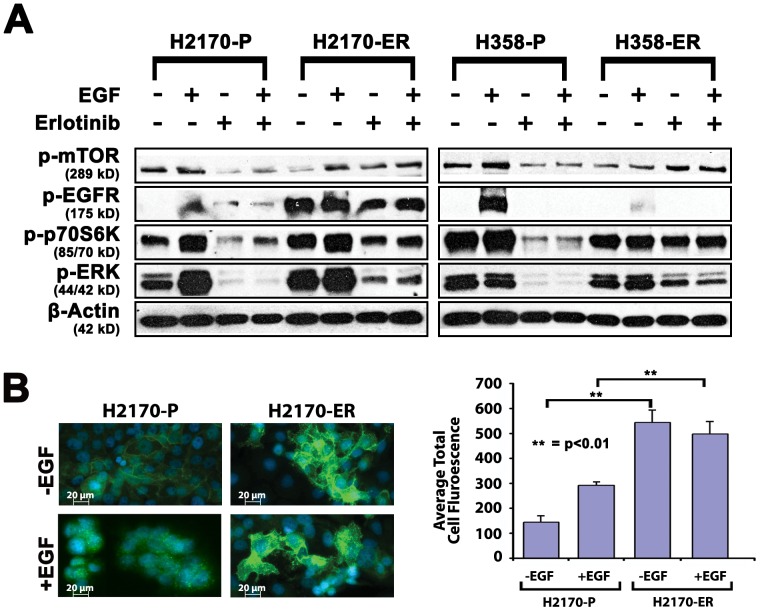
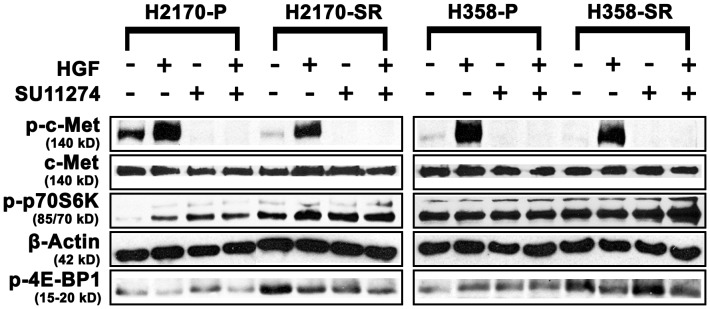
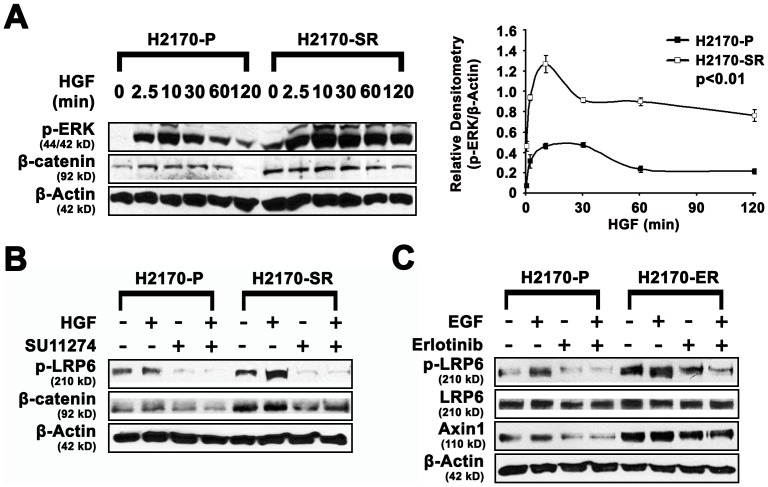
The use of tyrosine kinase inhibitors (TKIs) against EGFR/c-Met in non-small cell lung cancer (NSCLC) has been shown to be effective in increasing patient progression free survival (PFS), but their efficacy is limited due to the development of resistance and tumor recurrence. Therefore, understanding the molecular mechanisms underlying development of drug resistance in NSCLC is necessary for developing novel and effective therapeutic approaches to improve patient outcome. This study aims to understand the mechanism of EGFR/c-Met tyrosine kinase inhibitor (TKI) resistance in NSCLC. H2170 and H358 cell lines were made resistant to SU11274, a c-Met inhibitor, and erlotinib, an EGFR inhibitor, through step-wise increases in TKI exposure. The IC50 concentrations of resistant lines exhibited a 4-5 and 11-22-fold increase for SU11274 and erlotinib, respectively, when compared to parental lines. Furthermore, mTOR and Wnt signaling was studied in both cell lines to determine their roles in mediating TKI resistance. We observed a 2-4-fold upregulation of mTOR signaling proteins and a 2- to 8-fold upregulation of Wnt signaling proteins in H2170 erlotinib and SU11274 resistant cells. H2170 and H358 cells were further treated with the mTOR inhibitor everolimus and the Wnt inhibitor XAV939. H358 resistant cells were inhibited by 95% by a triple combination of everolimus, erlotinib and SU11274 in comparison to 34% by a double combination of these drugs. Parental H2170 cells displayed no sensitivity to XAV939, while resistant cells were significantly inhibited (39%) by XAV939 as a single agent, as well as in combination with SU11274 and erlotinib. Similar results were obtained with H358 resistant cells. This study suggests a novel molecular mechanism of drug resistance in lung cancer.
本研究旨在探讨非小细胞肺癌(NSCLC)中表皮生长因子受体(EGFR)/c-Met 酪氨酸激酶抑制剂(TKI)耐药的机制。通过逐步增加 TKI 暴露,使 H2170 和 H358 细胞系对 c-Met 抑制剂 SU11274 和 EGFR 抑制剂厄洛替尼产生耐药性。与亲本细胞系相比,耐药细胞系的 SU11274 和厄洛替尼的 IC50 浓度分别增加了 4-5 倍和 11-22 倍。此外,还研究了两条细胞系中的 mTOR 和 Wnt 信号通路,以确定它们在介导 TKI 耐药中的作用。我们观察到 H2170 厄洛替尼和 SU11274 耐药细胞中 mTOR 信号蛋白上调了 2-4 倍,Wnt 信号蛋白上调了 2-8 倍。进一步用 mTOR 抑制剂依维莫司和 Wnt 抑制剂 XAV939 处理 H2170 和 H358 细胞。与这些药物的双重组合相比,H358 耐药细胞的三重组合(依维莫司、厄洛替尼和 SU11274)抑制率为 95%,而双重组合为 34%。亲本 H2170 细胞对 XAV939 无敏感性,而耐药细胞对 XAV939 单药治疗(39%)以及与 SU11274 和厄洛替尼联合治疗均有明显抑制作用。H358 耐药细胞也得到了类似的结果。本研究提出了一种肺癌耐药的新分子机制。