Departamento de Paleontología, Facultad de Ciencias Geológicas, Universidad Complutense de Madrid, Madrid, Spain.
PLoS One. 2013 Nov 13;8(11):e79080. doi: 10.1371/journal.pone.0079080. eCollection 2013.
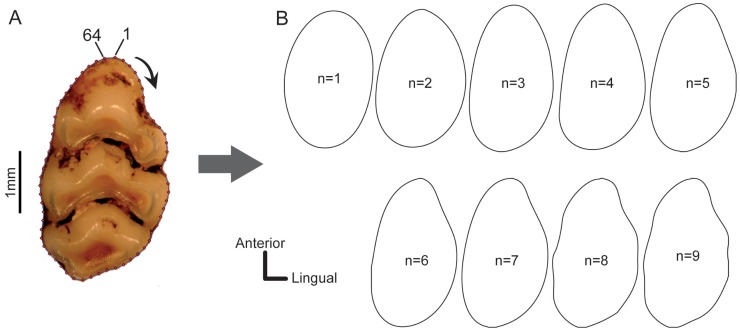
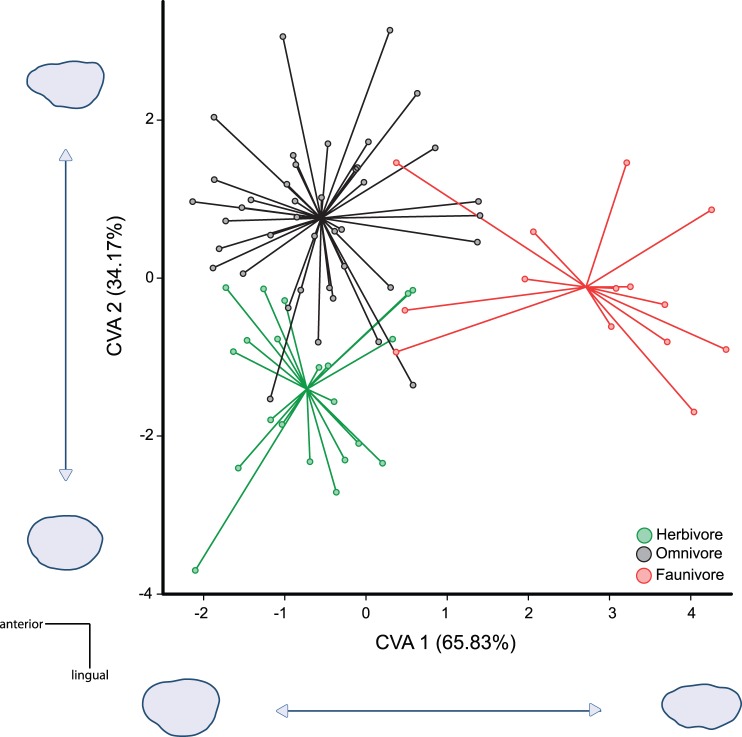
Murine rodents represent a highly diverse group, which displays great ecological versatility. In the present paper we analyse the relationship between dental morphology, on one hand, using geometric morphometrics based upon the outline of first upper molar and the dietary preference of extant murine genera, on the other. This ecomorphological study of extant murine rodents demonstrates that dietary groups can be distinguished with the use of a quantitative geometric morphometric approach based on first upper molar outline. A discriminant analysis of the geometric morphometric variables of the first upper molars enables us to infer the dietary preferences of extinct murine genera from the Iberian Peninsula. Most of the extinct genera were omnivore; only Stephanomys showed a pattern of dental morphology alike that of the herbivore genera.
鼠形亚目动物是一个高度多样化的群体,表现出极大的生态多样性。在本文中,我们分析了一方面基于第一上臼齿轮廓的几何形态测量学和另一方面现存鼠形目属的饮食偏好之间的关系。对现存鼠形目啮齿动物的这种生态形态学研究表明,基于第一上臼齿轮廓的定量几何形态测量方法可以区分饮食群体。对第一上臼齿的几何形态变量的判别分析使我们能够从伊比利亚半岛推断出已灭绝鼠形目属的饮食偏好。大多数已灭绝的属是杂食动物;只有斯蒂芬鼠表现出与草食性属相似的牙齿形态模式。