Roy M. Huffington Department of Earth Sciences, Southern Methodist University, Dallas, Texas, United States of America ; Peabody Museum and Department of Human Evolutionary Biology, Harvard University, Cambridge, Massachusetts, United States of America.
PLoS One. 2013 Oct 14;8(10):e76070. doi: 10.1371/journal.pone.0076070. eCollection 2013.
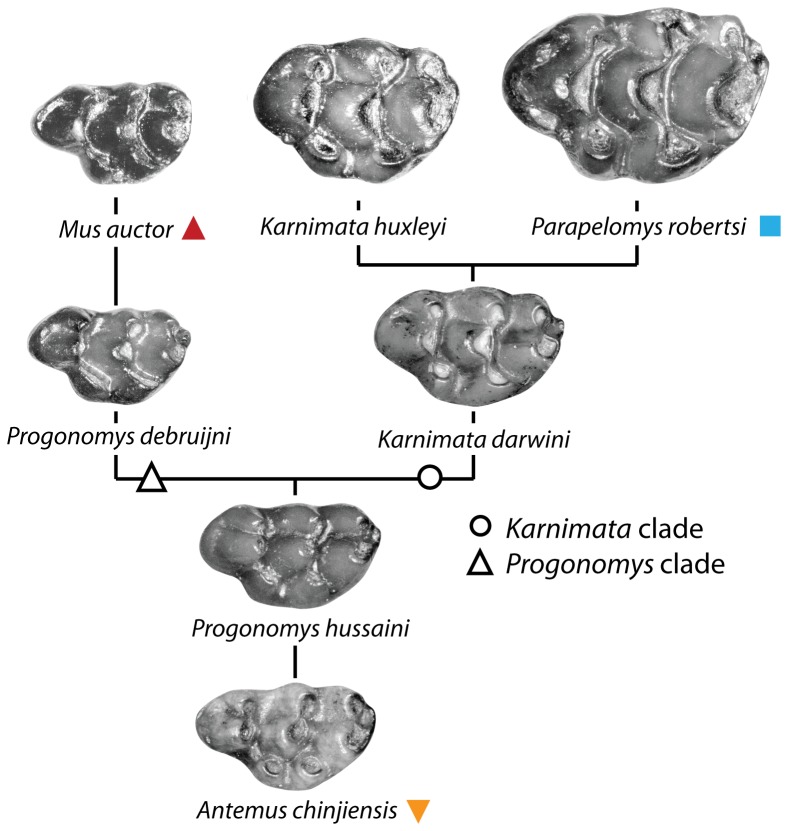
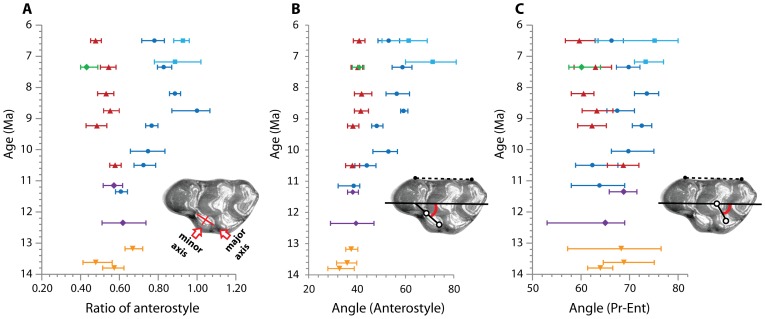
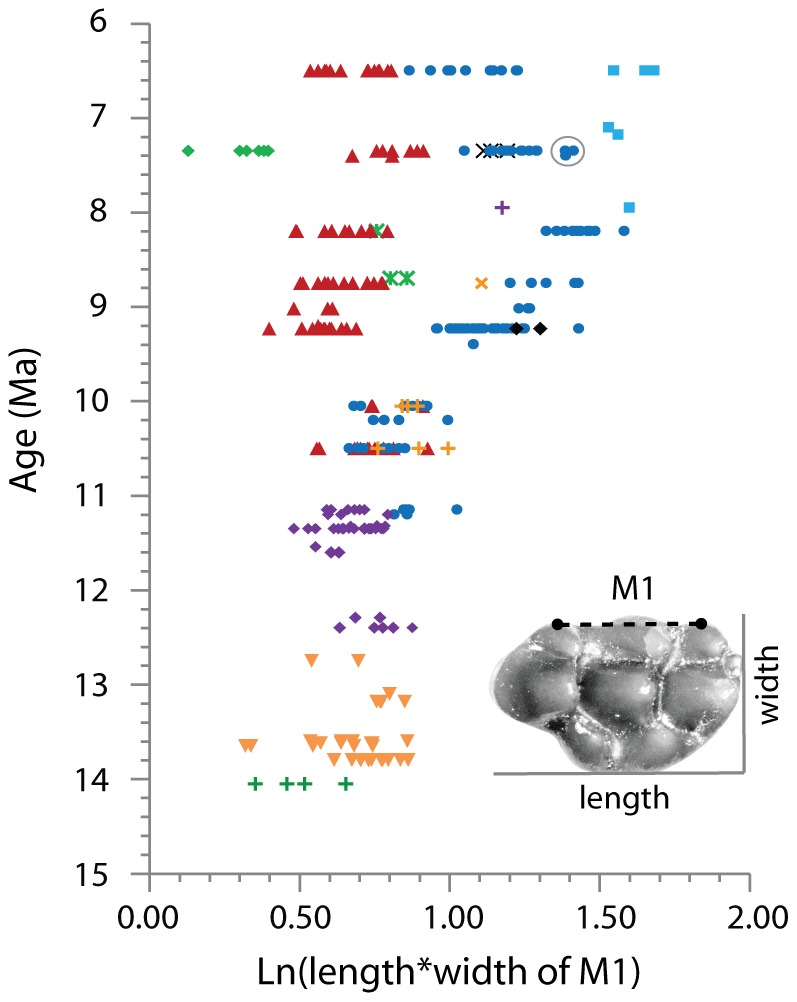
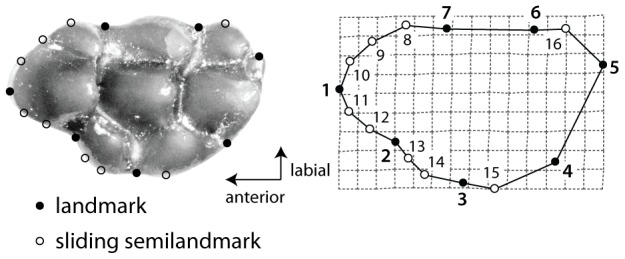
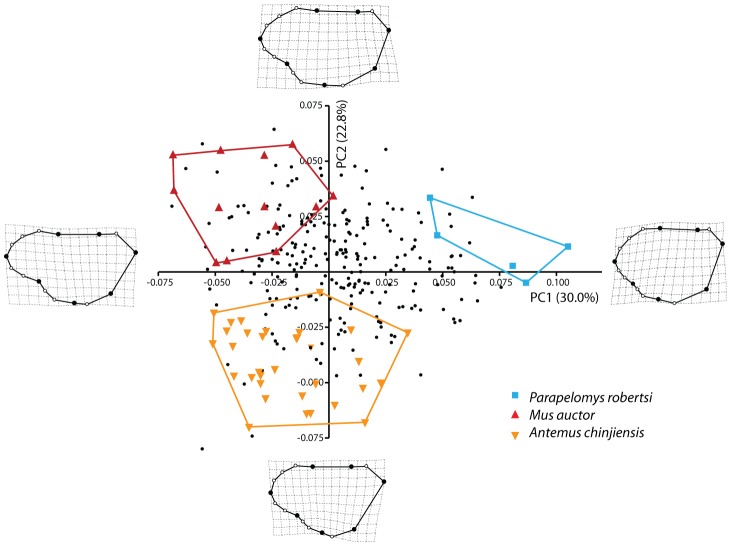
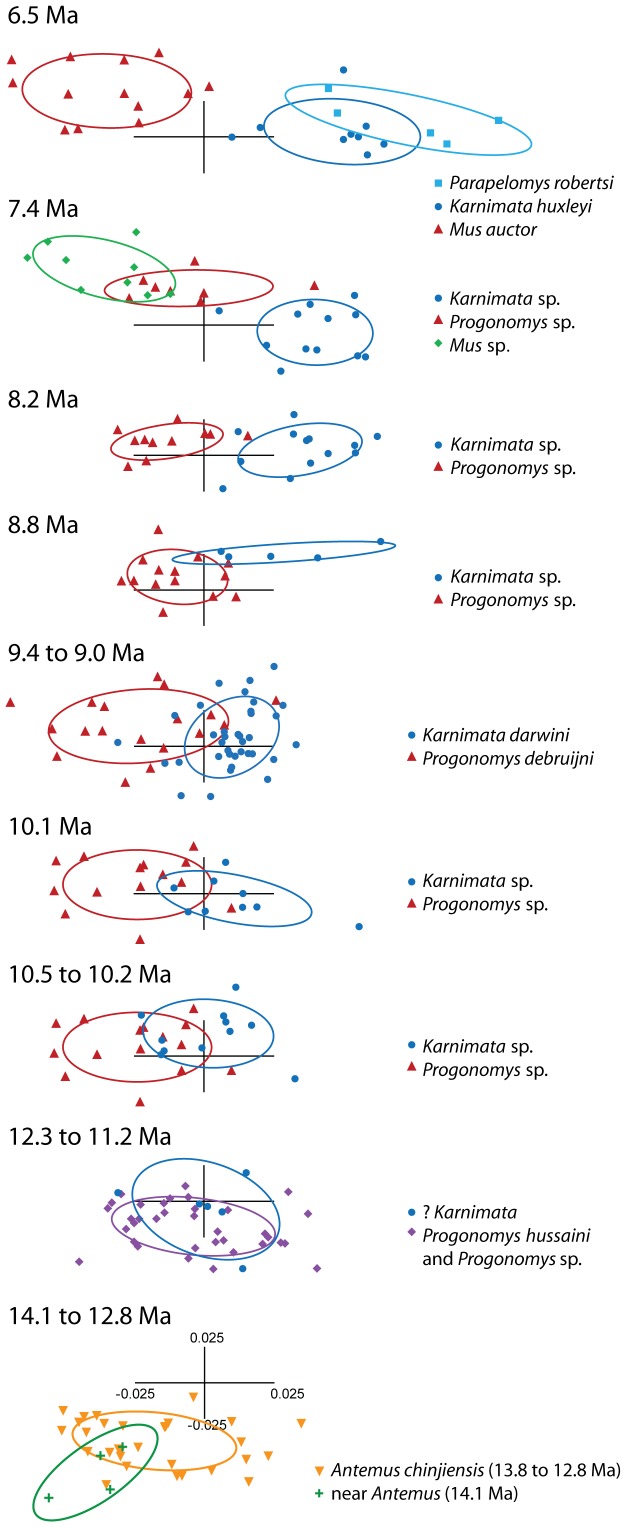
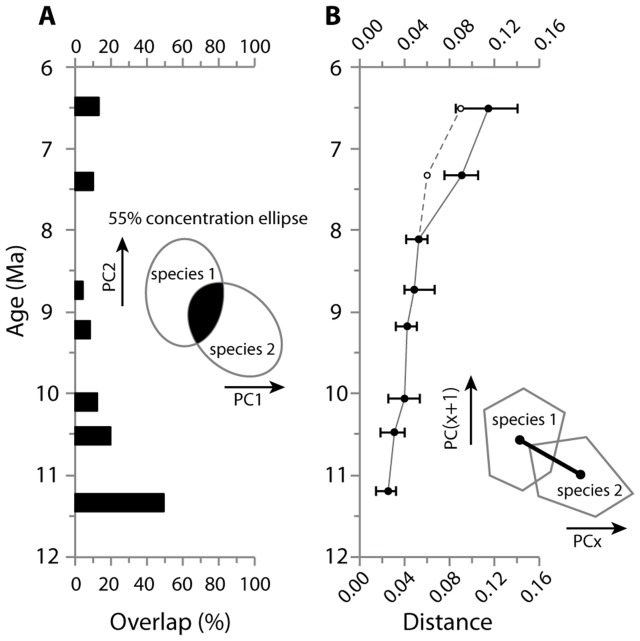
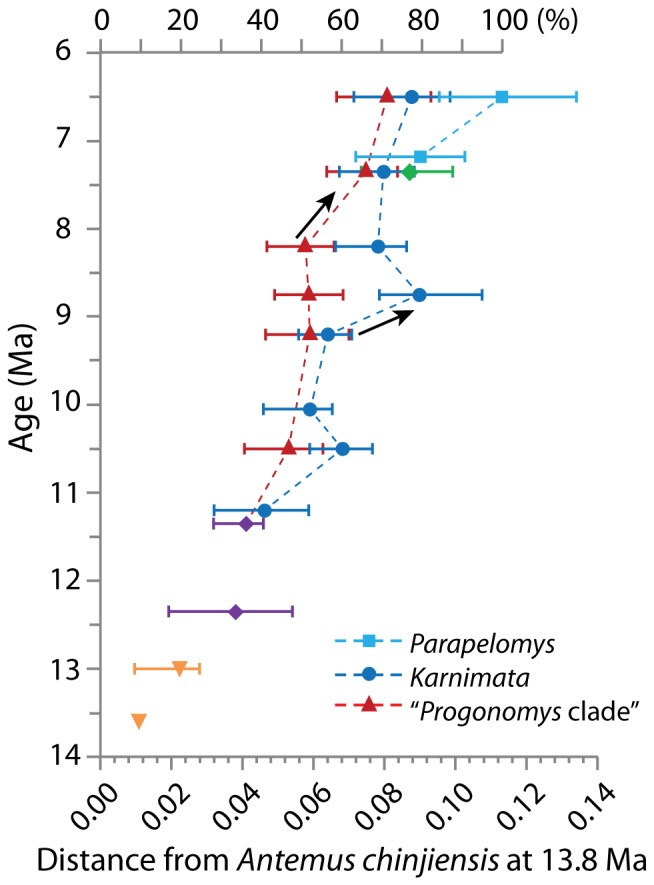
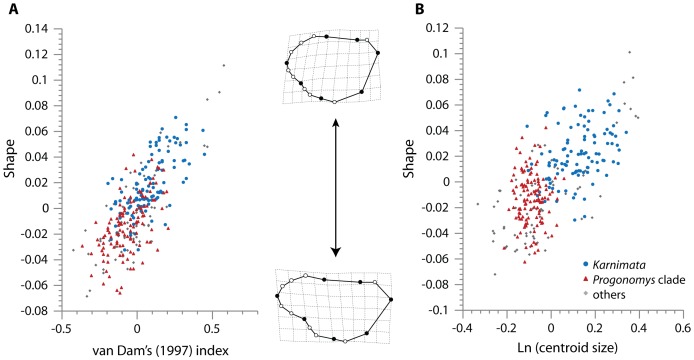
Past ecological responses of mammals to climate change are recognized in the fossil record by adaptive significance of morphological variations. To understand the role of dietary behavior on functional adaptations of dental morphology in rodent evolution, we examine evolutionary change of tooth shape in late Miocene Siwalik murine rodents, which experienced a dietary shift toward C4 diets during late Miocene ecological change indicated by carbon isotopic evidence. Geometric morphometric analysis in the outline of upper first molars captures dichotomous lineages of Siwalik murines, in agreement with phylogenetic hypotheses of previous studies (two distinct clades: the Karnimata and Progonomys clades), and indicates lineage-specific functional responses to mechanical properties of their diets. Tooth shapes of the two clades are similar at their sympatric origin but deviate from each other with decreasing overlap through time. Shape change in the Karnimata clade is associated with greater efficiency of propalinal chewing for tough diets than in the Progonomys clade. Larger body mass in Karnimata may be related to exploitation of lower-quality food items, such as grasses, than in smaller-bodied Progonomys. The functional and ecophysiological aspects of Karnimata exploiting C4 grasses are concordant with their isotopic dietary preference relative to Progonomys. Lineage-specific selection was differentially greater in Karnimata, and a faster rate of shape change toward derived Karnimata facilitated inclusion of C4 grasses in the diet. Sympatric speciation in these clades is most plausibly explained by interspecific competition on resource utilization between the two, based on comparisons of our results with the carbon isotope data. Interspecific competition with Karnimata may have suppressed morphological innovation of the Progonomys clade. Pairwise analyses of morphological and carbon isotope data can uncover ecological causes of sympatric speciation and define functional adaptations of teeth to resources.
过去哺乳动物对气候变化的生态响应在化石记录中通过形态变异的适应意义得到认可。为了了解饮食行为在啮齿动物牙齿形态功能适应进化中的作用,我们研究了晚中新世 Siwalik 鼠类的牙齿形状进化变化,这些鼠类在晚中新世生态变化中经历了饮食向 C4 饮食的转变,这一点可以通过碳同位素证据来证明。在上颌第一磨牙轮廓的几何形态分析中,捕捉到了 Siwalik 鼠类的二分谱系,与先前研究的系统发育假说一致(两个不同的分支:Karnimata 和 Progonomys 分支),并表明谱系特异性的功能响应与它们饮食的力学特性有关。两个分支的牙齿形状在它们的同域起源时相似,但随着时间的推移,重叠度逐渐减小,彼此之间的差异也越来越大。Karnimata 分支的形状变化与更高效的反刍咀嚼坚硬食物有关,而不是 Progonomys 分支。Karnimata 的体型较大可能与对低质量食物的利用有关,例如草类,而不是体型较小的 Progonomys。Karnimata 利用 C4 草类的功能和生态生理学方面与其相对于 Progonomys 的同位素饮食偏好是一致的。Karnimata 的谱系特异性选择差异更大,并且向衍生的 Karnimata 更快的形状变化速度有助于将 C4 草类纳入饮食。基于我们的结果与碳同位素数据的比较,这两个分支的同域物种形成最可能的解释是两者之间在资源利用上的种间竞争。与 Karnimata 的种间竞争可能抑制了 Progonomys 分支的形态创新。形态和碳同位素数据的成对分析可以揭示同域物种形成的生态原因,并定义牙齿对资源的功能适应。