Genome Damage and Stability Centre, University of Sussex, Brighton BN1 9RQ, UK.
Cell Rep. 2013 Nov 27;5(4):1108-20. doi: 10.1016/j.celrep.2013.10.016. Epub 2013 Nov 14.
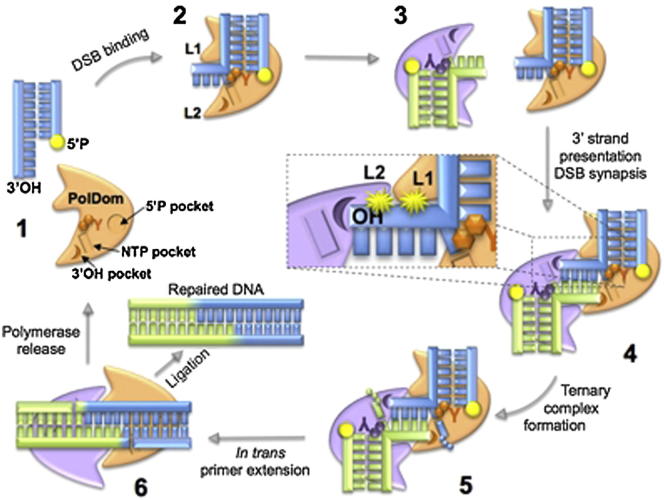
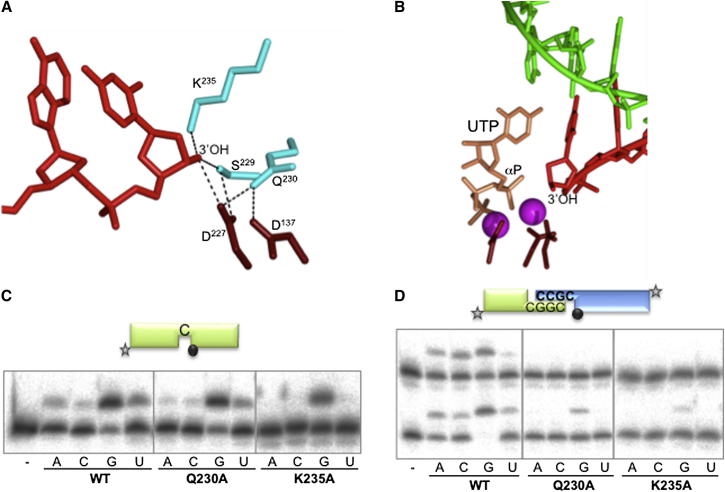
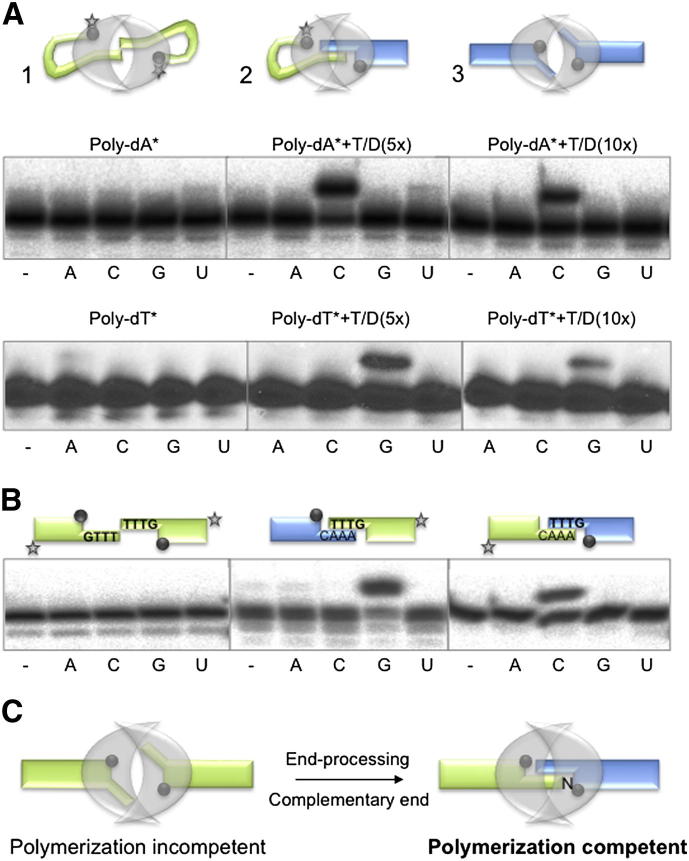
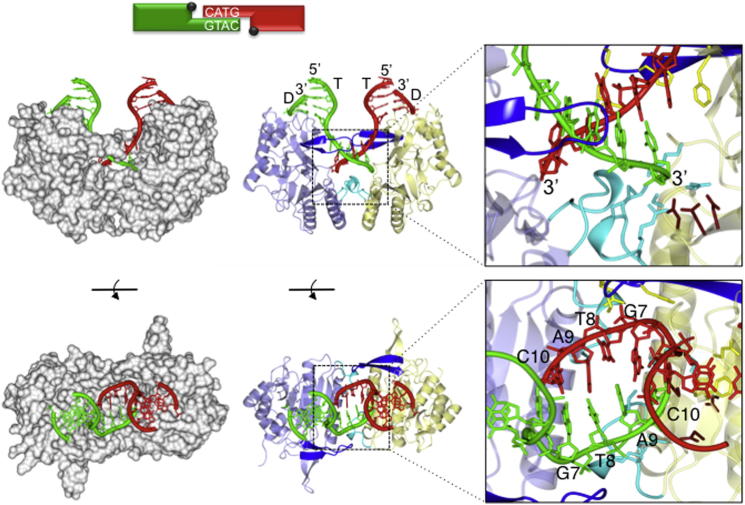
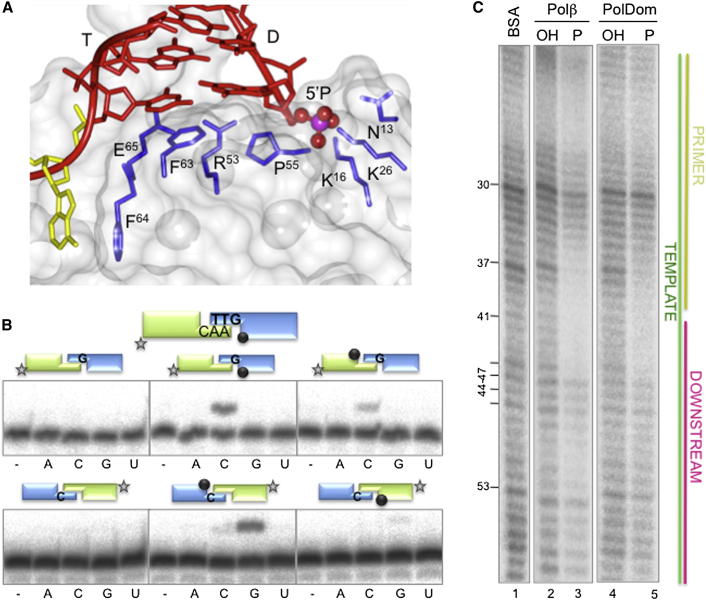
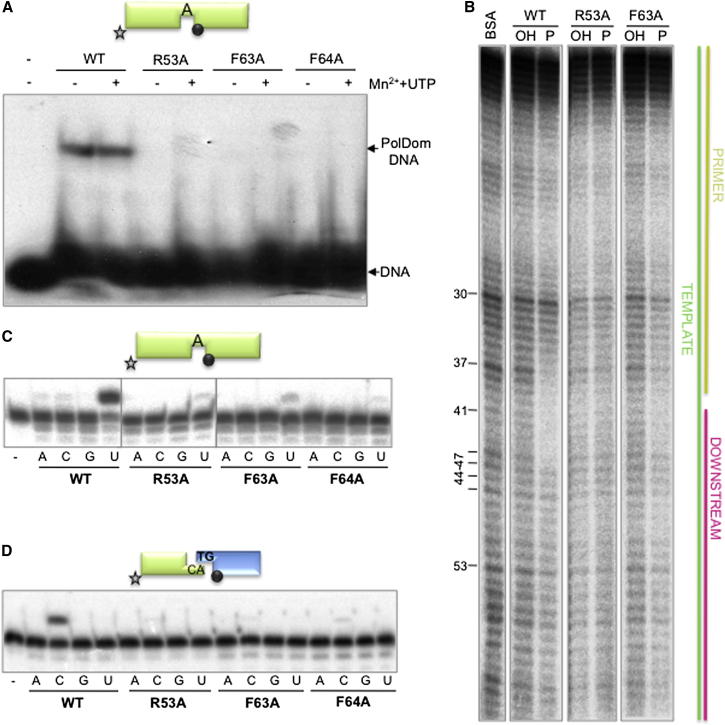
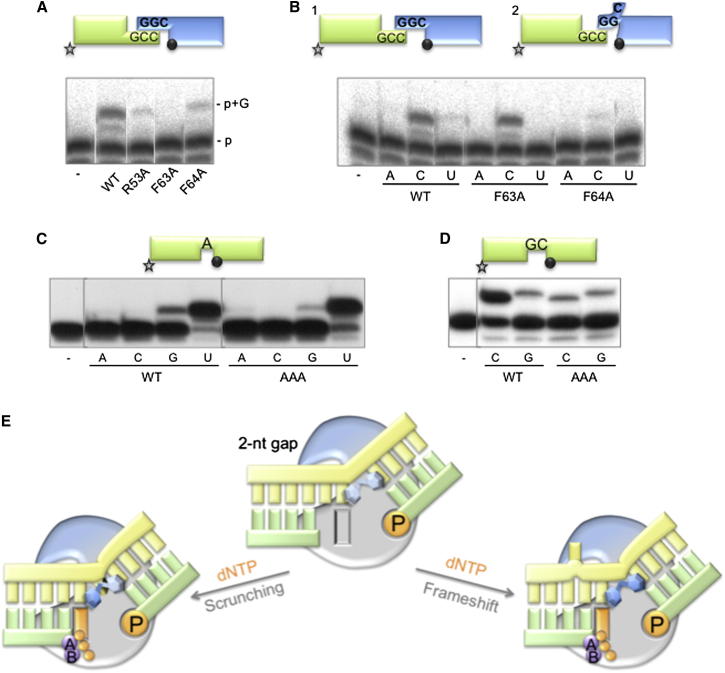
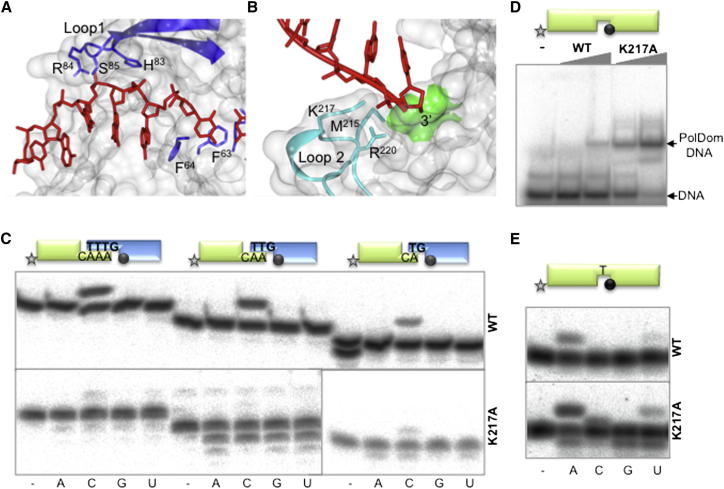
Nonhomologous end-joining (NHEJ) is one of the major DNA double-strand break (DSB) repair pathways. The mechanisms by which breaks are competently brought together and extended during NHEJ is poorly understood. As polymerases extend DNA in a 5'-3' direction by nucleotide addition to a primer, it is unclear how NHEJ polymerases fill in break termini containing 3' overhangs that lack a primer strand. Here, we describe, at the molecular level, how prokaryotic NHEJ polymerases configure a primer-template substrate by annealing the 3' overhanging strands from opposing breaks, forming a gapped intermediate that can be extended in trans. We identify structural elements that facilitate docking of the 3' ends in the active sites of adjacent polymerases and reveal how the termini act as primers for extension of the annealed break, thus explaining how such DSBs are extended in trans. This study clarifies how polymerases couple break-synapsis to catalysis, providing a molecular mechanism to explain how primer extension is achieved on DNA breaks.
非同源末端连接(NHEJ)是 DNA 双链断裂(DSB)修复的主要途径之一。在 NHEJ 过程中,断裂如何有效地聚集和延伸的机制尚不清楚。由于聚合酶通过向引物添加核苷酸沿 5'至 3'方向延伸 DNA,因此尚不清楚 NHEJ 聚合酶如何填补缺乏引物链的带有 3'突出端的断裂末端。在这里,我们在分子水平上描述了原核 NHEJ 聚合酶如何通过退火来自相反断裂的 3'突出链来配置引物-模板底物,形成可以在反式延伸的缺口中间体。我们确定了促进 3'末端在相邻聚合酶活性位点对接的结构元件,并揭示了末端如何作为退火断裂延伸的引物,从而解释了如何在反式延伸此类 DSB。这项研究阐明了聚合酶如何将断裂连接到催化作用,提供了一种分子机制来解释如何在 DNA 断裂上实现引物延伸。