Department of Developmental Neurobiology, Saint Jude Children's Research Hospital, MS 325, 262 Danny Thomas Place, Memphis, TN, 38105, USA.
Adv Exp Med Biol. 2014;800:113-31. doi: 10.1007/978-94-007-7687-6_7.
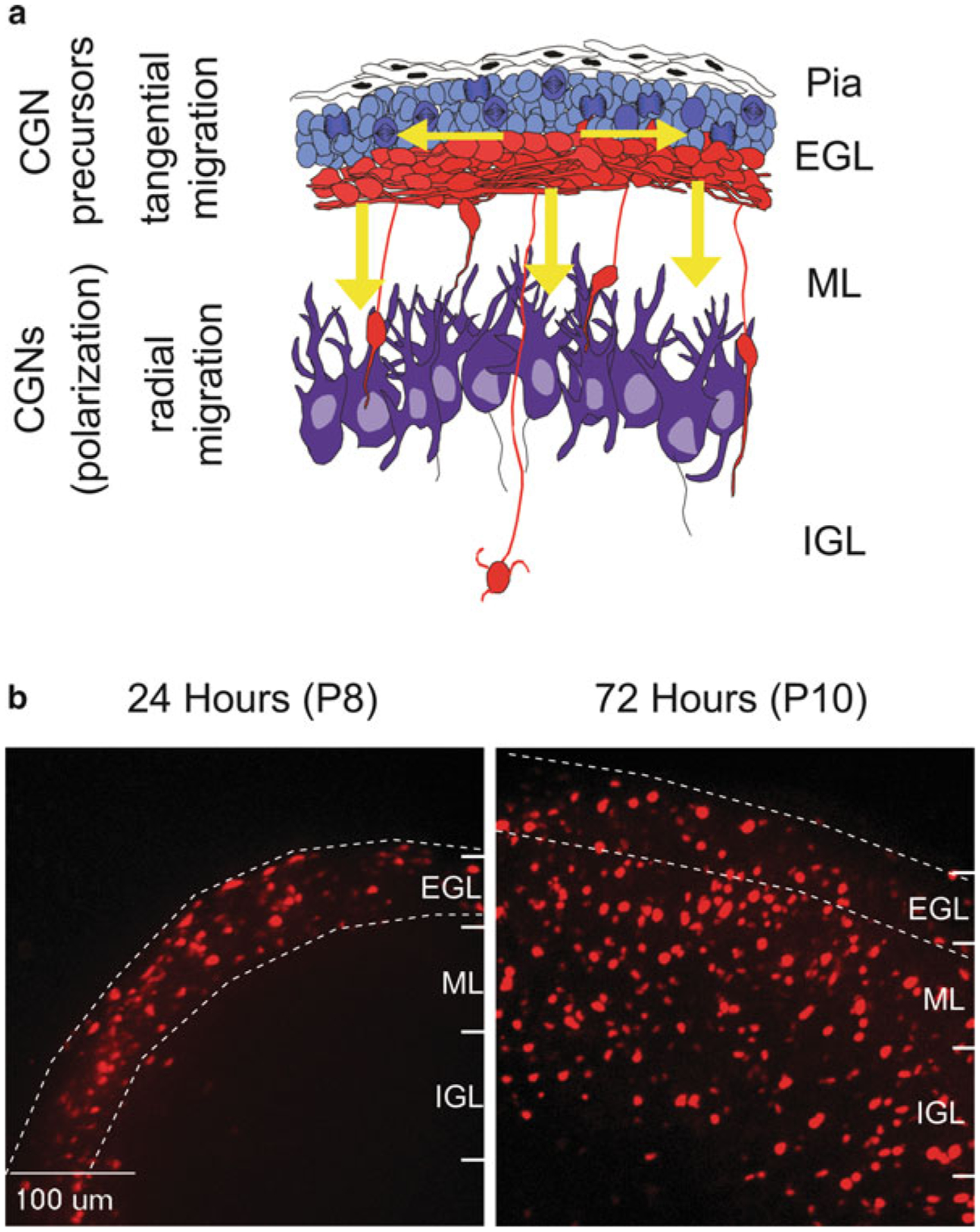
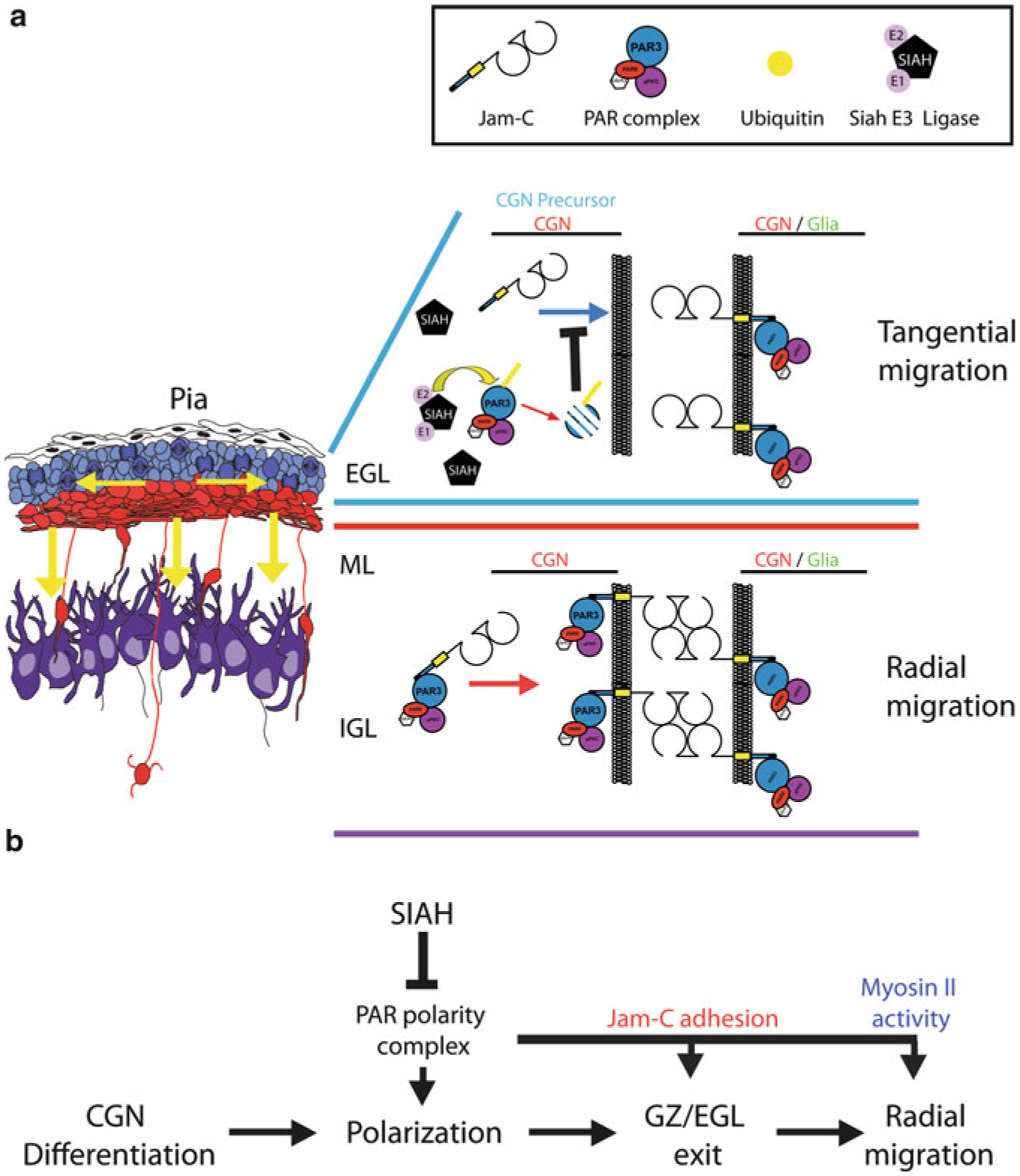
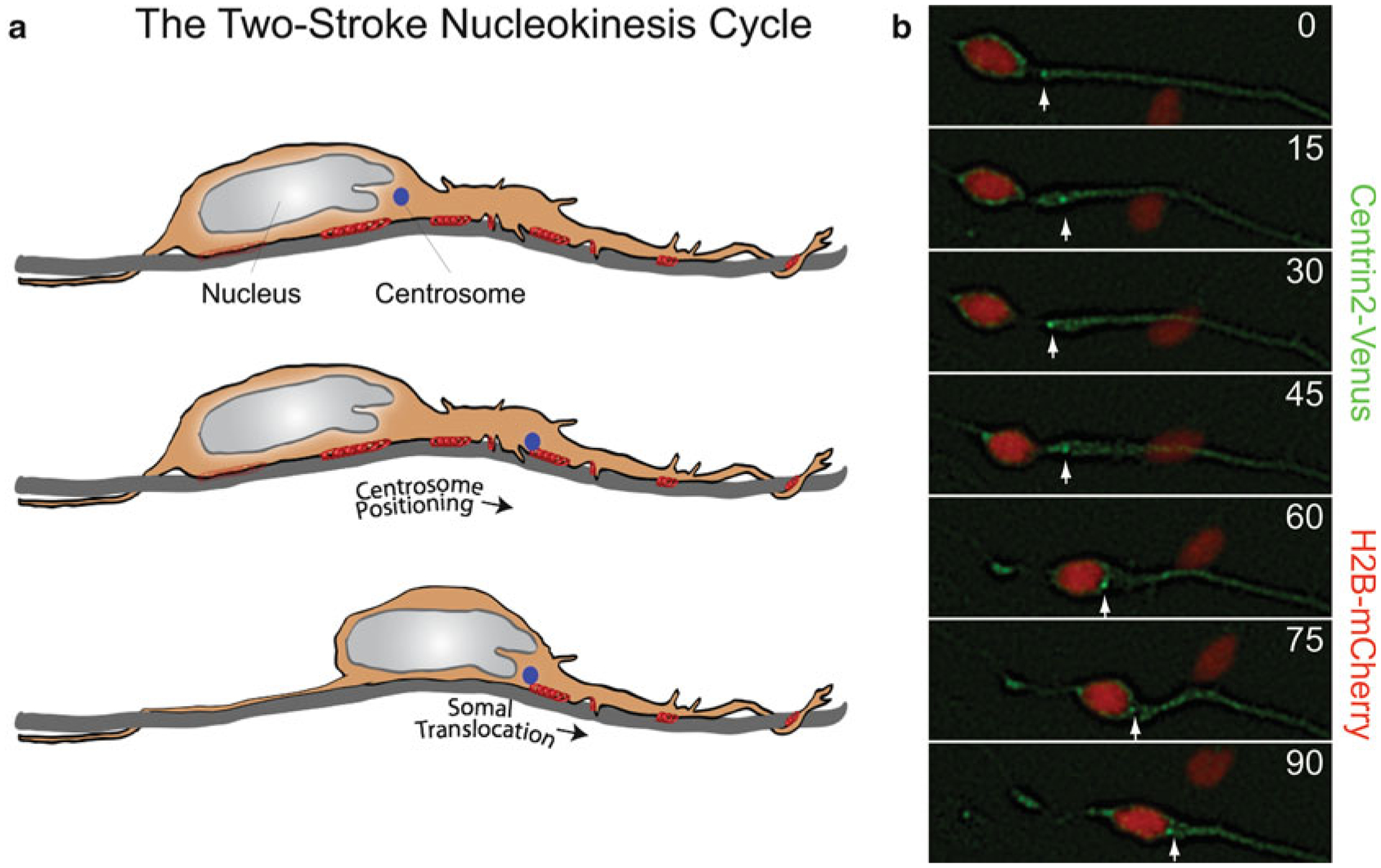
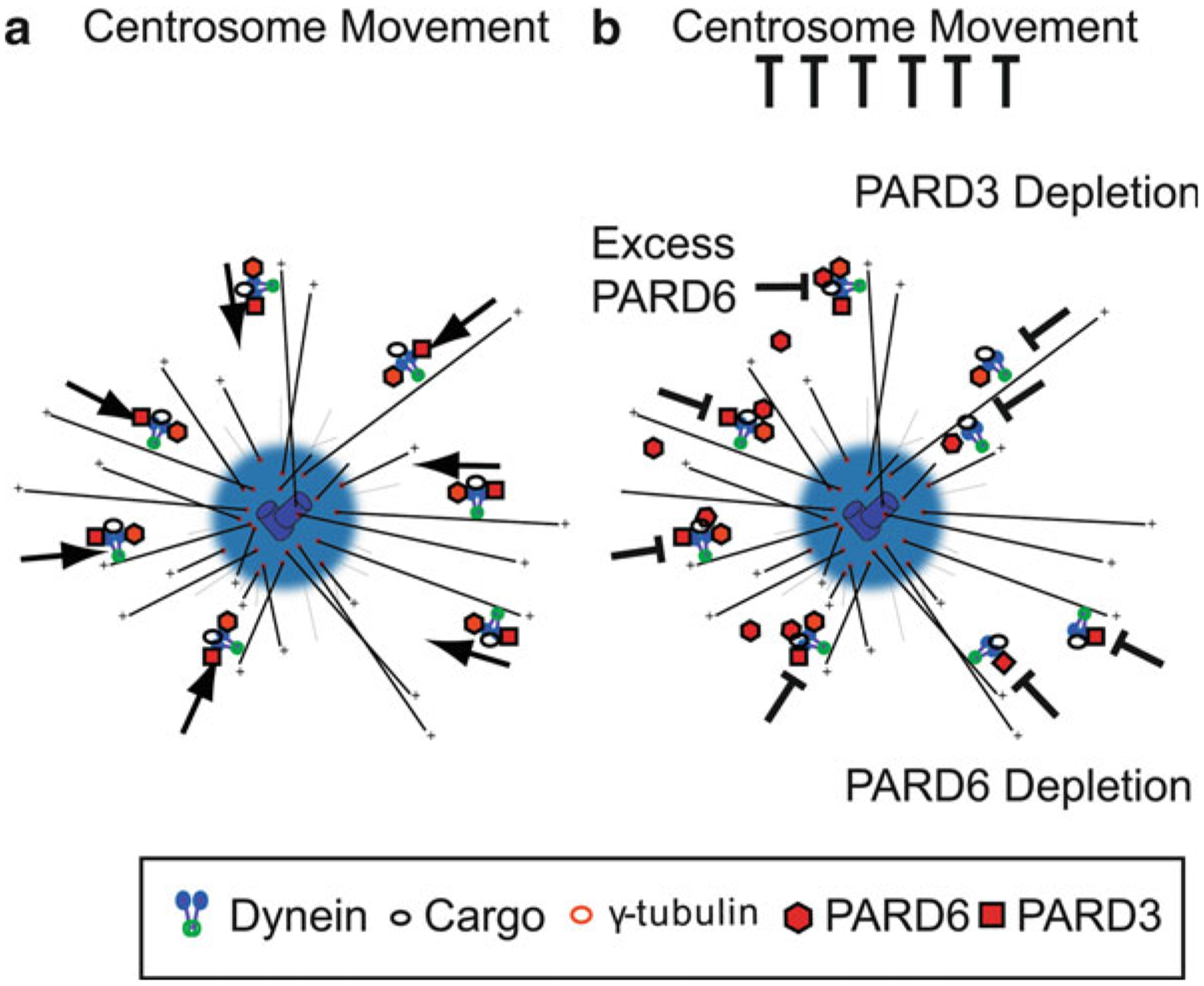
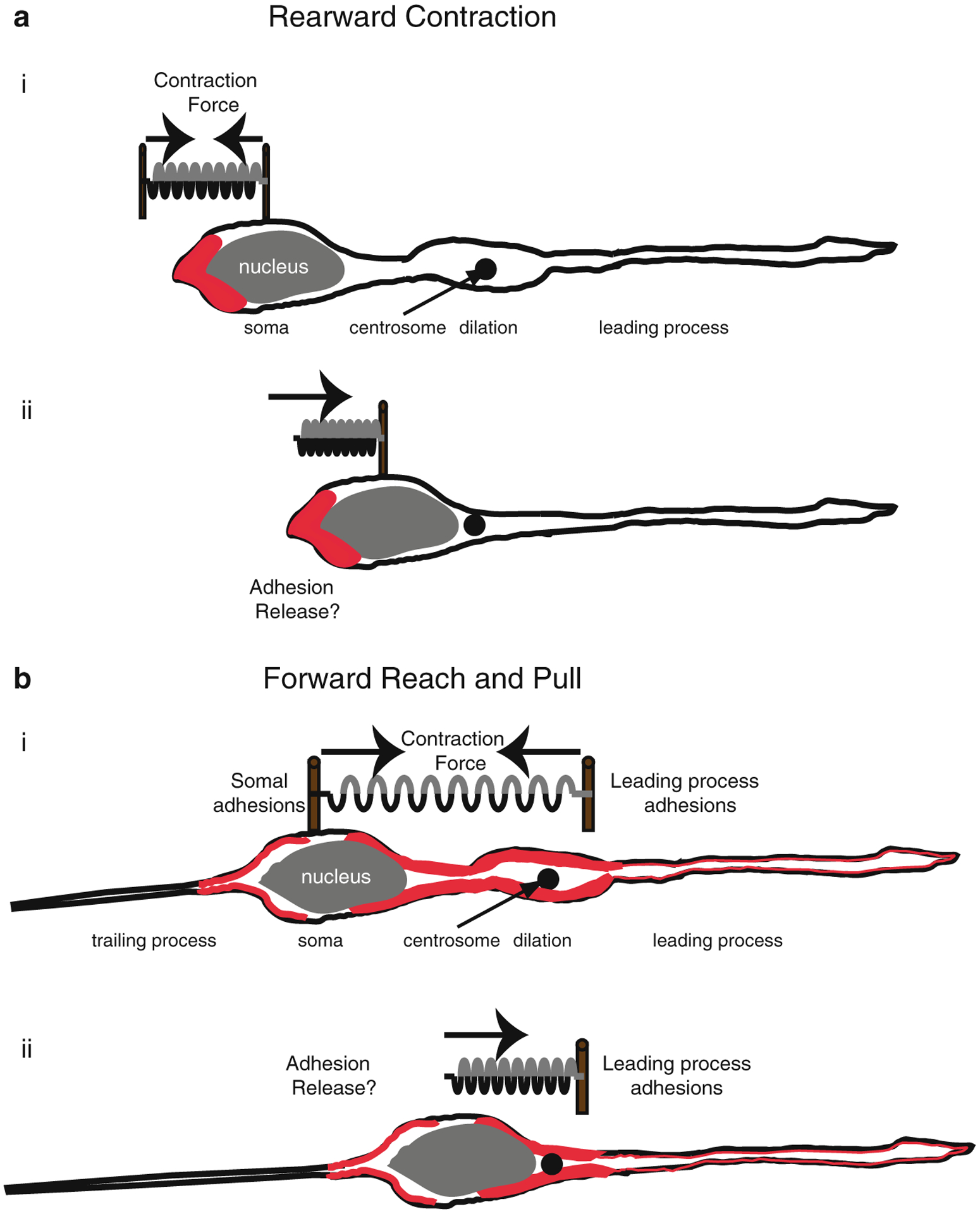
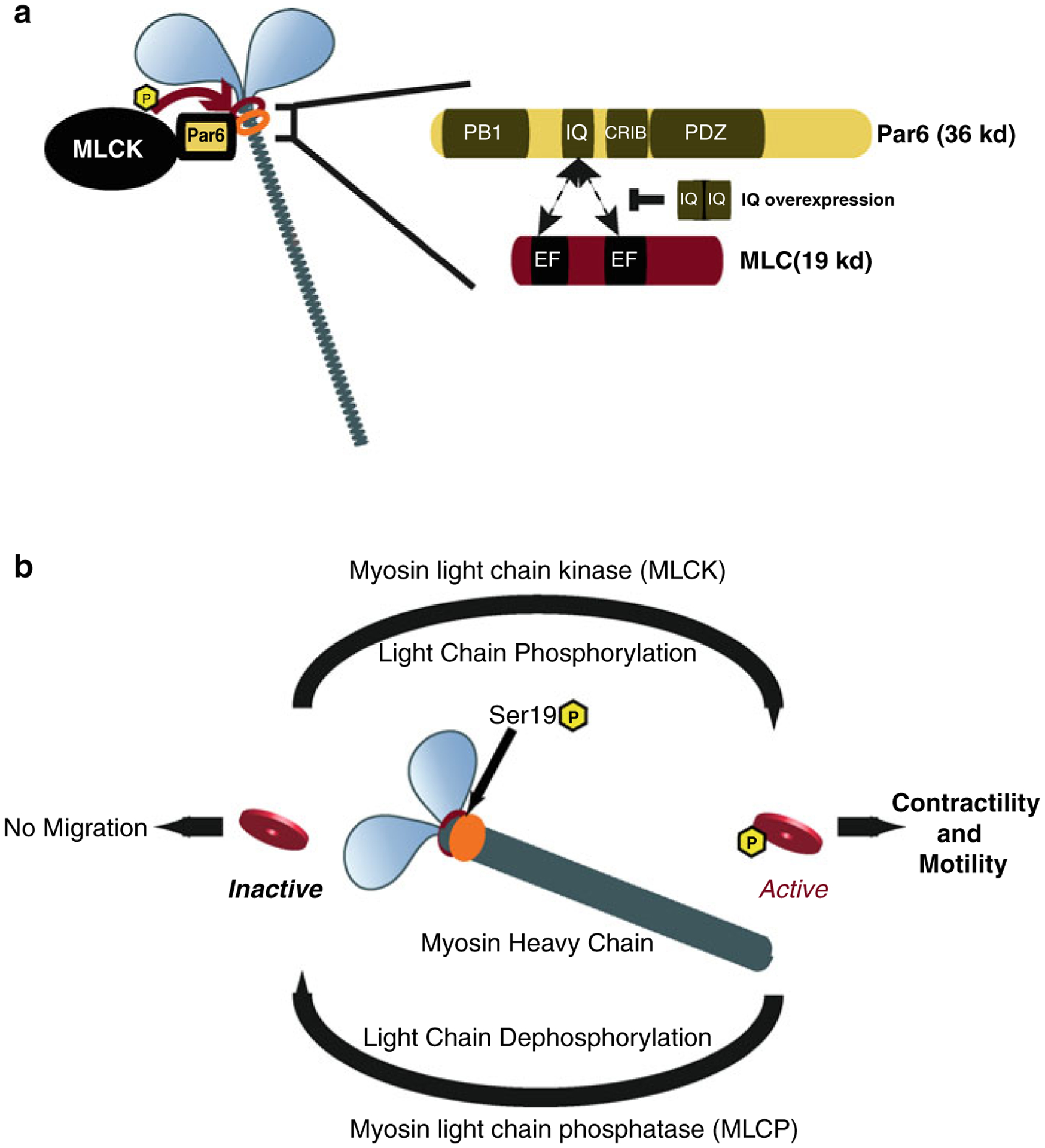
Proper migration of neurons is one of the most important aspects of early brain development. After neuronal progenitors are born in their respective germinal niches, they must migrate to their final locations to form precise neural circuits. A majority of migrating neurons move by associating and disassociating with glial fibers, which serve as scaffolding for the developing brain. Cerebellar granule neurons provide a model system for examination of the mechanisms of neuronal migration in dissociated and slice culture systems; the ability to purify these cells allows migration assays to be paired with genetic, molecular, and biochemical findings. CGNs migrate in a highly polarized fashion along radial glial fibers, using a two-stroke nucleokinesis cycle. The PAR polarity complex of PARD3, PARD6, and an atypical protein kinase C (aPKC) regulate several aspects of neuronal migration. The PAR polarity complex regulates the coordinated movements of the centrosome and soma during nucleokinesis, and also the stability of the microtubule cytoskeleton during migration. PAR proteins coordinate actomyosin dynamics in the leading process of migrating neurons, which are required for migration. The PAR complex also controls the cell-cell adhesions made by migrating neurons along glial cells, and through this mechanism regulates germinal zone exit during prenatal brain development. These findings suggest that the PAR complex coordinates the movement of multiple cellular elements as neurons migrate and that further examination of PAR complex effectors will not only provide novel insights to address fundamental challenges to the field but also expand our understanding of how the PAR complex functions at the molecular level.
神经元的正确迁移是早期大脑发育最重要的方面之一。神经元祖细胞在其各自的生发基质中产生后,必须迁移到最终位置以形成精确的神经回路。大多数迁移的神经元通过与神经胶质纤维的结合和分离来移动,神经胶质纤维为发育中的大脑提供支架。小脑颗粒神经元为在分离和切片培养系统中检查神经元迁移机制提供了模型系统;纯化这些细胞的能力允许将迁移测定与遗传、分子和生化发现相结合。CGNs 沿着放射状神经胶质纤维以高度极化的方式迁移,使用两冲程核动力循环。PAR 极性复合物 PARD3、PARD6 和非典型蛋白激酶 C(aPKC)调节神经元迁移的几个方面。PAR 极性复合物调节核动力过程中中心体和体的协调运动,以及迁移过程中微管细胞骨架的稳定性。PAR 蛋白协调迁移神经元前导过程中的肌动球蛋白动力学,这是迁移所必需的。PAR 复合物还控制迁移神经元沿神经胶质细胞形成的细胞-细胞黏附,通过这种机制调节产前大脑发育中的生发区出口。这些发现表明,PAR 复合物协调神经元迁移过程中多个细胞成分的运动,进一步研究 PAR 复合物效应器不仅将为解决该领域的基本挑战提供新的见解,而且还将扩展我们对 PAR 复合物在分子水平上如何发挥作用的理解。