Seattle Biomedical Research Institute, Seattle, Washington, United States of America.
PLoS One. 2013 Nov 7;8(11):e72786. doi: 10.1371/journal.pone.0072786. eCollection 2013.
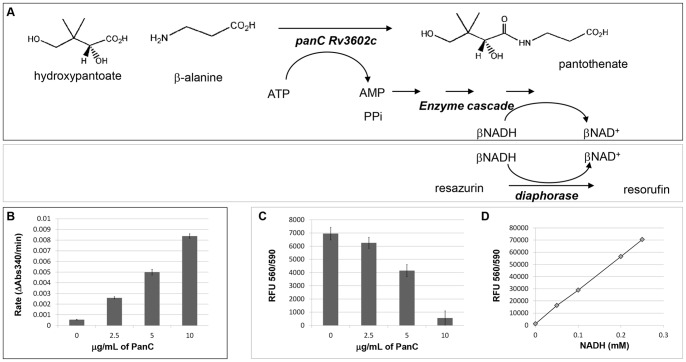
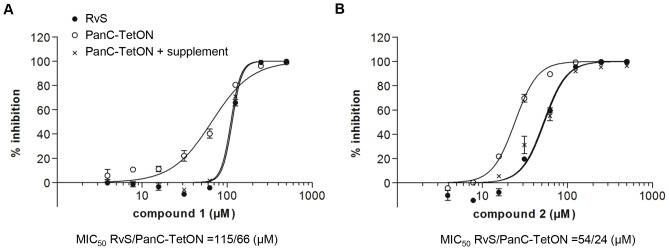
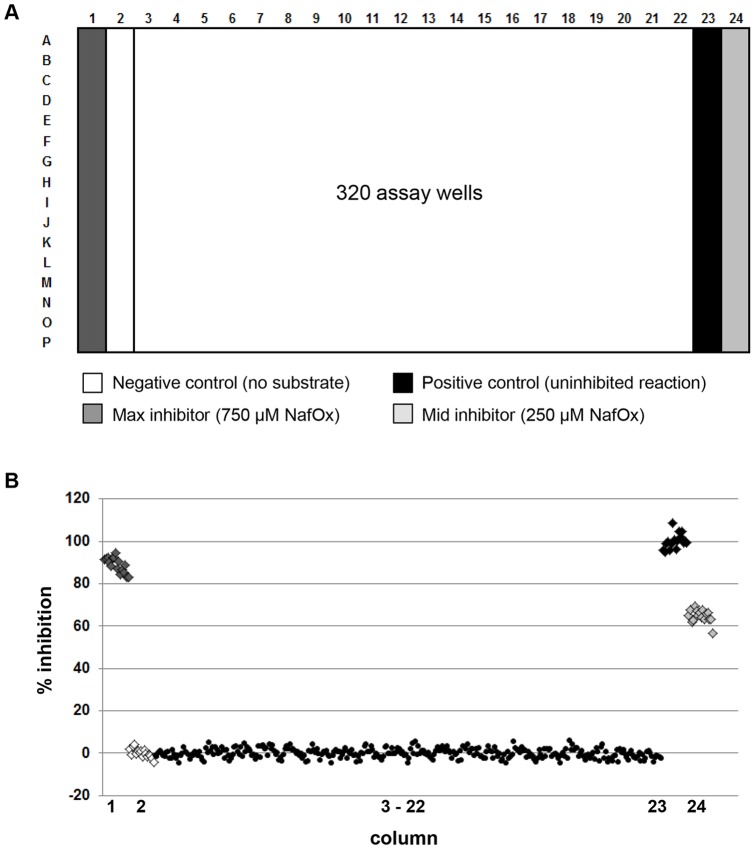
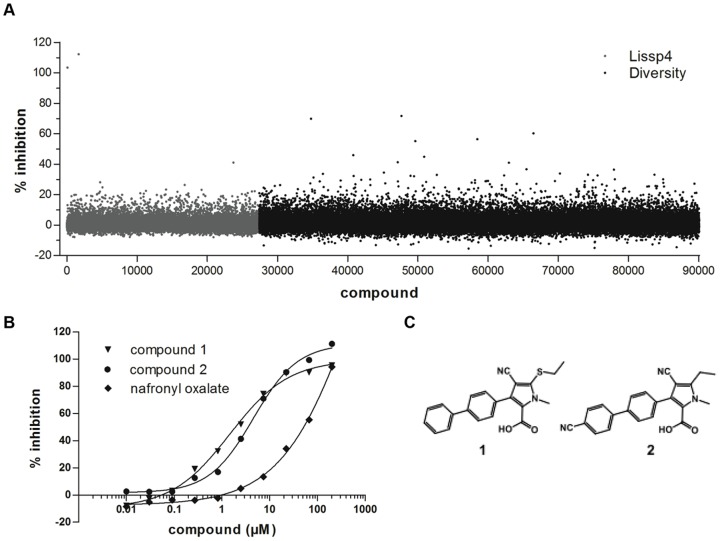
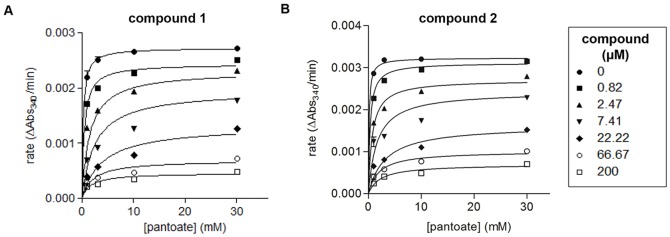
The enzyme pantothenate synthetase, PanC, is an attractive drug target in Mycobacterium tuberculosis. It is essential for the in vitro growth of M. tuberculosis and for survival of the bacteria in the mouse model of infection. PanC is absent from mammals. We developed an enzyme-based assay to identify inhibitors of PanC, optimized it for high-throughput screening, and tested a large and diverse library of compounds for activity. Two compounds belonging to the same chemical class of 3-biphenyl-4- cyanopyrrole-2-carboxylic acids had activity against the purified recombinant protein, and also inhibited growth of live M. tuberculosis in manner consistent with PanC inhibition. Thus we have identified a new class of PanC inhibitors with whole cell activity that can be further developed.
酶泛酸合成酶(PanC)是结核分枝杆菌中一种有吸引力的药物靶点。它是结核分枝杆菌体外生长所必需的,也是细菌在感染小鼠模型中存活所必需的。PanC 不存在于哺乳动物中。我们开发了一种基于酶的测定法来鉴定 PanC 的抑制剂,对其进行了优化以进行高通量筛选,并测试了一个大型多样的化合物库的活性。两种属于 3-联苯-4-氰基吡咯-2-羧酸同一种化学类别的化合物对纯化的重组蛋白具有活性,并且以与 PanC 抑制一致的方式抑制活结核分枝杆菌的生长。因此,我们已经鉴定出一类具有全细胞活性的新型 PanC 抑制剂,它们可以进一步开发。