Biomedical Research Institute, School of Life Sciences, Hasselt University / Transnational University Limburg, Diepenbeek, Belgium.
Acta Neuropathol Commun. 2013 Aug 2;1:43. doi: 10.1186/2051-5960-1-43.
Foamy macrophages, containing myelin degradation products, are abundantly found in active multiple sclerosis (MS) lesions. Recent studies have described an altered phenotype of macrophages after myelin internalization. However, mechanisms by which myelin affects the phenotype of macrophages and how this phenotype influences lesion progression remain unclear.
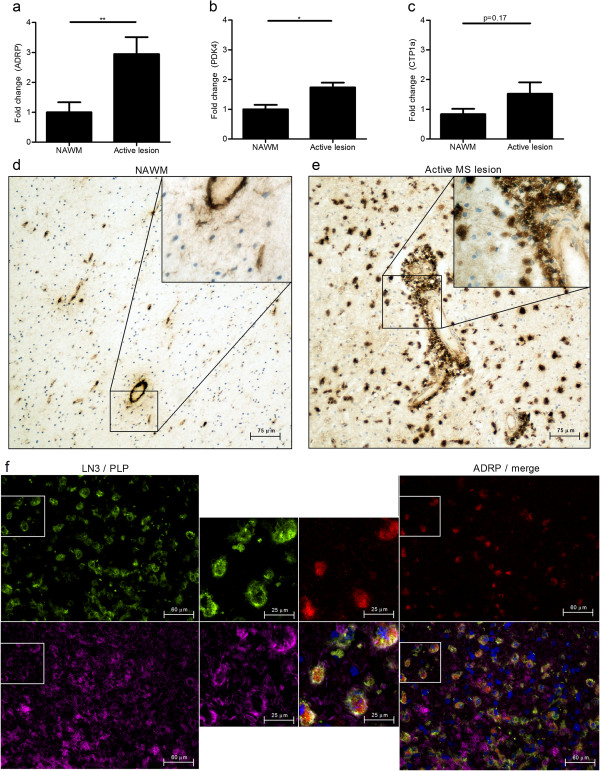
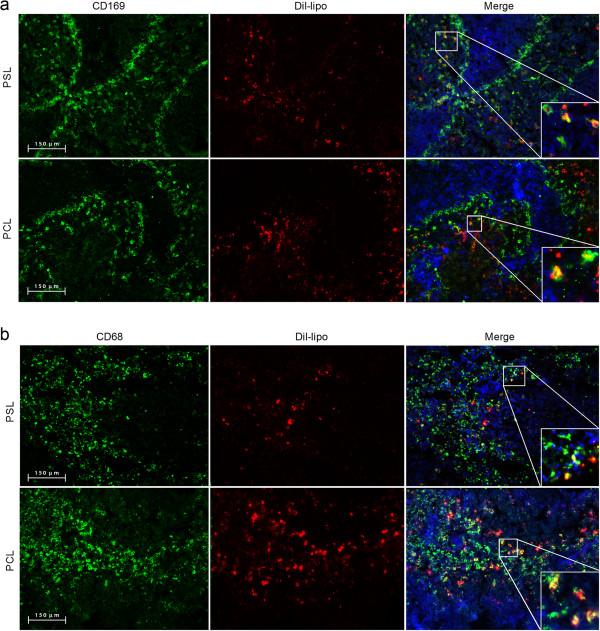
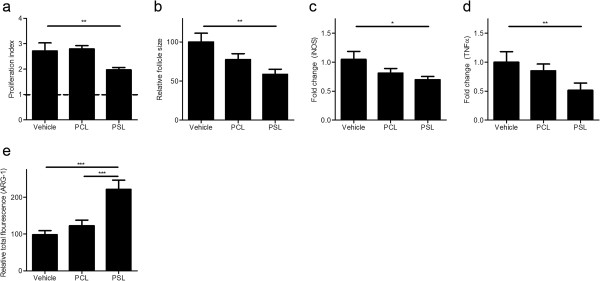
We demonstrate that myelin as well as phosphatidylserine (PS), a phospholipid found in myelin, reduce nitric oxide production by macrophages through activation of peroxisome proliferator-activated receptor β/δ (PPARβ/δ). Furthermore, uptake of PS by macrophages, after intravenous injection of PS-containing liposomes (PSLs), suppresses the production of inflammatory mediators and ameliorates experimental autoimmune encephalomyelitis (EAE), an animal model of MS. The protective effect of PSLs in EAE animals is associated with a reduced immune cell infiltration into the central nervous system and decreased splenic cognate antigen specific proliferation. Interestingly, PPARβ/δ is activated in foamy macrophages in active MS lesions, indicating that myelin also activates PPARβ/δ in macrophages in the human brain.
Our data show that myelin modulates the phenotype of macrophages by PPAR activation, which may subsequently dampen MS lesion progression. Moreover, our results suggest that myelin-derived PS mediates PPARβ/δ activation in macrophages after myelin uptake. The immunoregulatory impact of naturally-occurring myelin lipids may hold promise for future MS therapeutics.
富含髓磷脂降解产物的泡沫状巨噬细胞在活跃的多发性硬化症(MS)病变中大量存在。最近的研究描述了髓磷脂内化后巨噬细胞表型的改变。然而,髓磷脂影响巨噬细胞表型的机制以及这种表型如何影响病变进展仍不清楚。
我们证明髓磷脂和磷脂酰丝氨酸(PS),一种存在于髓磷脂中的磷脂,通过激活过氧化物酶体增殖物激活受体β/δ(PPARβ/δ)来减少巨噬细胞的一氧化氮产生。此外,在静脉注射含有 PS 的脂质体(PSLs)后,PS 被巨噬细胞摄取,可抑制炎症介质的产生,并改善实验性自身免疫性脑脊髓炎(EAE),一种 MS 的动物模型。PSLs 在 EAE 动物中的保护作用与中枢神经系统免疫细胞浸润减少和脾同源抗原特异性增殖减少有关。有趣的是,在活跃的 MS 病变中的泡沫状巨噬细胞中激活了 PPARβ/δ,表明髓磷脂也在人类大脑中的巨噬细胞中激活了 PPARβ/δ。
我们的数据表明,髓磷脂通过 PPAR 激活来调节巨噬细胞的表型,这可能随后抑制 MS 病变的进展。此外,我们的结果表明,髓磷脂摄取后,髓磷脂衍生的 PS 介导了巨噬细胞中 PPARβ/δ 的激活。天然存在的髓磷脂脂质的免疫调节作用可能为未来的 MS 治疗提供希望。