Department of Neuropathology and Cell Biology, Tokyo Metropolitan Institute of Medical Science, Setagaya-ku, Tokyo 156-8506, Japan.
Acta Neuropathol Commun. 2013 Aug 21;1:54. doi: 10.1186/2051-5960-1-54.
Intracytoplasmic inclusions composed of filamentous tau proteins are defining characteristics of neurodegenerative tauopathies, but it remains unclear why different tau isoforms accumulate in different diseases and how they induce abnormal filamentous structures and pathologies. Two tau isoform-specific antibodies, RD3 and RD4, are widely used for immunohistochemical and biochemical studies of tau species in diseased brains.
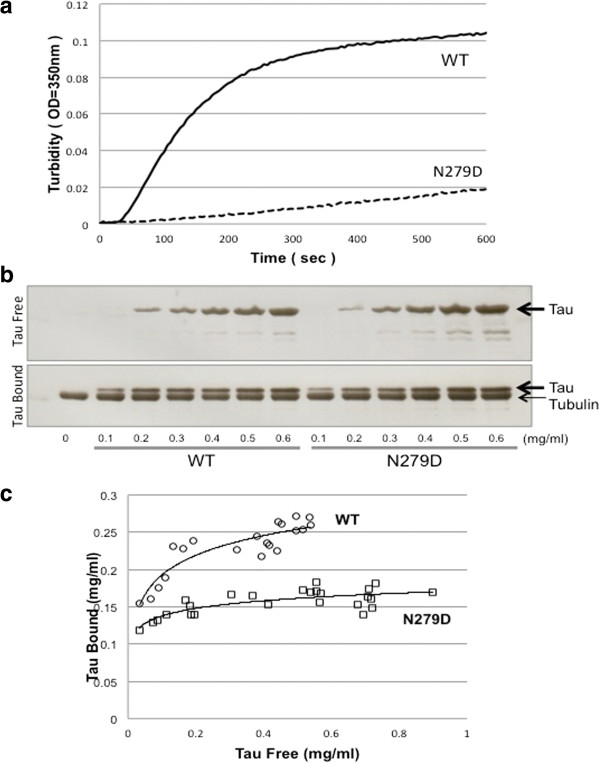
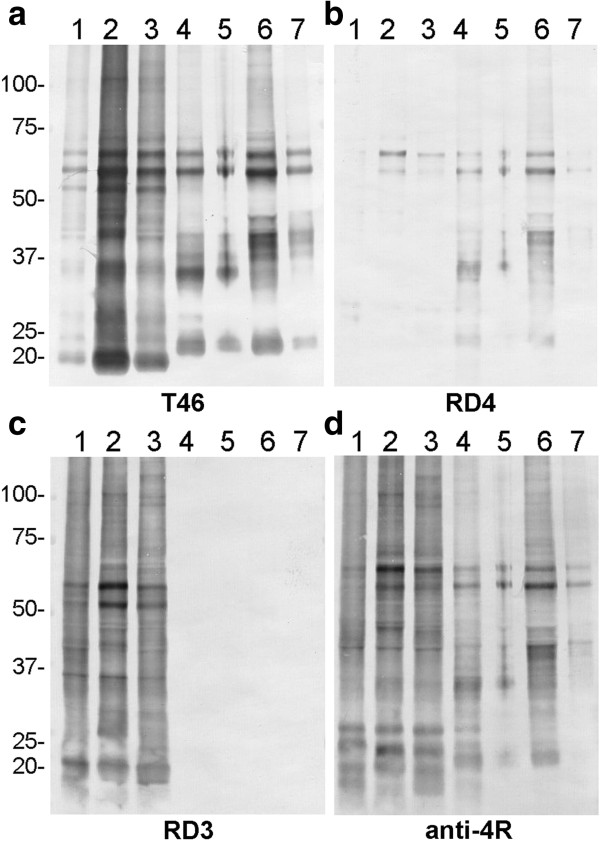
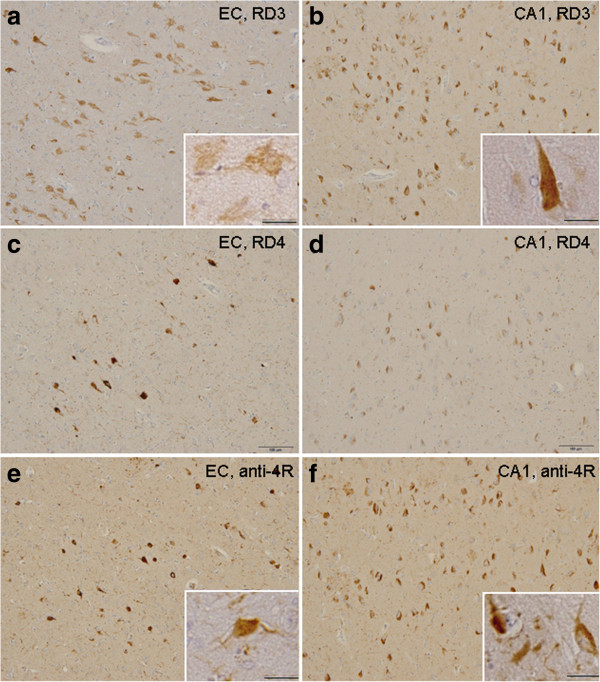
Here, we show that extensive irreversible post-translational deamidation takes place at asparagine residue 279 (N279) in the RD4 epitope of tau in Alzheimer's disease (AD), but not corticobasal degeneration (CBD) or progressive supranuclear palsy (PSP), and this modification abrogates the immunoreactivity to RD4. An antiserum raised against deamidated RD4 peptide specifically recognized 4R tau isoforms, regardless of deamidation, and strongly stained tau in AD brain. We also found that mutant tau with N279D substitution showed reduced ability to bind to microtubules and to promote microtubule assembly.
The biochemical and structural differences of tau in AD from that in 4R tauopathies found in this study may therefore have implications for prion-like propagation of tau.
由丝状 tau 蛋白组成的细胞质包涵体是神经退行性 tau 病的特征性表现,但不同 tau 异构体为何在不同疾病中积累以及它们如何诱导异常丝状结构和病变仍不清楚。两种 tau 异构体特异性抗体,RD3 和 RD4,广泛用于疾病大脑中 tau 物种的免疫组织化学和生化研究。
在这里,我们表明,阿尔茨海默病(AD)中 RD4 表位的 tau 的天冬酰胺残基 279(N279)发生广泛的不可逆转的翻译后脱酰胺化,但皮质基底节变性(CBD)或进行性核上性麻痹(PSP)则没有,这种修饰消除了对 RD4 的免疫反应性。针对脱酰胺 RD4 肽的抗血清特异性识别 4R tau 异构体,无论是否脱酰胺,并且强烈染色 AD 脑中的 tau。我们还发现,具有 N279D 取代的突变 tau 显示出与微管结合和促进微管组装的能力降低。
本研究发现 AD 中的 tau 在生化和结构上与 4R tau 病中的 tau 存在差异,这可能对 tau 的类朊病毒传播具有影响。