Division of Integrative Neuroscience, Research Foundation for Mental Hygiene, New York State Psychiatric Institute, New York 10032, USA.
Learn Mem. 2013 Nov 19;20(12):710-29. doi: 10.1101/lm.026542.112.
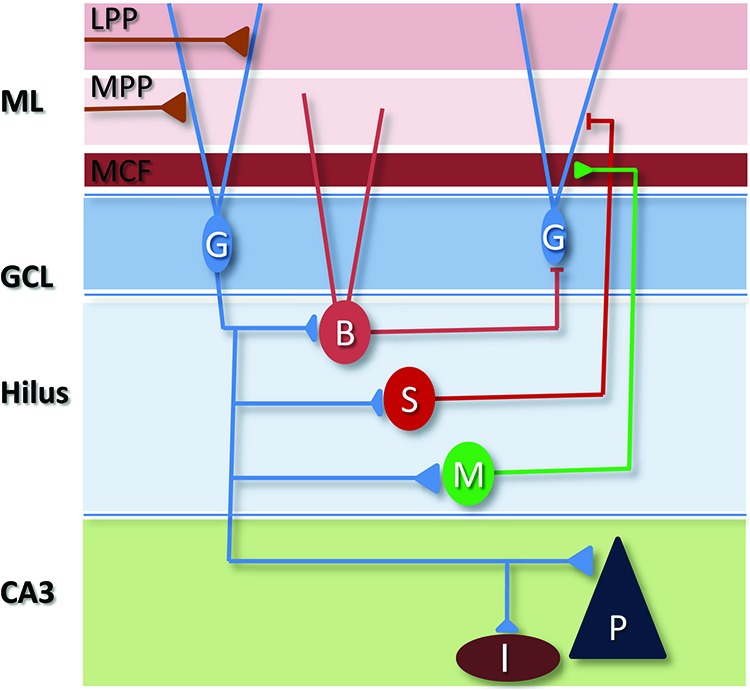
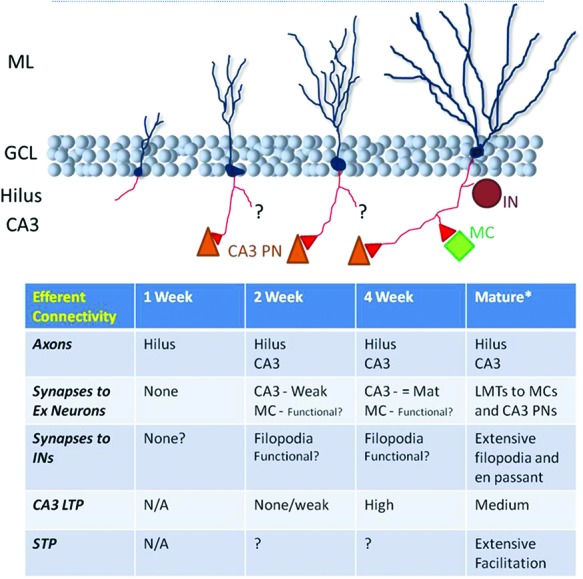
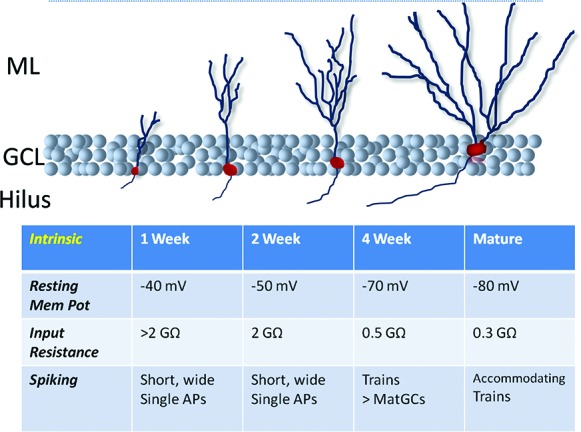
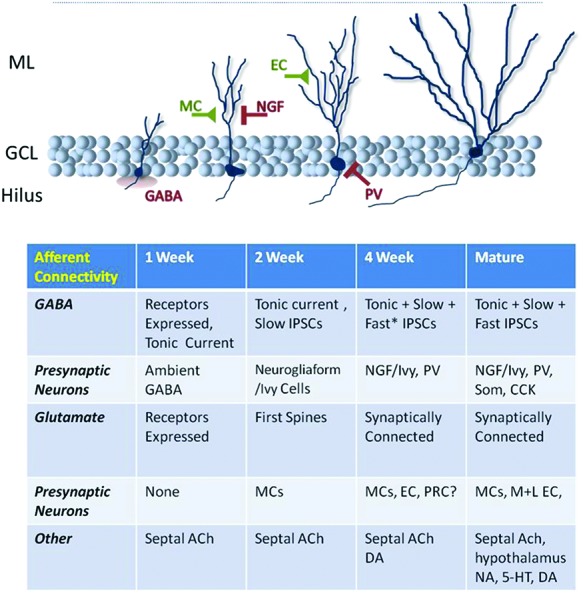
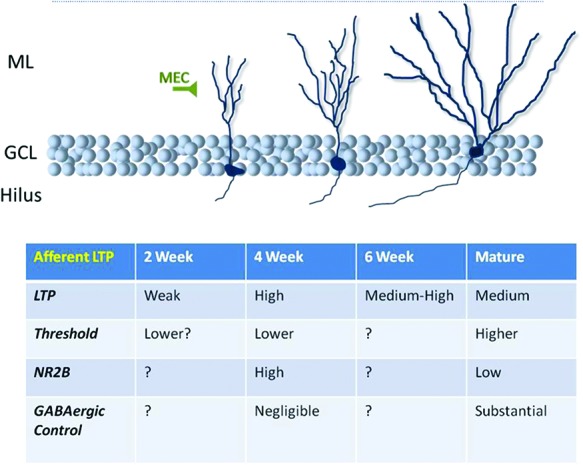
In the adult mammalian brain, newly generated neurons are continuously incorporated into two networks: interneurons born in the subventricular zone migrate to the olfactory bulb, whereas the dentate gyrus (DG) of the hippocampus integrates locally born principal neurons. That the rest of the mammalian brain loses significant neurogenic capacity after the perinatal period suggests that unique aspects of the structure and function of DG and olfactory bulb circuits allow them to benefit from the adult generation of neurons. In this review, we consider the distinctive features of the DG that may account for it being able to profit from this singular form of neural plasticity. Approaches to the problem of neurogenesis are grouped as "bottom-up," where the phenotype of adult-born granule cells is contrasted to that of mature developmentally born granule cells, and "top-down," where the impact of altering the amount of neurogenesis on behavior is examined. We end by considering the primary implications of these two approaches and future directions.
在成年哺乳动物大脑中,新生成的神经元不断被整合到两个网络中:室管膜下区产生的中间神经元迁移到嗅球,而海马的齿状回则整合了局部产生的主神经元。在围产期之后,哺乳动物大脑失去了显著的神经发生能力,这表明 DG 和嗅球回路的结构和功能的独特方面使它们能够受益于成年神经元的产生。在这篇综述中,我们考虑了 DG 的独特特征,这些特征可能使其能够从这种独特的神经可塑性中受益。解决神经发生问题的方法可以分为“自下而上”和“自上而下”两种,前者对比了成年新生颗粒细胞的表型与成熟发育过程中产生的颗粒细胞的表型,后者则研究了改变神经发生数量对行为的影响。最后,我们考虑了这两种方法的主要影响和未来的方向。