School of Molecular and Cellular Biology, Faculty of Biological Sciences and Astbury Centre for Structural Molecular Biology, University of Leeds, Leeds, United Kingdom.
J Virol. 2014 Feb;88(3):1421-32. doi: 10.1128/JVI.03017-13. Epub 2013 Nov 20.
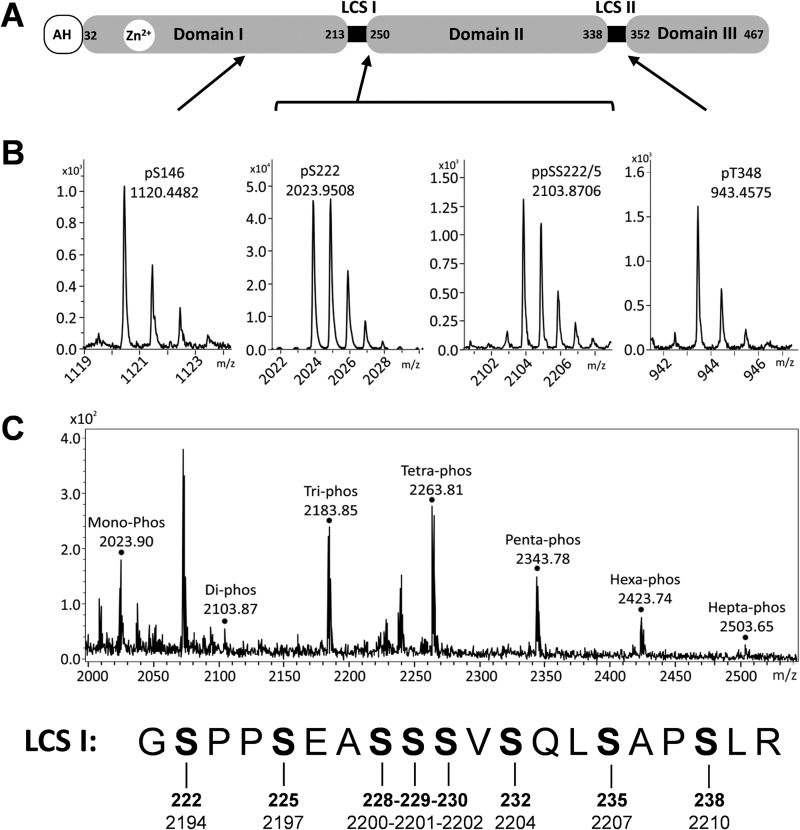
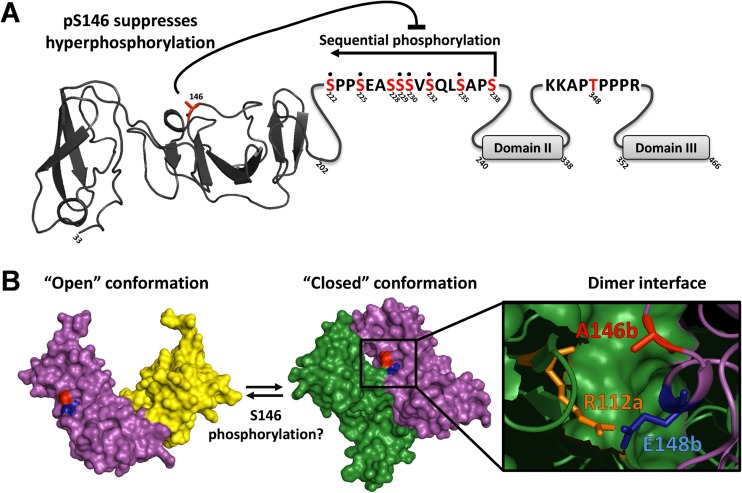
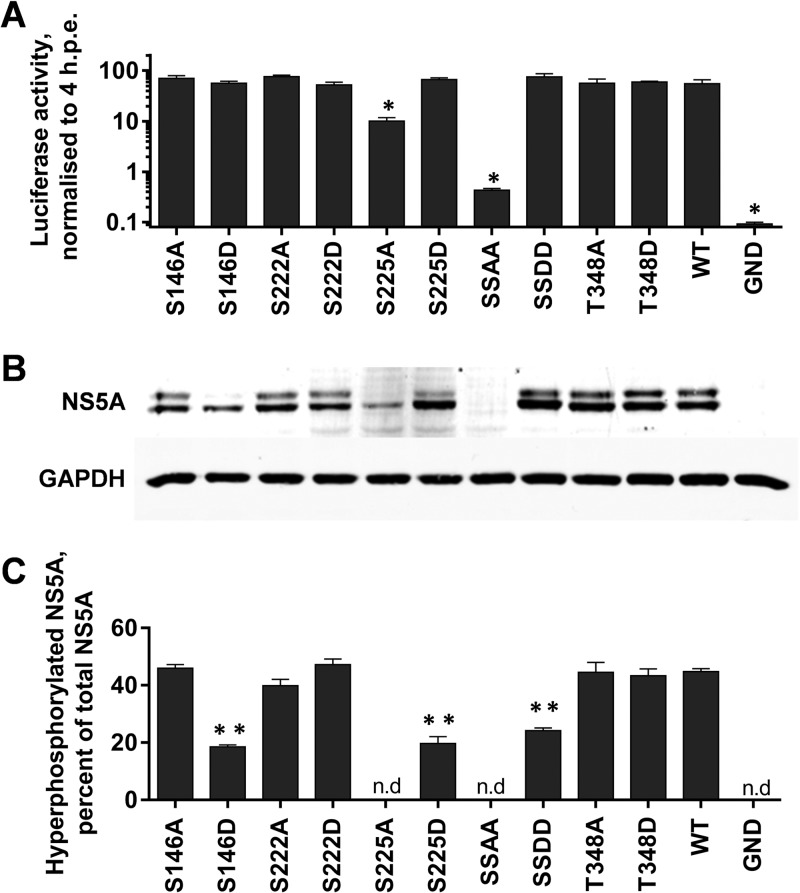
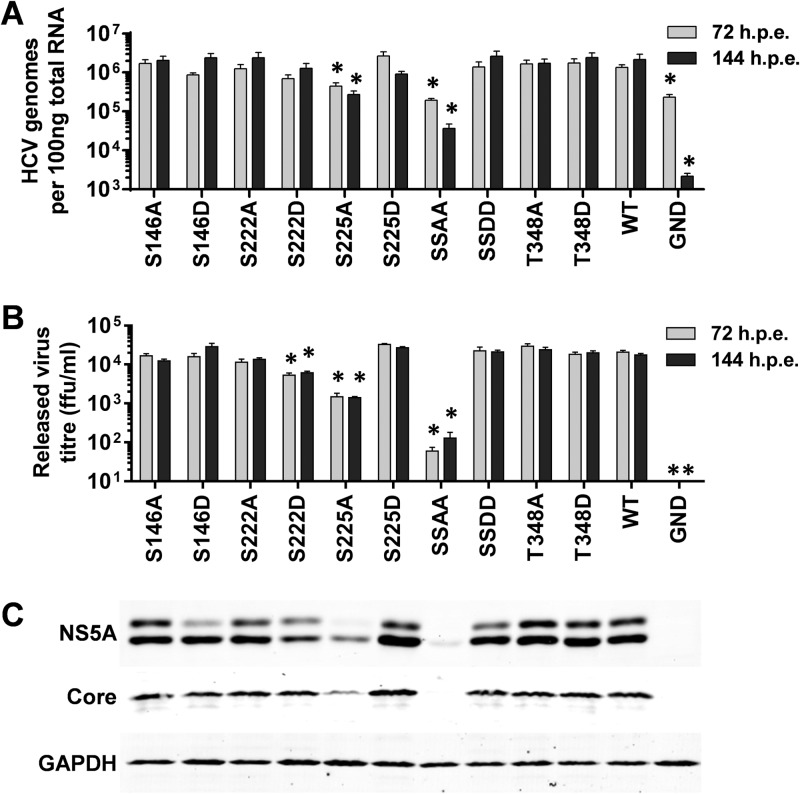
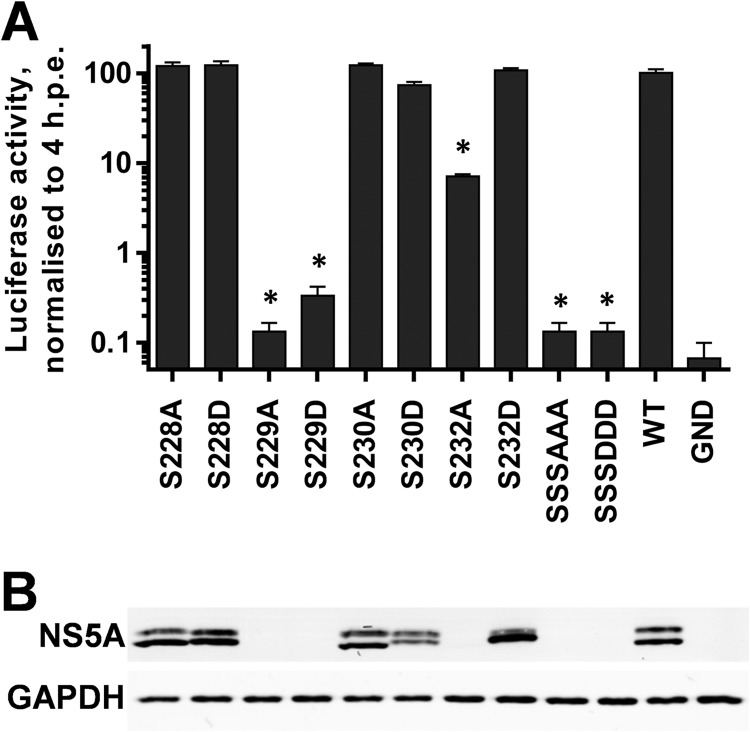
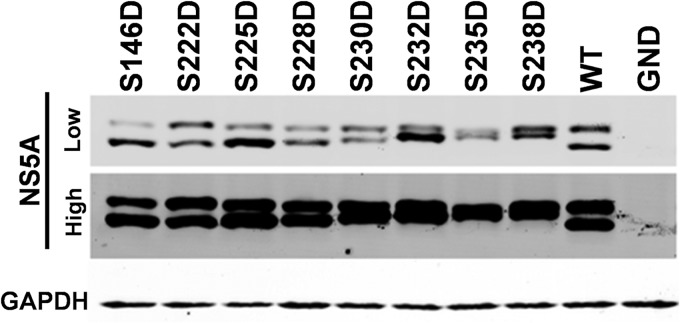
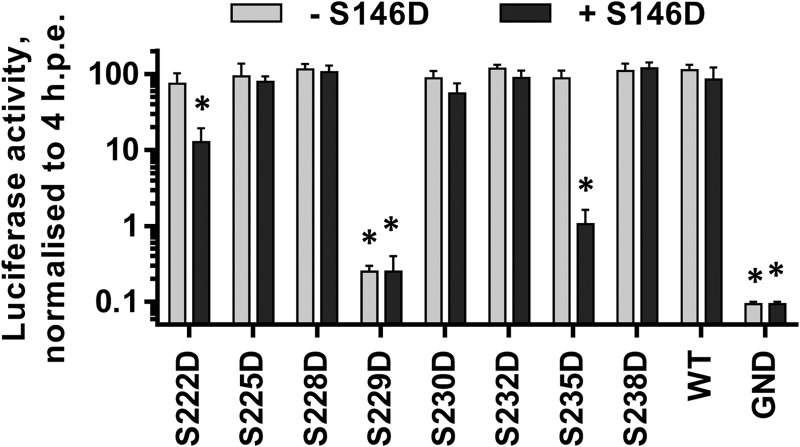
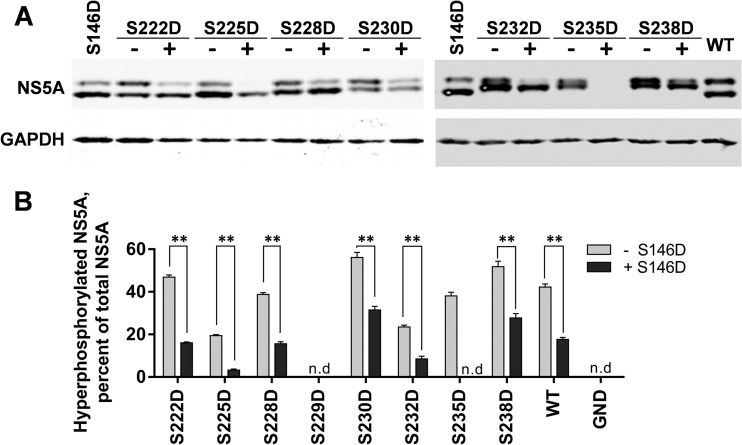
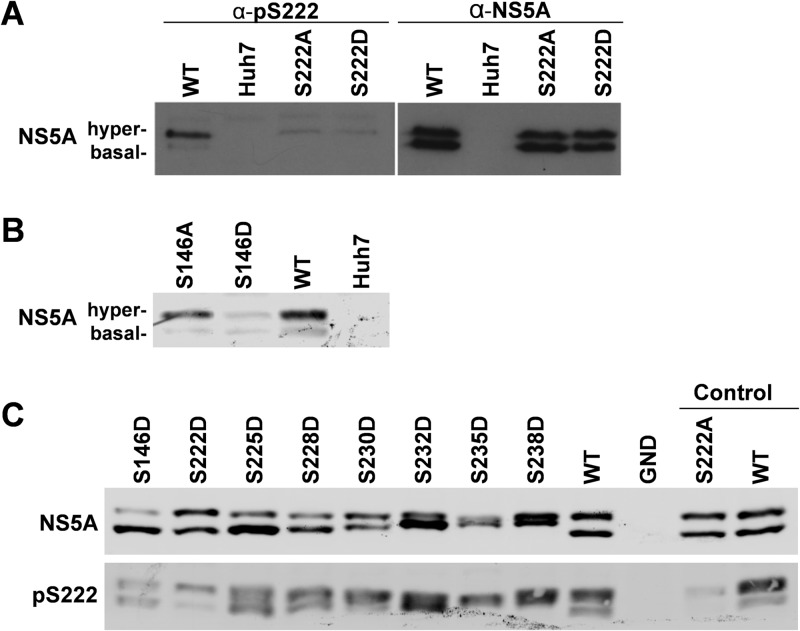
The hepatitis C virus nonstructural NS5A protein has roles in genome replication, virus assembly, and modulation of host pathways. NS5A is a phosphoprotein, and it has been proposed that differential phosphorylation could regulate the various roles of the protein. By SDS-PAGE, two forms of NS5A with distinct apparent molecular weights can be observed, referred to as basally phosphorylated and hyperphosphorylated species. However, the sites of phosphorylation on these two species have not been unequivocally identified, hampering our understanding of the function and regulation of NS5A. To address this, we purified tagged NS5A from cells harboring a replicating subgenomic replicon and analyzed the purified protein by mass spectrometry. We identified six peptide fragments containing 12 phosphorylated residues and were able to assign four of these to serines 146, 222, and 225 and threonine 348. A serine-rich peptide fragment spanning residues 221 to 240 was highly phosphorylated. Using mutagenesis, we identified roles for a subset of these phosphoacceptors in virus genome replication. We further showed that phosphorylation at S146 regulates hyperphosphorylation, and by generating a phospho-specific antibody targeted to pS222, we identified that S222 phosphorylation predominates in the hyperphosphorylated species. Last, by introducing phosphomimetic mutations across residues 221 to 240, we demonstrated changes in the mobility of the basally phosphorylated species suggestive of a sequential phosphorylation cascade within this serine-rich cluster. We propose that this regulation could drive a conformational switch between the dimeric structures of NS5A and could also explain the different functions of the protein in the virus life cycle.
丙型肝炎病毒非结构 NS5A 蛋白在基因组复制、病毒组装和宿主途径调节中发挥作用。NS5A 是一种磷酸化蛋白,据推测,差异磷酸化可能调节该蛋白的各种功能。通过 SDS-PAGE,可以观察到两种具有不同表观分子量的 NS5A 形式,分别称为基础磷酸化和高磷酸化形式。然而,这两种形式的磷酸化位点尚未明确鉴定,这阻碍了我们对 NS5A 功能和调节的理解。为了解决这个问题,我们从携带复制亚基因组复制子的细胞中纯化了标记的 NS5A,并通过质谱分析对纯化的蛋白进行了分析。我们鉴定了含有 12 个磷酸化残基的六个肽片段,并能够将其中四个分配给丝氨酸 146、222 和 225 以及苏氨酸 348。跨越残基 221 至 240 的富含丝氨酸的肽片段高度磷酸化。通过突变,我们确定了这些磷酸受体中的一部分在病毒基因组复制中的作用。我们进一步表明,S146 的磷酸化调节高磷酸化,并且通过生成针对 pS222 的磷酸特异性抗体,我们鉴定出 S222 磷酸化在高磷酸化形式中占主导地位。最后,通过在残基 221 至 240 上引入磷酸模拟突变,我们证明了基础磷酸化形式的迁移率发生变化,表明在这个富含丝氨酸的簇中存在顺序磷酸化级联。我们提出,这种调节可能会驱动 NS5A 二聚体结构之间的构象转换,也可以解释该蛋白在病毒生命周期中的不同功能。