Department of clinical Laboratory, Nanjing First Hospital, Nanjing Medical University, 68 Changle Road, Nanjing, 210006, Jiangsu, China.
Central Laboratory, Nanjing First Hospital, Nanjing Medical University, 68 Changle Road, Nanjing, 210006, Jiangsu, China.
BMC Microbiol. 2021 Feb 22;21(1):58. doi: 10.1186/s12866-021-02107-3.
A severe form of pneumonia, named coronavirus disease 2019 (COVID-19) by the World Health Organization is widespread on the whole world. The severe acute respiratory syndrome coronavirus 2 (SARS-CoV-2) was proved to be the main agent of COVID-19. In the present study, we conducted an in depth analysis of the SARS-COV-2 nucleocapsid to identify potential targets that may allow identification of therapeutic targets.
The SARS-COV-2 N protein subcellular localization and physicochemical property was analyzed by PSORT II Prediction and ProtParam tool. Then SOPMA tool and swiss-model was applied to analyze the structure of N protein. Next, the biological function was explored by mass spectrometry analysis and flow cytometry. At last, its potential phosphorylation sites were analyzed by NetPhos3.1 Server and PROVEAN PROTEIN.
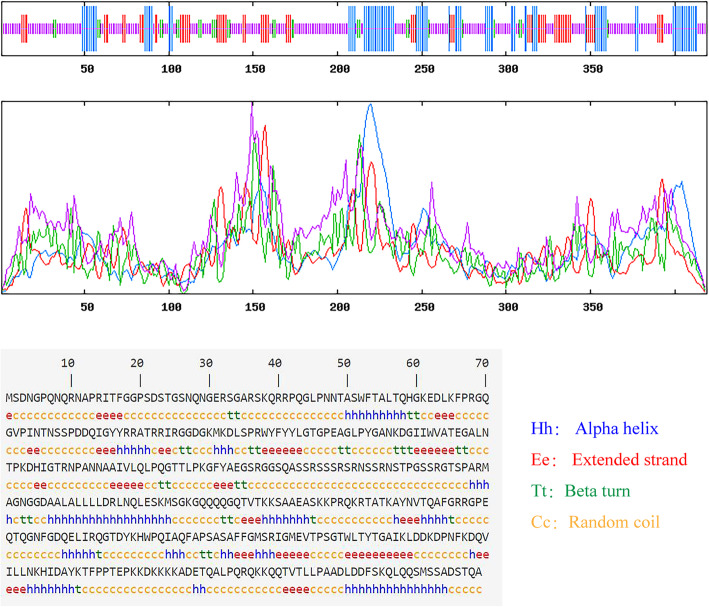
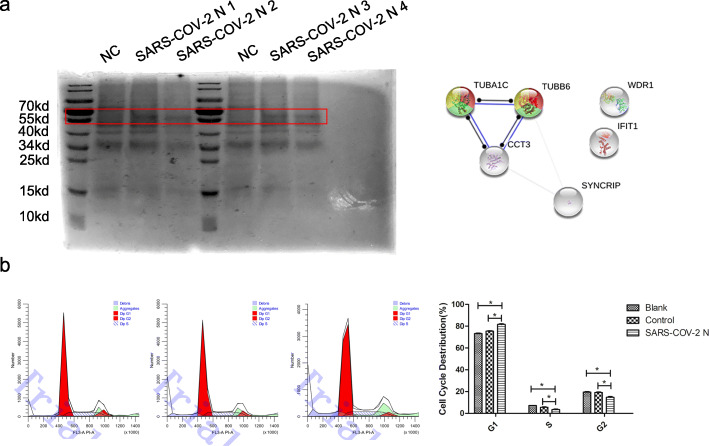
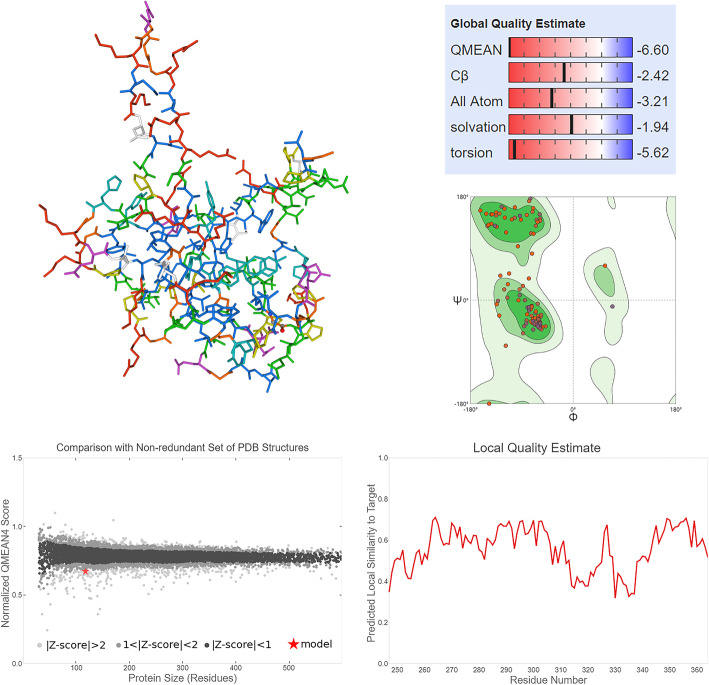
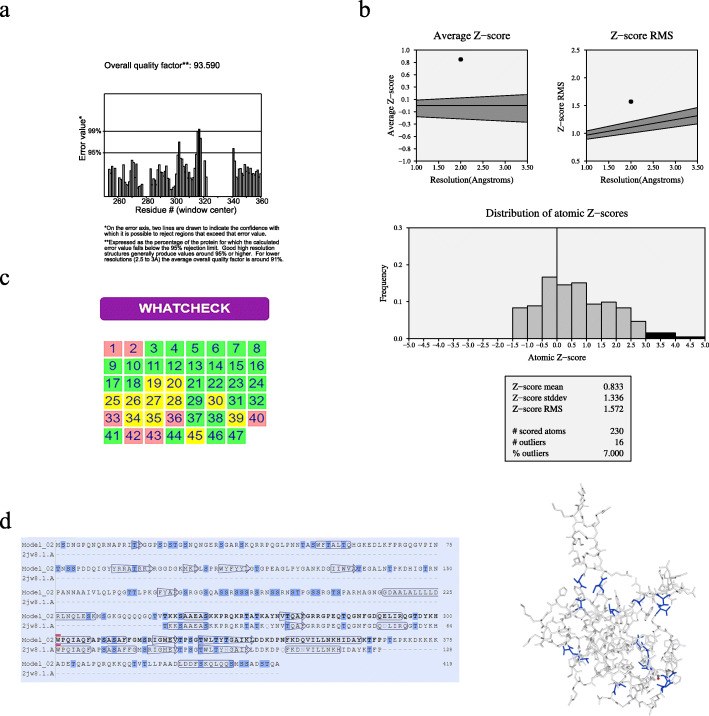
SARS-COV-2 N protein composed of 419 aa, is a 45.6 kDa positively charged unstable hydrophobic protein. It has 91 and 49% similarity to SARS-CoV and MERS-CoV and is predicted to be predominantly a nuclear protein. It mainly contains random coil (55.13%) of which the tertiary structure was further determined with high reliability (95.76%). Cells transfected with SARS-COV-2 N protein usually show a G1/S phase block company with an increased expression of TUBA1C, TUBB6. At last, our analysis of SARS-COV-2 N protein predicted a total number of 12 phosphorylated sites and 9 potential protein kinases which would significantly affect SARS-COV-2 N protein function.
In this study, we report the physicochemical properties, subcellular localization, and biological function of SARS-COV-2 N protein. The 12 phosphorylated sites and 9 potential protein kinase sites in SARS-COV-2 N protein may serve as promising targets for drug discovery and development for of a recombinant virus vaccine.
世界卫生组织将一种名为 2019 年冠状病毒病(COVID-19)的严重肺炎形式在全球范围内广泛传播。严重急性呼吸系统综合征冠状病毒 2(SARS-CoV-2)被证实是 COVID-19 的主要病原体。在本研究中,我们对 SARS-CoV-2 的核衣壳进行了深入分析,以确定可能有助于识别治疗靶标的潜在靶标。
通过 PSORT II 预测和 ProtParam 工具分析 SARS-CoV-2 N 蛋白的亚细胞定位和理化性质。然后应用 SOPMA 工具和 swiss-model 分析 N 蛋白的结构。接下来,通过质谱分析和流式细胞术探索其生物学功能。最后,通过 NetPhos3.1 Server 和 PROVEAN PROTEIN 分析其潜在的磷酸化位点。
SARS-CoV-2 N 蛋白由 419 个氨基酸组成,是一种 45.6 kDa 的带正电荷的不稳定疏水性蛋白。它与 SARS-CoV 和 MERS-CoV 的相似性分别为 91%和 49%,预测主要为核蛋白。它主要包含无规卷曲(55.13%),其三级结构具有很高的可靠性(95.76%)。转染 SARS-CoV-2 N 蛋白的细胞通常会出现 G1/S 期阻滞,同时 TUBA1C、TUBB6 的表达增加。最后,我们对 SARS-CoV-2 N 蛋白的分析预测了总共 12 个磷酸化位点和 9 个潜在的蛋白激酶,这将显著影响 SARS-CoV-2 N 蛋白的功能。
在这项研究中,我们报告了 SARS-CoV-2 N 蛋白的理化性质、亚细胞定位和生物学功能。SARS-CoV-2 N 蛋白中的 12 个磷酸化位点和 9 个潜在的蛋白激酶位点可能成为药物发现和开发用于重组病毒疫苗的有前途的靶标。