Karolyi Florian, Morawetz Linde, Colville Jonathan F, Handschuh Stephan, Metscher Brian D, Krenn Harald W
Department of Integrative Zoology, Faculty of Life Science, University of Vienna, Althanstrasse 14, 1090, Vienna, Austria,
Naturwissenschaften. 2013 Nov;100(11):1083-93. doi: 10.1007/s00114-013-1114-6. Epub 2013 Nov 21.
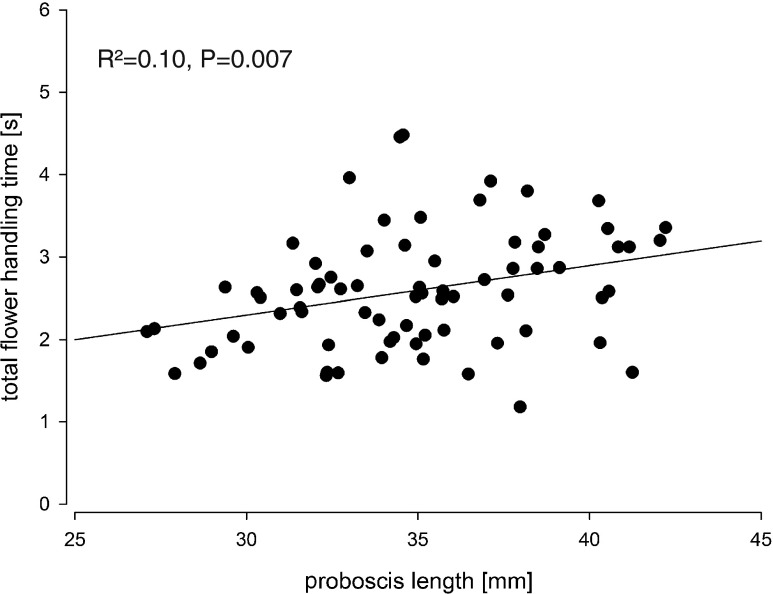
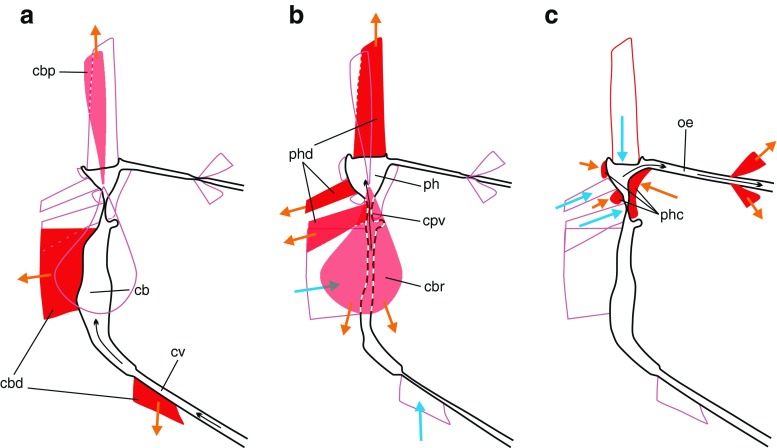
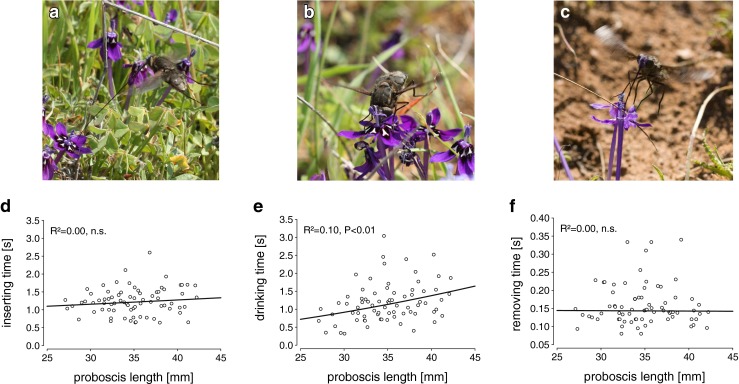
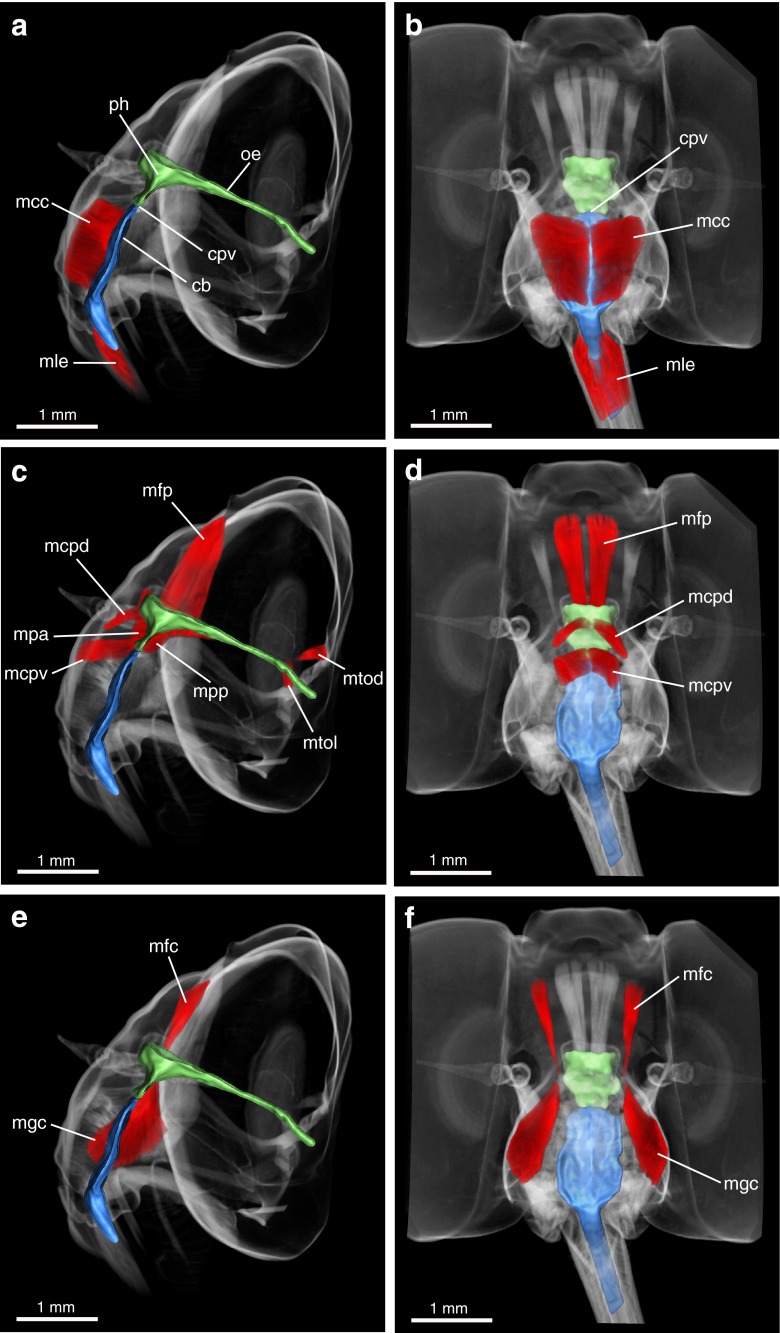
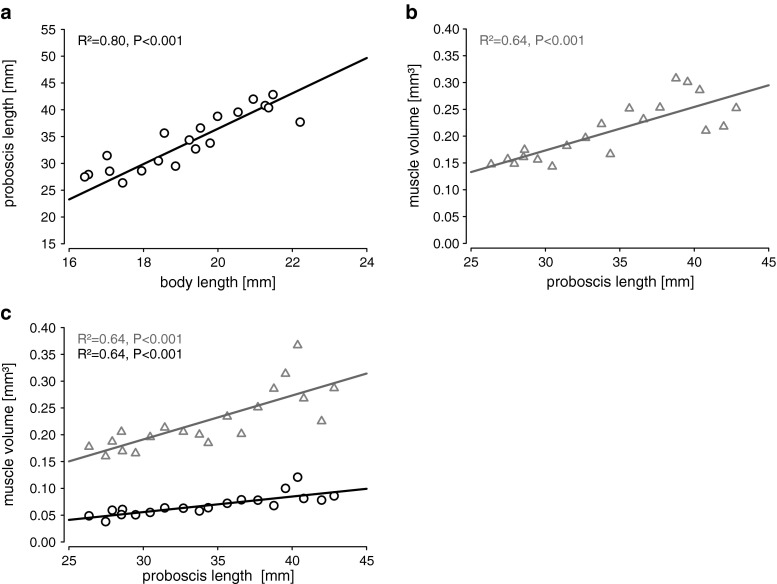
A well-developed suction pump in the head represents an important adaptation for nectar-feeding insects, such as Hymenoptera, Lepidoptera and Diptera. This pumping organ creates a pressure gradient along the proboscis, which is responsible for nectar uptake. The extremely elongated proboscis of the genus Prosoeca (Nemestrinidae) evolved as an adaptation to feeding from long, tubular flowers. According to the functional constraint hypothesis, nectar uptake through a disproportionately elongated, straw-like proboscis increases flower handling time and consequently lowers the energy intake rate. Due to the conspicuous length variation of the proboscis of Prosoeca, individuals with longer proboscides are hypothesised to have longer handling times. To test this hypothesis, we used field video analyses of flower-visiting behaviour, detailed examinations of the suction pump morphology and correlations of proboscis length with body length and suction pump dimensions. Using a biomechanical framework described for nectar-feeding Lepidoptera in relation to proboscis length and suction pump musculature, we describe and contrast the system in long-proboscid flies. Flies with longer proboscides spent significantly more time drinking from flowers. In addition, proboscis length and body length showed a positive allometric relationship. Furthermore, adaptations of the suction pump included an allometric relationship between proboscis length and suction pump muscle volume and a combination of two pumping organs. Overall, the study gives detailed insight into the adaptations required for long-proboscid nectar feeding, and comparisons with other nectar-sucking insects allow further considerations of the evolution of the suction pump in insects with sucking mouthparts.
头部发育良好的抽吸泵是膜翅目、鳞翅目和双翅目等吸食花蜜昆虫的一项重要适应性特征。这种抽吸器官会沿着喙管产生一个压力梯度,负责吸取花蜜。Prosoeca属(长足虻科)的喙管极度延长,是为适应从长管状花朵中取食而进化形成的。根据功能限制假说,通过不成比例延长的吸管状喙管吸取花蜜会增加处理花朵的时间,从而降低能量摄入率。由于Prosoeca喙管长度差异显著,因此推测喙管较长的个体处理花朵的时间更长。为了验证这一假说,我们对访花行为进行了野外视频分析,详细检查了抽吸泵的形态,并分析了喙管长度与体长以及抽吸泵尺寸之间的相关性。利用针对吸食花蜜的鳞翅目昆虫喙管长度和抽吸泵肌肉组织所描述的生物力学框架,我们描述并对比了长喙蝇类的这一系统。喙管较长的苍蝇从花朵中吸食花蜜所花费的时间显著更长。此外,喙管长度与体长呈现正异速生长关系。此外,抽吸泵的适应性特征包括喙管长度与抽吸泵肌肉体积之间的异速生长关系以及两个抽吸器官的组合。总体而言,这项研究深入洞察了长喙昆虫吸食花蜜所需的适应性特征,与其他吸食花蜜昆虫的比较有助于进一步思考具有刺吸式口器昆虫抽吸泵的进化过程。