Cassol Edana, Misra Vikas, Morgello Susan, Gabuzda Dana
Dana Farber Cancer Institute, Harvard Medical School, Boston, MA, USA.
J Neuroimmune Pharmacol. 2013 Dec;8(5):1087-97. doi: 10.1007/s11481-013-9512-2. Epub 2013 Nov 21.
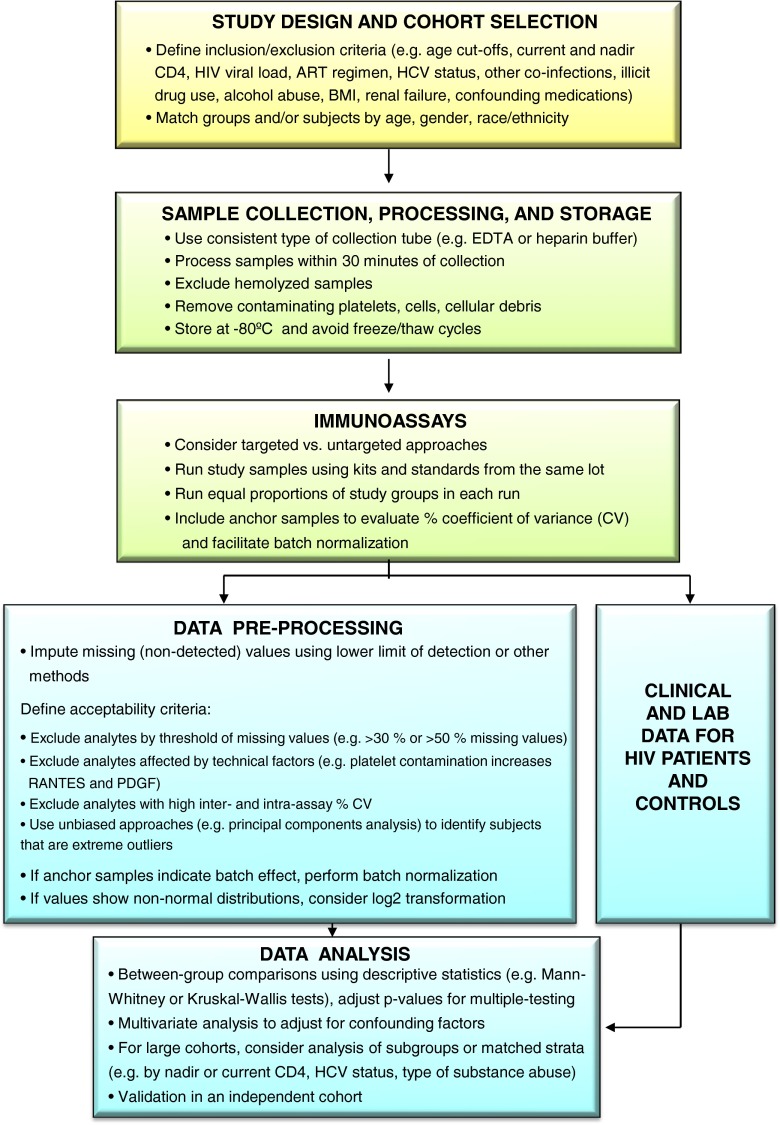
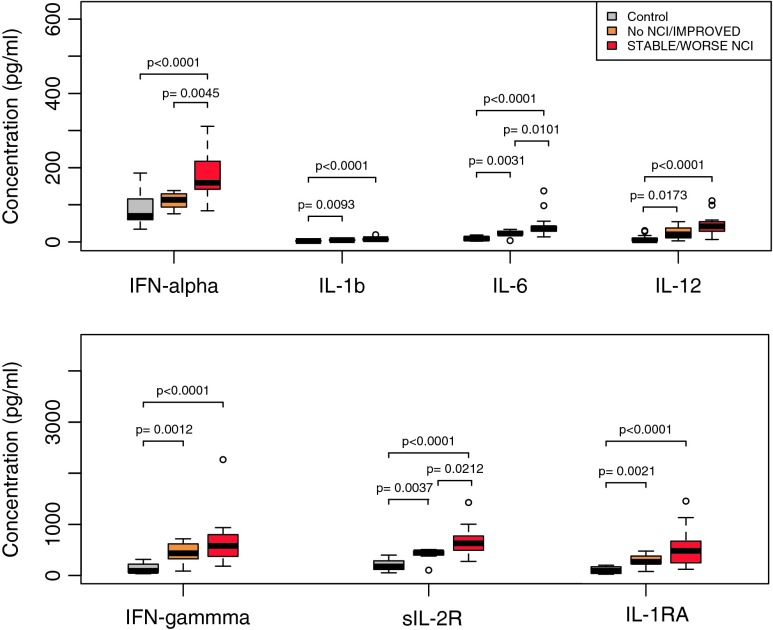
Despite reduced prevalence of severe forms of HIV-associated neurocognitive disorders (HAND) on current antiretroviral therapy (ART) regimens, milder forms of neurocognitive impairment (NCI) remain prevalent in HIV-infected populations. These mild forms of HAND consist of subtypes, probably reflecting distinct, though possibly overlapping, pathophysiological mechanisms. Factors associated with HAND in HIV patients with prolonged viral suppression on ART include older age, low nadir CD4, active HCV co-infection, and cardiovascular risk factors, but underlying mechanisms and their relationship to innate immune activation, chronic inflammation, and other features of systemic disease are poorly understood. In this article, we discuss applications and limitations of plasma inflammatory biomarkers for studies on HAND in HIV patients on ART and describe an analysis pipeline to reduce common sources of noise and increase likelihood of identifying relevant inflammatory biomarkers. Clinical covariates and comorbidities that influence inflammatory biomarkers, such as aging, obesity, metabolic abnormalities, HCV co-infection, and substance abuse, are also reviewed. As an example for using this analytic pipeline, we present an exploratory study of 22 plasma inflammatory biomarkers (IFN-α 2b and -γ, 16 cytokines/chemokines, sIL-2R, sCD14, HA, and YKL-40) in a cohort of HIV-infected individuals with advanced disease, frequent HCV co-infection, and viral suppression on ART. The identification of inflammatory biomarkers associated with HAND in HIV+ patients on ART may be useful to distinguish between HAND subtypes with distinct pathophysiology, and is important for achieving a systems-level understanding of the biology of these disorders, developing effective therapies, and evaluating therapeutic outcomes.
尽管目前的抗逆转录病毒疗法(ART)方案使严重形式的HIV相关神经认知障碍(HAND)的患病率有所降低,但较轻形式的神经认知障碍(NCI)在HIV感染人群中仍然普遍存在。这些轻度形式的HAND由多种亚型组成,可能反映了不同但可能重叠的病理生理机制。在接受ART治疗且病毒得到长期抑制的HIV患者中,与HAND相关的因素包括年龄较大、最低CD4水平较低、合并活动性丙型肝炎病毒(HCV)感染以及心血管危险因素,但潜在机制及其与先天免疫激活、慢性炎症和全身性疾病其他特征的关系仍知之甚少。在本文中,我们讨论了血浆炎症生物标志物在接受ART治疗的HIV患者HAND研究中的应用和局限性,并描述了一个分析流程,以减少常见的噪声来源并增加识别相关炎症生物标志物的可能性。我们还综述了影响炎症生物标志物的临床协变量和合并症,如衰老、肥胖、代谢异常、HCV合并感染和药物滥用。作为使用此分析流程的一个例子,我们对一组患有晚期疾病、频繁合并HCV感染且在ART治疗下实现病毒抑制的HIV感染者进行了一项探索性研究,检测了22种血浆炎症生物标志物(IFN-α 2b和 -γ、16种细胞因子/趋化因子、sIL-2R、sCD14、HA和YKL-40)。识别接受ART治疗的HIV阳性患者中与HAND相关的炎症生物标志物,可能有助于区分具有不同病理生理学的HAND亚型,对于从系统层面理解这些疾病的生物学机制、开发有效疗法以及评估治疗效果具有重要意义。