Department of Hematology and Medical Oncology, Emory University, Atlanta, Georgia, United States of America ; Department of Medical Oncology, University of Messina, Messina, Italy.
PLoS One. 2013 Nov 19;8(11):e81162. doi: 10.1371/journal.pone.0081162. eCollection 2013.
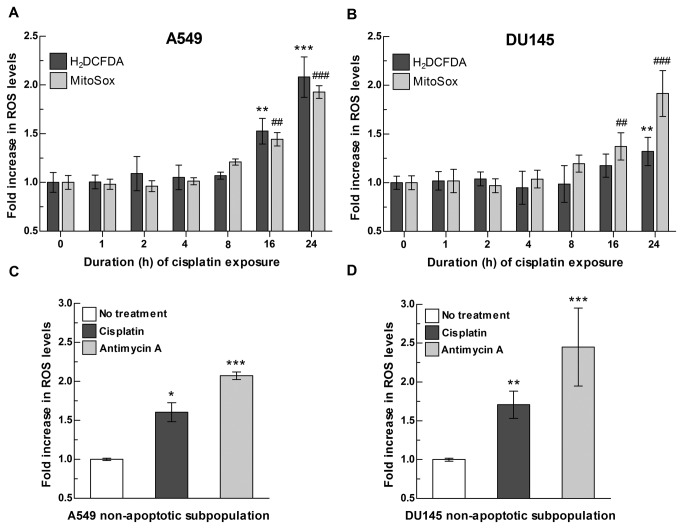
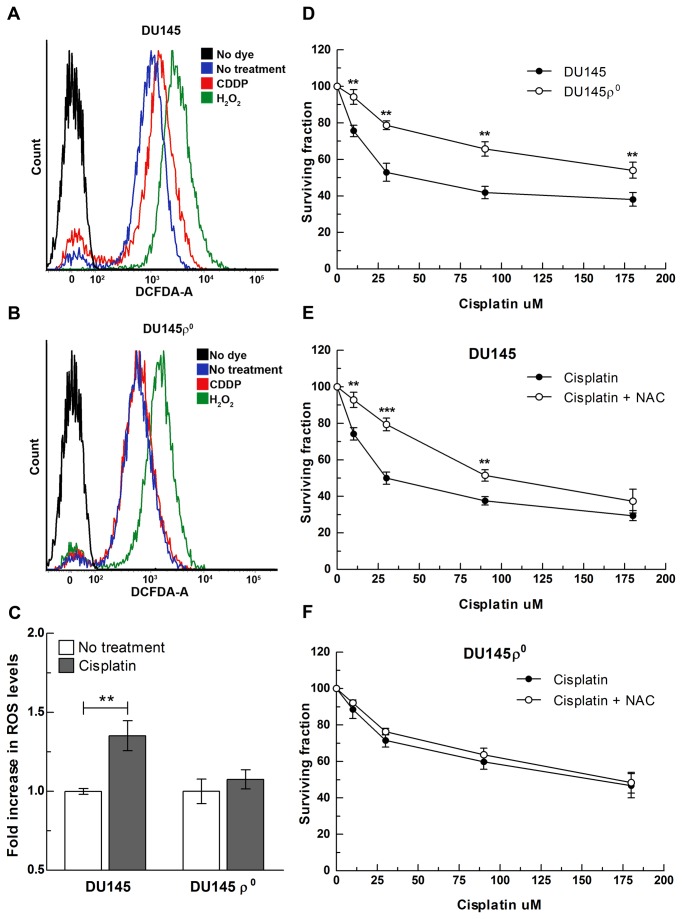
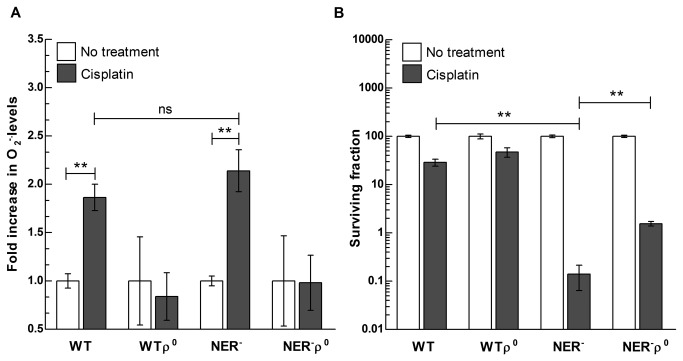
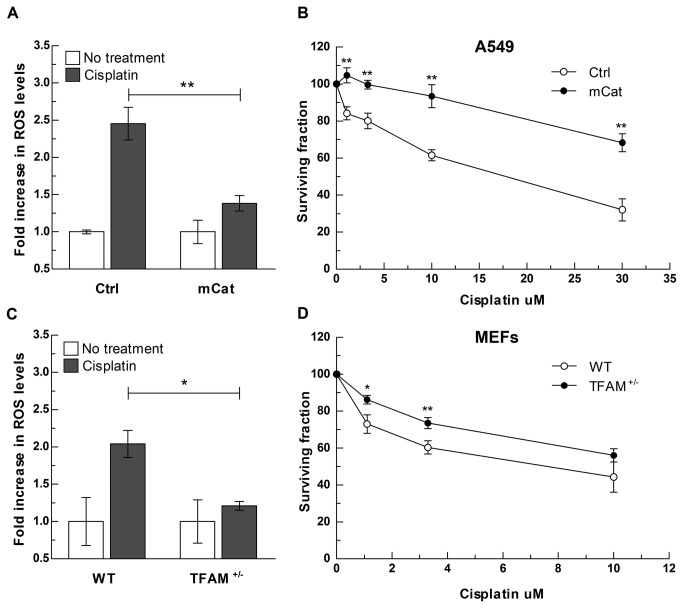
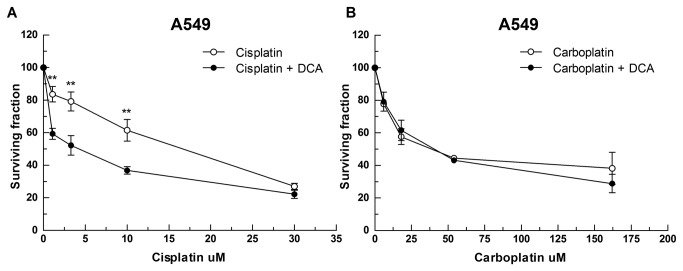
Cisplatin is one of the most effective and widely used anticancer agents for the treatment of several types of tumors. The cytotoxic effect of cisplatin is thought to be mediated primarily by the generation of nuclear DNA adducts, which, if not repaired, cause cell death as a consequence of DNA replication and transcription blockage. However, the ability of cisplatin to induce nuclear DNA (nDNA) damage per se is not sufficient to explain its high degree of effectiveness nor the toxic effects exerted on normal, post-mitotic tissues. Oxidative damage has been observed in vivo following exposure to cisplatin in several tissues, suggesting a role for oxidative stress in the pathogenesis of cisplatin-induced dose-limiting toxicities. However, the mechanism of cisplatin-induced generation of ROS and their contribution to cisplatin cytotoxicity in normal and cancer cells is still poorly understood. By employing a panel of normal and cancer cell lines and the budding yeast Saccharomyces cerevisiae as model system, we show that exposure to cisplatin induces a mitochondrial-dependent ROS response that significantly enhances the cytotoxic effect caused by nDNA damage. ROS generation is independent of the amount of cisplatin-induced nDNA damage and occurs in mitochondria as a consequence of protein synthesis impairment. The contribution of cisplatin-induced mitochondrial dysfunction in determining its cytotoxic effect varies among cells and depends on mitochondrial redox status, mitochondrial DNA integrity and bioenergetic function. Thus, by manipulating these cellular parameters, we were able to enhance cisplatin cytotoxicity in cancer cells. This study provides a new mechanistic insight into cisplatin-induced cell killing and may lead to the design of novel therapeutic strategies to improve anticancer drug efficacy.
顺铂是治疗多种肿瘤最有效和最广泛使用的抗癌药物之一。顺铂的细胞毒性作用被认为主要是通过生成核 DNA 加合物介导的,如果不加修复,这些加合物会导致 DNA 复制和转录受阻,从而导致细胞死亡。然而,顺铂本身诱导核 DNA(nDNA)损伤的能力不足以解释其高度有效性,也不能解释其对正常有丝分裂后组织的毒性作用。在几种组织中暴露于顺铂后,体内观察到氧化损伤,表明氧化应激在顺铂诱导的剂量限制毒性的发病机制中起作用。然而,顺铂诱导 ROS 生成的机制及其在正常和癌细胞中对顺铂细胞毒性的贡献仍知之甚少。通过使用一系列正常和癌细胞系以及 budding 酵母 Saccharomyces cerevisiae 作为模型系统,我们表明,暴露于顺铂会诱导线粒体依赖性 ROS 反应,这显著增强了由 nDNA 损伤引起的细胞毒性作用。ROS 的生成与顺铂诱导的 nDNA 损伤的量无关,并且发生在由于蛋白质合成受损而导致的线粒体中。顺铂诱导的线粒体功能障碍在决定其细胞毒性作用方面在细胞之间存在差异,并且取决于线粒体氧化还原状态、线粒体 DNA 完整性和生物能功能。因此,通过操纵这些细胞参数,我们能够增强癌细胞中顺铂的细胞毒性。本研究为顺铂诱导的细胞杀伤提供了新的机制见解,并可能导致设计新的治疗策略来提高抗癌药物的疗效。