
早期解剖学意义上现代人的错颌畸形:对现代牙列不齐病因学的反思。
Malocclusion in early anatomically modern human: a reflection on the etiology of modern dental misalignment.
机构信息
Department of Orthodontics, Maurice and Gabriela Goldschleger School of Dental Medicine, Tel Aviv University, Tel-Aviv, Israel . ; Department of Anatomy and Anthropology, Sackler Faculty of Medicine, Tel-Aviv University, Tel-Aviv, Israel.
出版信息
PLoS One. 2013 Nov 20;8(11):e80771. doi: 10.1371/journal.pone.0080771. eCollection 2013.
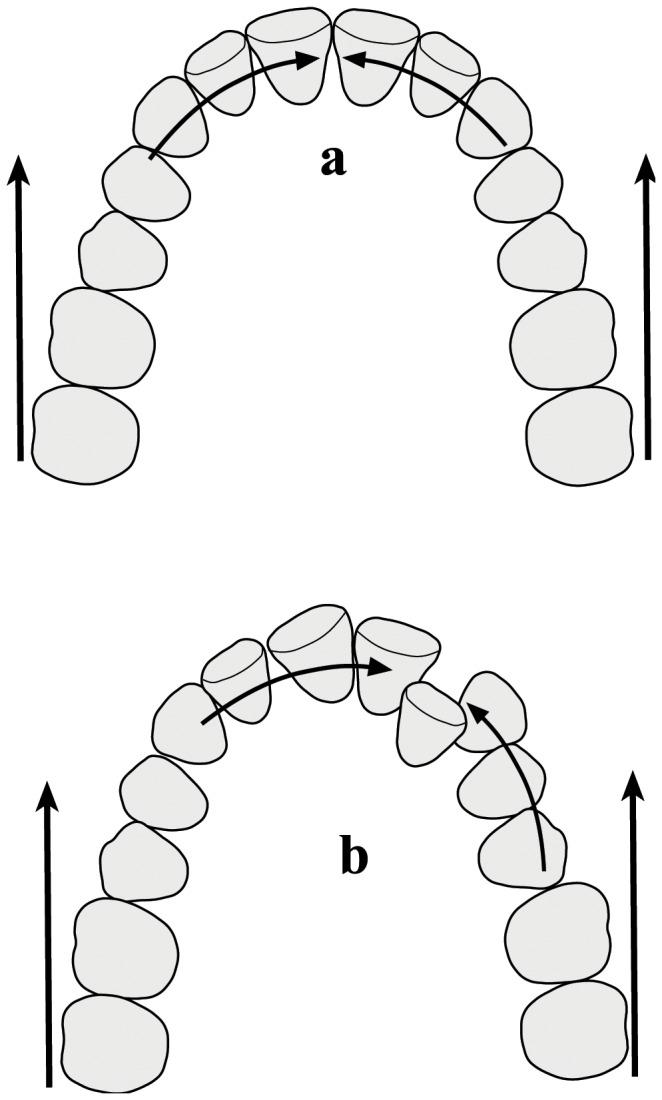
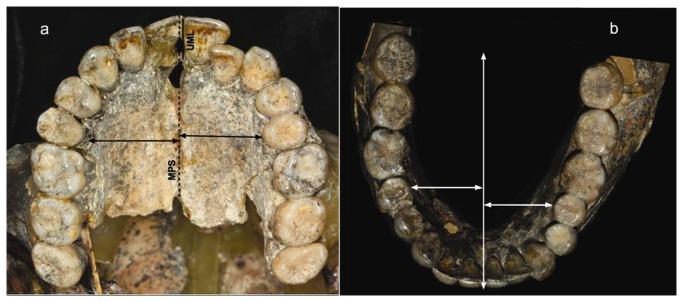
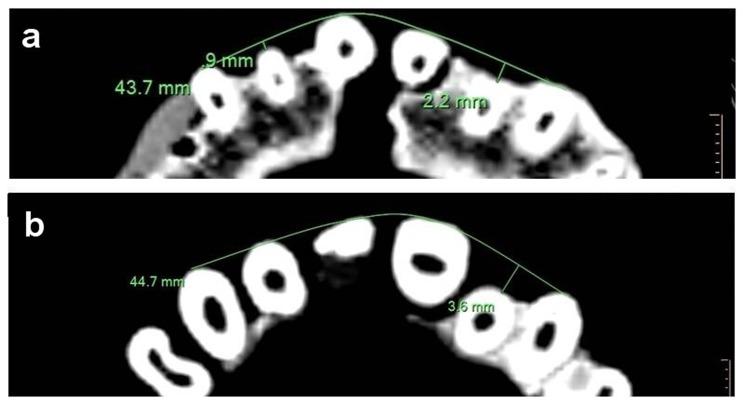
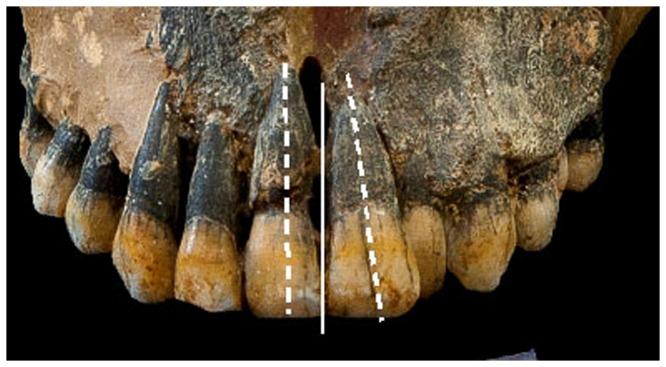
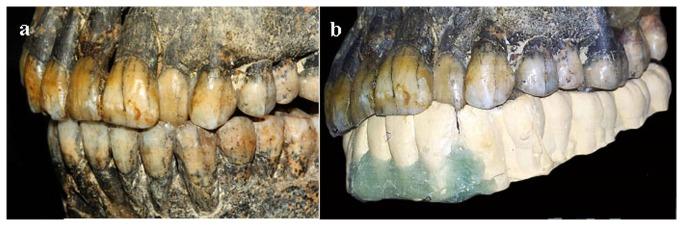
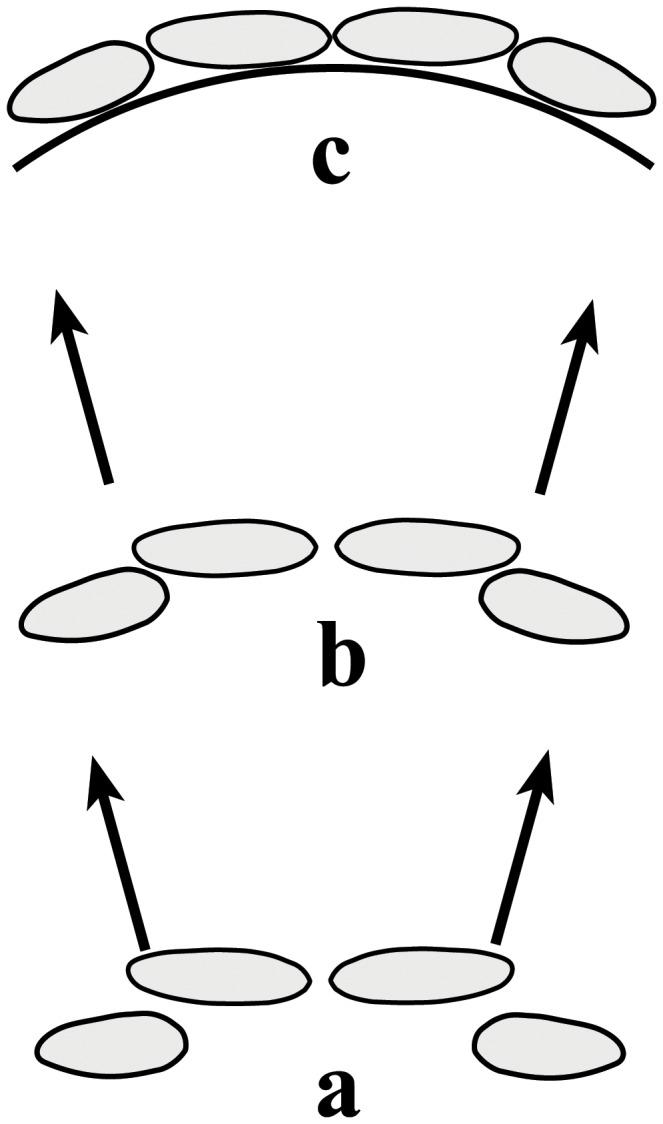
Malocclusions are common in modern populations. Yet, as the study of occlusion requires an almost intact dentition in both the maxilla and mandible, searching for the ultimate cause of malocclusion is a challenge: relatively little ancient material is available for research on occlusal states. The Qafzeh 9 skull is unique, as its preserved dentition allowed us to investigate the presence and manifestations of malocclusion. The aim of this study was thus to examine the occlusal condition in the Qafzeh 9 specimen in light of modern knowledge regarding the etiology of malocclusion. We revealed a pathologic occlusion in the Qafzeh 9 skull that probably originated in the early developmental stage of the dentition, and was aggravated by forces applied by mastication. When arch continuity is interrupted due to misalignment of teeth as in this case, force transmission is not equal on both sides, causing intra-arch outcomes such as mesialization of the teeth, midline deviation, rotations and the aggravation of crowding. All are evident in the Qafzeh 9 skull: the midline deviates to the left; the incisors rotate mesio-buccally; the left segment is constricted; the left first molar is buccally positioned and the left premolars palatally tilted. The inter-arch evaluation revealed anterior cross bite with functional shift that might affect force transmission and bite force. In conclusion, the findings of the current study suggest that malocclusion of developmental origin was already present in early anatomically modern humans (AMH) (the present case being the oldest known case, dated to ca. 100,000 years); that there is no basis to the notion that early AMH had a better adjustment between teeth and jaw size; and that jaw-teeth size discrepancy could be found in prehistoric populations and is not a recent phenomenon.
错颌畸形在现代人群中很常见。然而,由于研究咬合需要上下颌都有几乎完整的牙齿,因此寻找错颌畸形的根本原因是一个挑战:相对较少的古代材料可用于研究咬合状态。Qafzeh 9 颅骨是独一无二的,因为其保存完好的牙齿使我们能够研究错颌的存在和表现。因此,本研究的目的是根据错颌畸形的病因学现代知识来检查 Qafzeh 9 标本的咬合状况。我们在 Qafzeh 9 颅骨中发现了一种病理性的咬合,这种咬合可能起源于牙齿的早期发育阶段,并因咀嚼力的作用而加重。当牙齿排列不齐导致牙弓连续性中断时,力的传递就不会在两侧均等,导致牙弓内的结果,如牙齿近中移动、中线偏斜、旋转和拥挤加剧。所有这些都在 Qafzeh 9 颅骨中显而易见:中线偏向左侧;切牙向颊侧旋转;左侧段狭窄;左侧第一磨牙颊向位置,左侧前磨牙腭向倾斜。牙弓间的评估显示前牙交叉咬合伴功能性移位,可能影响力的传递和咬合力。总之,本研究的发现表明,发育起源的错颌畸形已经存在于早期的解剖学现代人(AMH)中(本病例是已知最古老的病例,距今约 10 万年);早期 AMH 的牙齿和颌骨大小之间没有更好的调整的说法是没有依据的;在史前人群中可以发现颌骨牙齿大小差异,而且这不是一个最近的现象。



 Zotero 插件