Hoefer Julia, Kern Johann, Ofer Philipp, Eder Iris E, Schäfer Georg, Dietrich Dimo, Kristiansen Glen, Geley Stephan, Rainer Johannes, Gunsilius Eberhard, Klocker Helmut, Culig Zoran, Puhr Martin
Experimental Urology, Department of Urology, Innsbruck Medical University, Anichstrasse 35, A-6020 Innsbruck, Austria Oncotyrol Laboratory for Tumor Biology and Angiogenesis, Innsbruck, Austria Institute of Pathology, University Hospital Bonn, Bonn, Germany Division of Molecular Pathophysiology, Innsbruck Biocenter, Medical University Innsbruck, Innsbruck, Austria.
Endocr Relat Cancer. 2014 Jan 30;21(2):175-87. doi: 10.1530/ERC-13-0446. Print 2014 Apr.
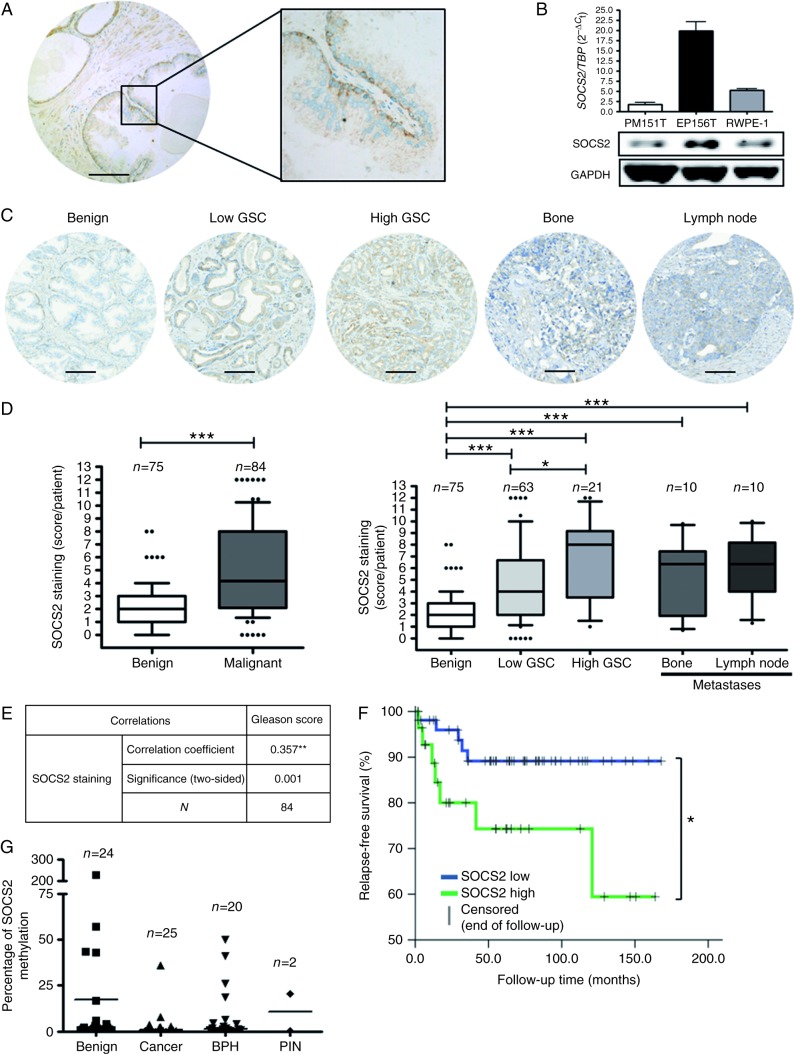
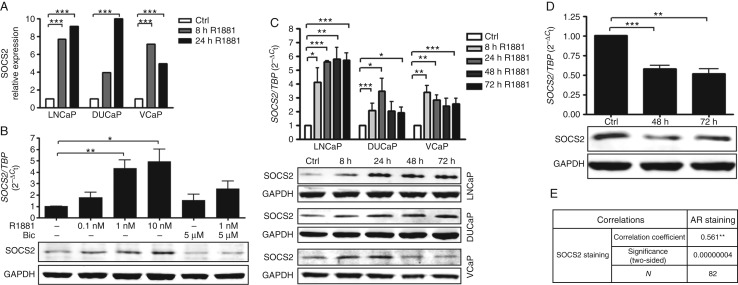
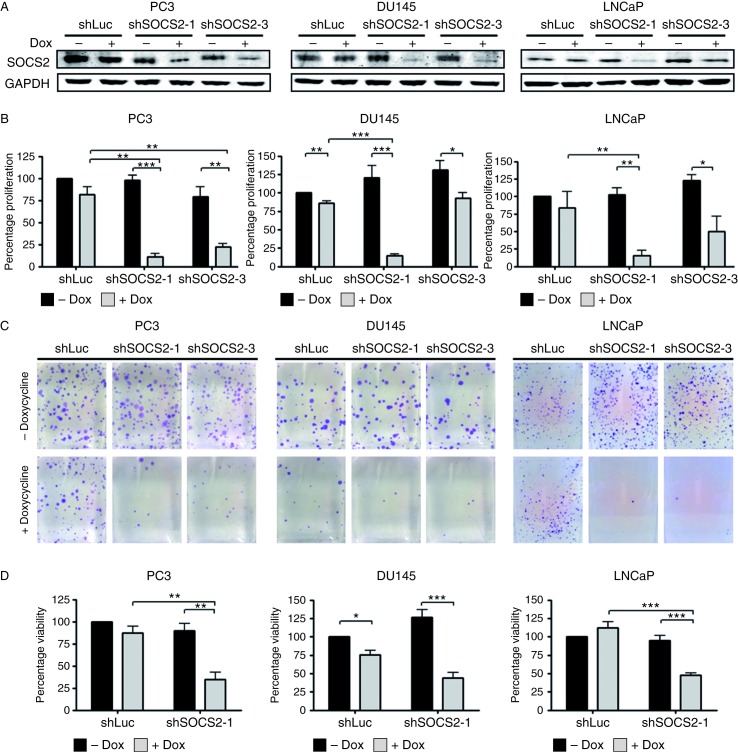
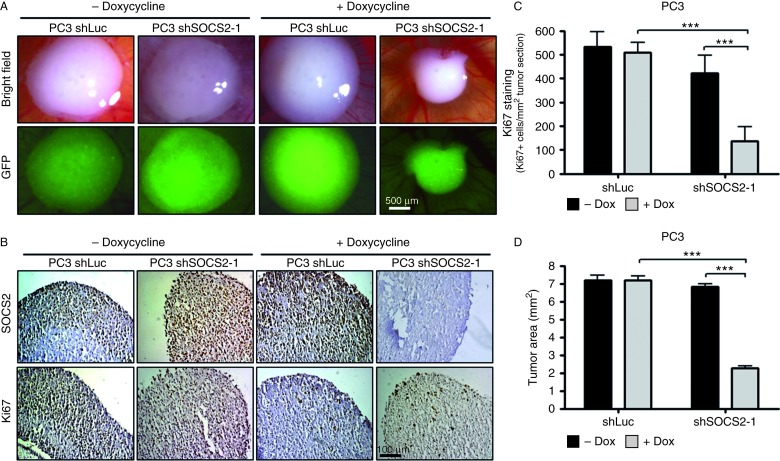
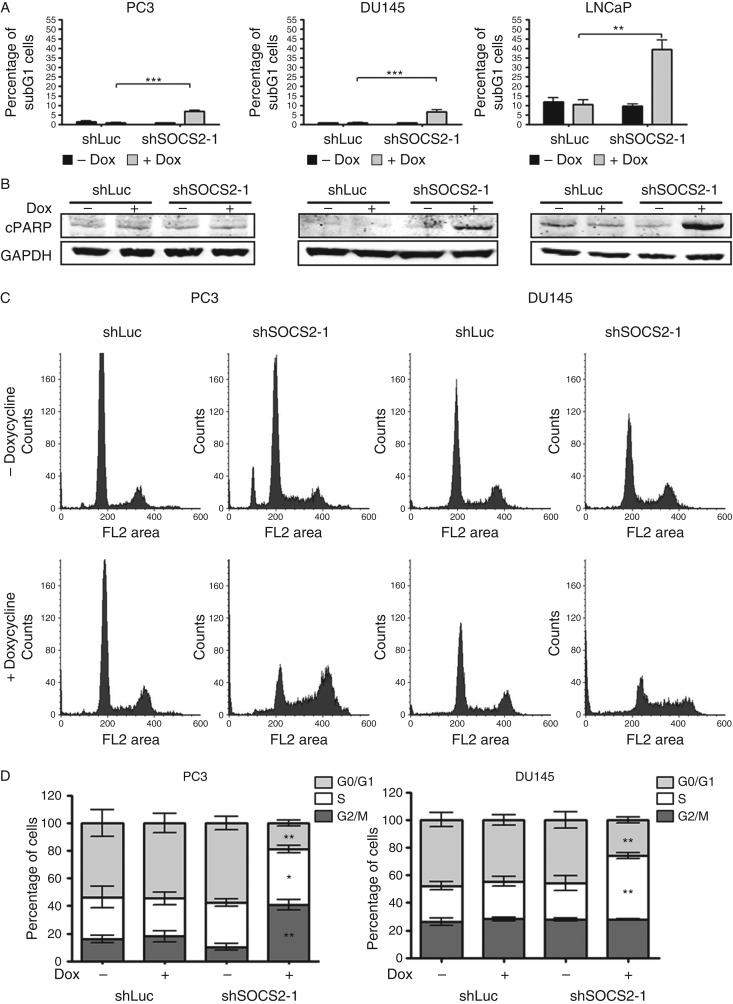
Deregulation of cytokine and growth factor signaling due to an altered expression of endogenous regulators is well recognized in prostate cancer (PCa) and other cancers. Suppressor of cytokine signaling 2 (SOCS2) is a key regulator of the GH, IGF, and prolactin signaling pathways that have been implicated in carcinogenesis. In this study, we evaluated the expression patterns and functional significance of SOCS2 in PCa. Protein expression analysis employing tissue microarrays from two independent patient cohorts revealed a significantly enhanced expression in tumor tissue compared with benign tissue as well as association with Gleason score and disease progression. In vitro and in vivo assays uncovered the involvement of SOCS2 in the regulation of cell growth and apoptosis. Functionally, SOCS2 knockdown inhibited PCa cell proliferation and xenograft growth in a CAM assay. Decreased cell growth after SOCS2 downregulation was associated with cell-cycle arrest and apoptosis. In addition, we proved that SOCS2 expression is significantly elevated upon androgenic stimulation in androgen receptor (AR)-positive cell lines, providing a possible mechanistic explanation for high SOCS2 levels in PCa tissue. Consequently, SOCS2 expression correlated with AR expression in the malignant tissue of patients. On the whole, our study linked increased SOCS2 expression in PCa with a pro-proliferative role in vitro and in vivo.
由于内源性调节因子表达改变导致的细胞因子和生长因子信号传导失调在前列腺癌(PCa)和其他癌症中已得到充分认识。细胞因子信号传导抑制因子2(SOCS2)是生长激素(GH)、胰岛素样生长因子(IGF)和催乳素信号通路的关键调节因子,这些信号通路与癌症发生有关。在本研究中,我们评估了SOCS2在PCa中的表达模式及其功能意义。利用来自两个独立患者队列的组织微阵列进行的蛋白质表达分析显示,与良性组织相比,肿瘤组织中的表达显著增强,并且与Gleason评分和疾病进展相关。体外和体内试验揭示了SOCS2参与细胞生长和凋亡的调节。在功能上,在鸡胚绒毛尿囊膜(CAM)试验中,敲低SOCS2可抑制PCa细胞增殖和异种移植瘤生长。SOCS2下调后细胞生长减少与细胞周期停滞和凋亡有关。此外,我们证明在雄激素受体(AR)阳性细胞系中,雄激素刺激后SOCS2表达显著升高,这为PCa组织中SOCS2水平升高提供了一种可能的机制解释。因此,在患者的恶性组织中,SOCS2表达与AR表达相关。总体而言,我们的研究将PCa中SOCS2表达增加与体外和体内的促增殖作用联系起来。