Grandits Alexander M, Wieser Rotraud
Division of Oncology, Department of Medicine I, Medical University of Vienna, Vienna, Austria; Comprehensive Cancer Center, Vienna, Austria.
Division of Oncology, Department of Medicine I, Medical University of Vienna, Vienna, Austria; Comprehensive Cancer Center, Vienna, Austria.
Exp Hematol. 2021 Jul;99:1-11. doi: 10.1016/j.exphem.2021.05.004. Epub 2021 May 21.
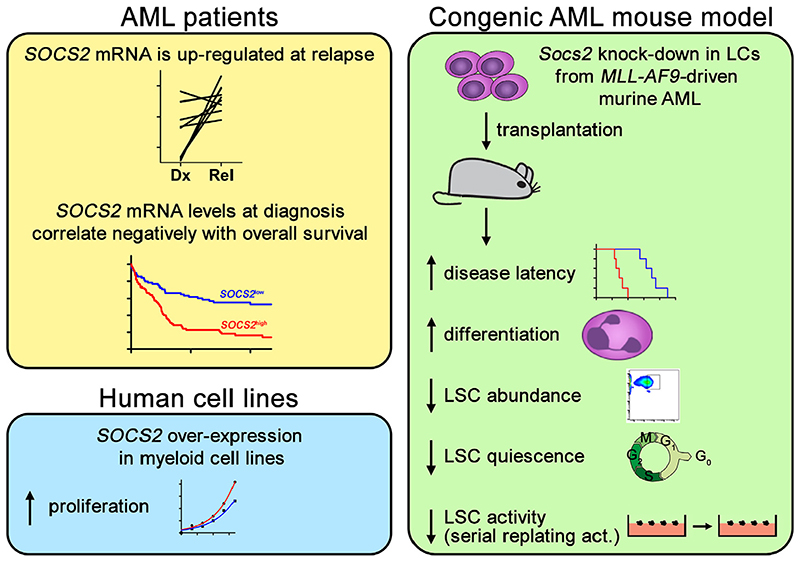
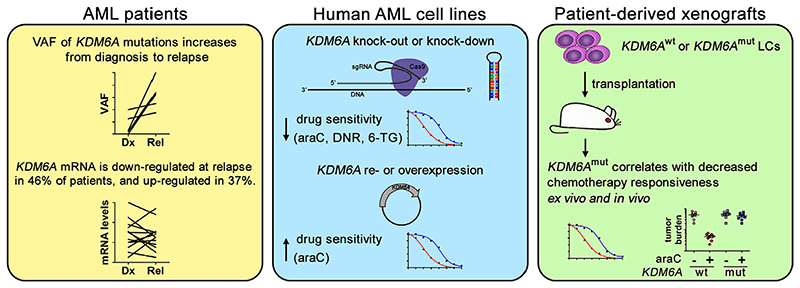
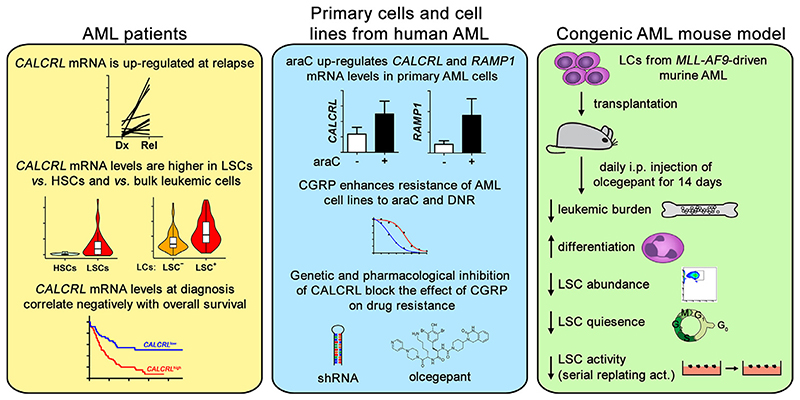
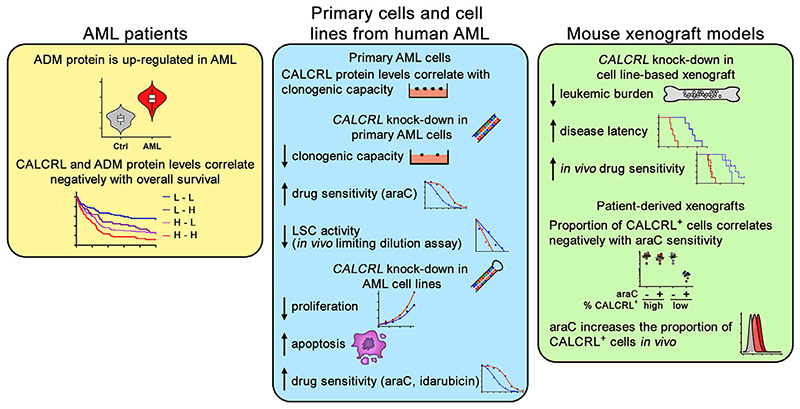
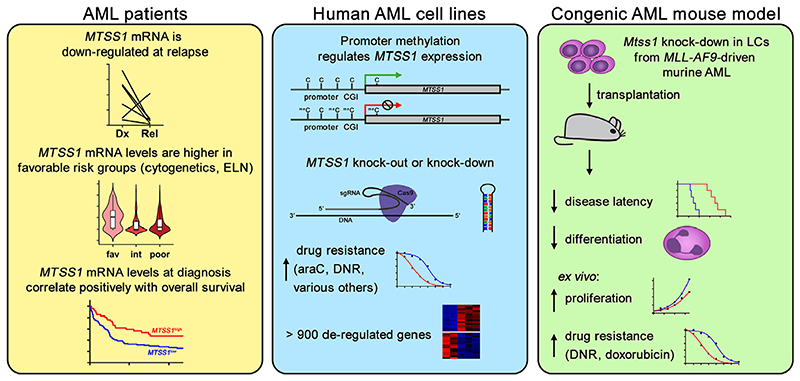
Relapse is associated with therapy resistance and is a major cause of death in acute myeloid leukemia (AML). It is thought to result from the accretion of therapy-refractory leukemic stem cells. Genetic and transcriptional changes that are recurrently gained at relapse are likely to contribute to the increased stemness and decreased therapy responsiveness at this disease stage. Despite the recent approval of several targeted drugs, chemotherapy with cytosine arabinoside and anthracyclines is still the mainstay of AML therapy. Accordingly, a number of studies have investigated genetic and gene expression changes between diagnosis and relapse of patients subjected to such treatment. Genetic alterations recurrently acquired at relapse were identified, but were restricted to small proportions of patients, and their functional characterization is still largely pending. In contrast, the expression of a substantial number of genes was altered consistently between diagnosis and recurrence of AML. Recent studies corroborated the roles of the upregulation of SOCS2 and CALCRL and of the downregulation of MTSS1 and KDM6A in therapy resistance and/or stemness of AML. These findings spur the assumption that functional investigations of genes consistently altered at recurrence of AML have the potential to promote the development of novel targeted drugs that may help to improve the outcome of this currently often fatal disease.
复发与治疗耐药相关,是急性髓系白血病(AML)的主要死因。复发被认为是由于治疗难治性白血病干细胞的累积所致。复发时反复出现的基因和转录变化可能导致该疾病阶段干细胞特性增加和治疗反应性降低。尽管最近有几种靶向药物获批,但阿糖胞苷和蒽环类药物的化疗仍是AML治疗的主要手段。因此,许多研究调查了接受此类治疗的患者在诊断和复发之间的基因和基因表达变化。已确定复发时反复获得的基因改变,但仅限于小部分患者,其功能特征仍大多有待确定。相比之下,大量基因的表达在AML的诊断和复发之间持续改变。最近的研究证实了SOCS2和CALCRL上调以及MTSS1和KDM6A下调在AML治疗耐药和/或干细胞特性中的作用。这些发现促使人们推测,对AML复发时持续改变的基因进行功能研究有可能促进新型靶向药物的开发,这可能有助于改善这种目前往往致命的疾病的治疗结果。