Kwon Sanghoon, Kim Young-Eun, Park Jeong-A, Kim Doo-Sik, Kwon Hyung-Joo, Lee Younghee
Center for Medical Science Research, College of Medicine, Hallym University, Chuncheon 200-702, Korea.
Department of Biochemistry, College of Natural Sciences, Chungbuk National University, Cheongju 361-763, Korea.
BMB Rep. 2014 Apr;47(4):215-20. doi: 10.5483/bmbrep.2014.47.4.157.
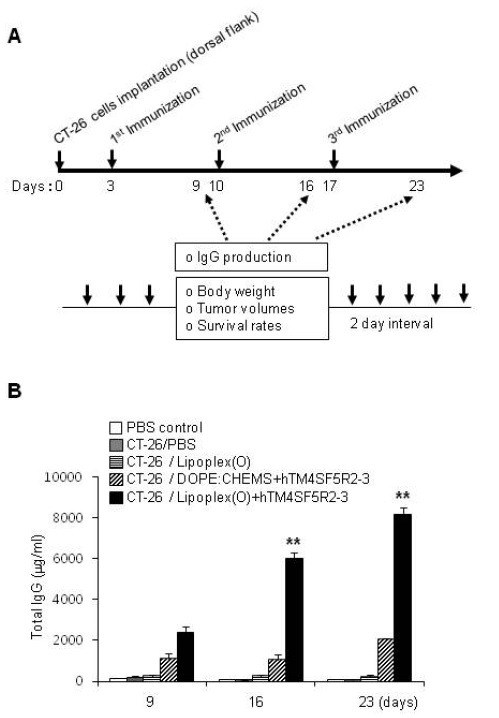
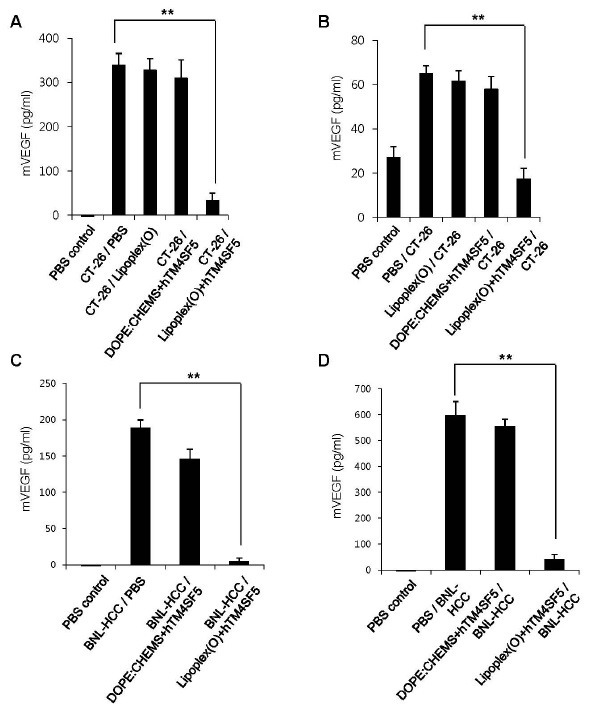
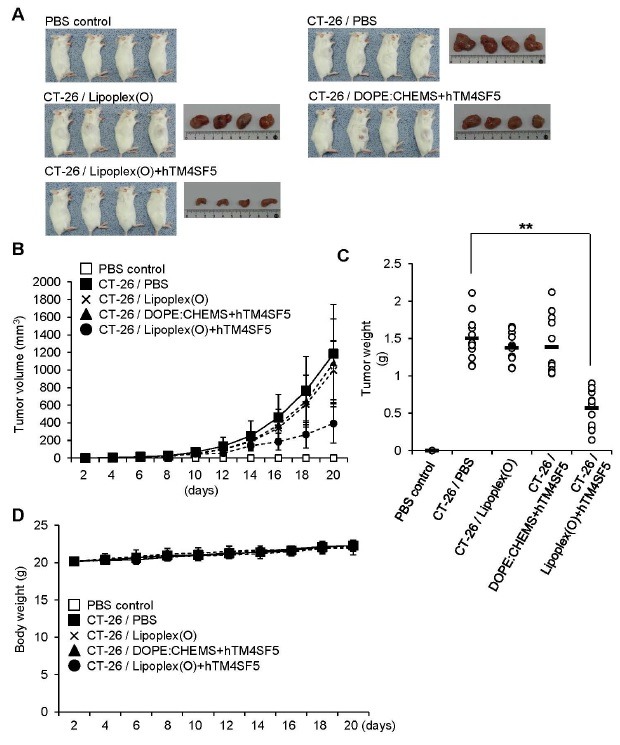
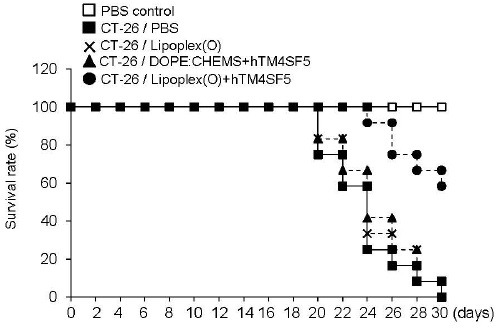
Molecular-targeted therapy has gained attention because of its high efficacy and weak side effects. Previously, we confirmed that transmembrane 4 superfamily member 5 protein (TM4SF5) can serve as a molecular target to prevent or treat hepatocellular carcinoma (HCC). We recently extended the application of the peptide vaccine, composed of CpG-DNA, liposome complex, and TM4SF5 peptide, to prevent colon cancer in a mouse model. Here, we first implanted mice with mouse colon cancer cells and then checked therapeutic effects of the vaccine against tumor growth. Immunization with the peptide vaccine resulted in robust production of TM4SF5-specific antibodies, alleviated tumor growth, and reduced survival rate of the tumor-bearing mice. We also found that serum levels of VEGF were markedly reduced in the mice immunized with the peptide vaccine. Therefore, we suggest that the TM4SF5-specific peptide vaccine has a therapeutic effect against colon cancer in a mouse model.
分子靶向治疗因其高效性和低副作用而备受关注。此前,我们证实跨膜4超家族成员5蛋白(TM4SF5)可作为预防或治疗肝细胞癌(HCC)的分子靶点。最近,我们将由CpG-DNA、脂质体复合物和TM4SF5肽组成的肽疫苗的应用扩展到在小鼠模型中预防结肠癌。在此,我们首先给小鼠植入小鼠结肠癌细胞,然后检查该疫苗对肿瘤生长的治疗效果。用肽疫苗免疫可导致TM4SF5特异性抗体的大量产生,减轻肿瘤生长,并降低荷瘤小鼠的存活率。我们还发现,用肽疫苗免疫的小鼠血清中VEGF水平显著降低。因此,我们认为TM4SF5特异性肽疫苗对小鼠模型中的结肠癌具有治疗作用。