Arthritis Res Ther. 2013 Oct 31;15(5):R174. doi: 10.1186/ar4362.
Our understanding of autoimmunity is skewed considerably towards the late stages of overt disease and chronic inflammation. Defining the targeted organ's role during emergence of autoimmune diseases is, however, critical in order to define their etiology, early and covert disease phases and delineate their molecular basis.
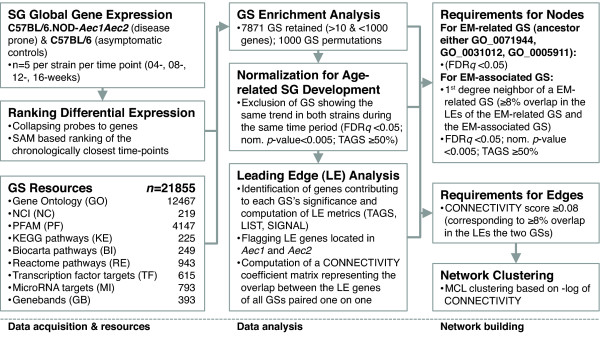
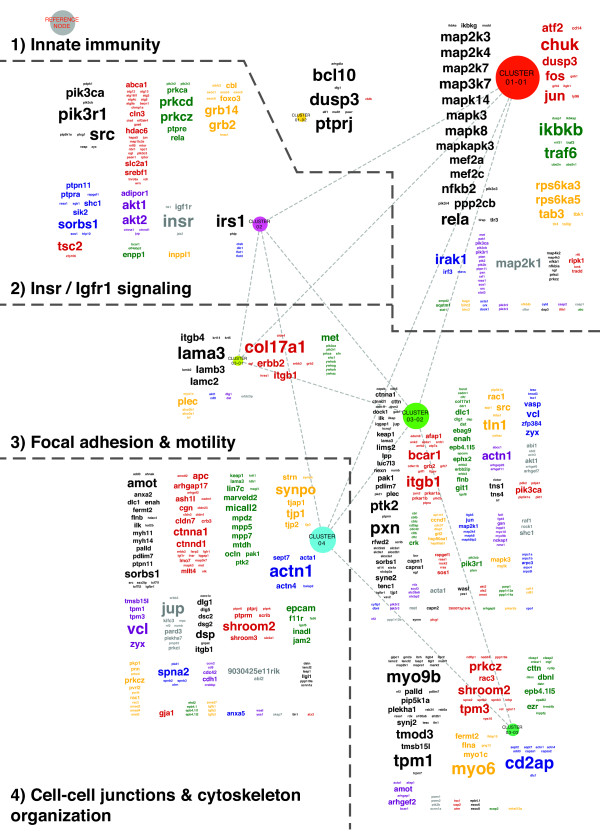
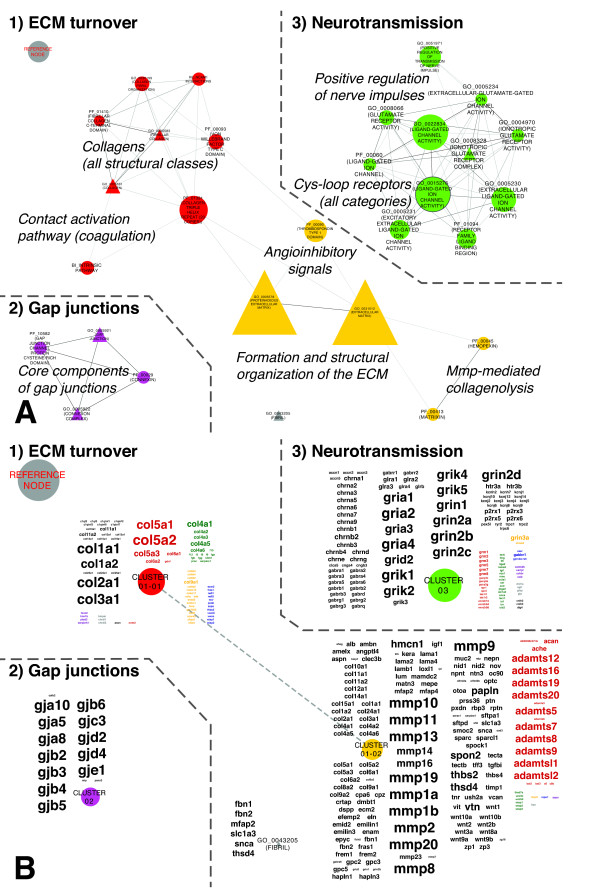
Using Sjögren's syndrome (SS) as an exemplary rheumatic autoimmune disease and temporal global gene-expression profiling, we systematically mapped the transcriptional landscapes and chronological interrelationships between biological themes involving the salivary glands' extracellular milieu. The time period studied spans from pre- to subclinical and ultimately to onset of overt disease in a well-defined model of spontaneous SS, the C57BL/6.NOD-Aec1Aec2 strain. In order to answer this aim of great generality, we developed a novel bioinformatics-based approach, which integrates comprehensive data analysis and visualization within interactive networks. The latter are computed by projecting the datasets as a whole on a priori-defined consensus-based knowledge.
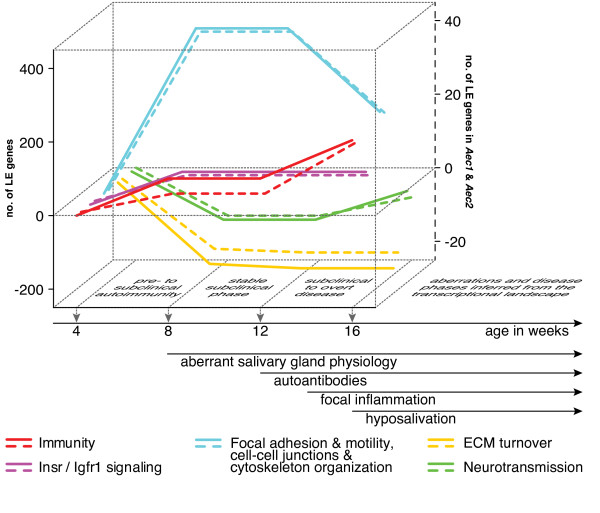
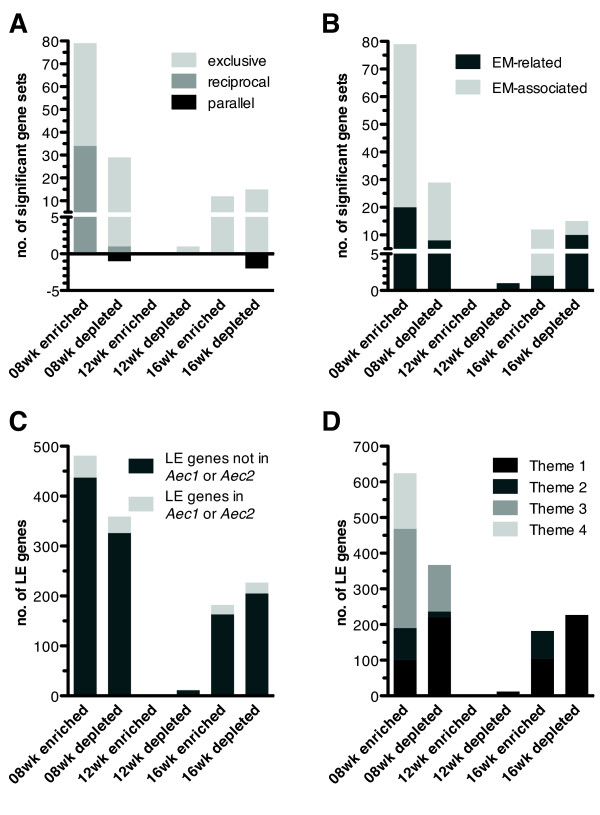
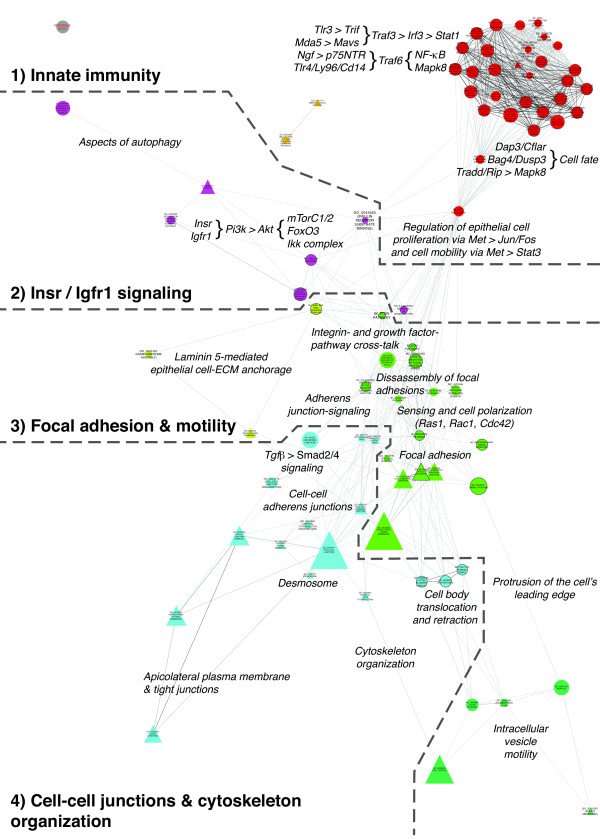
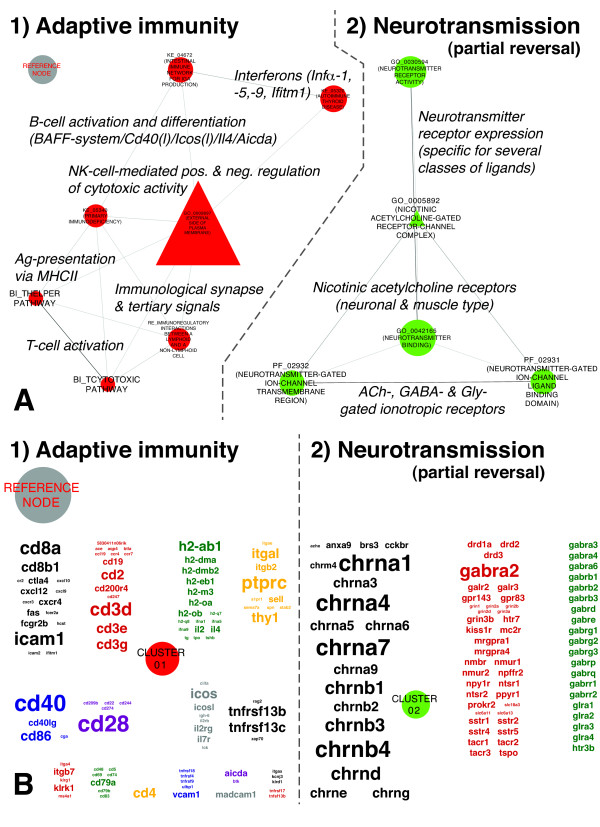
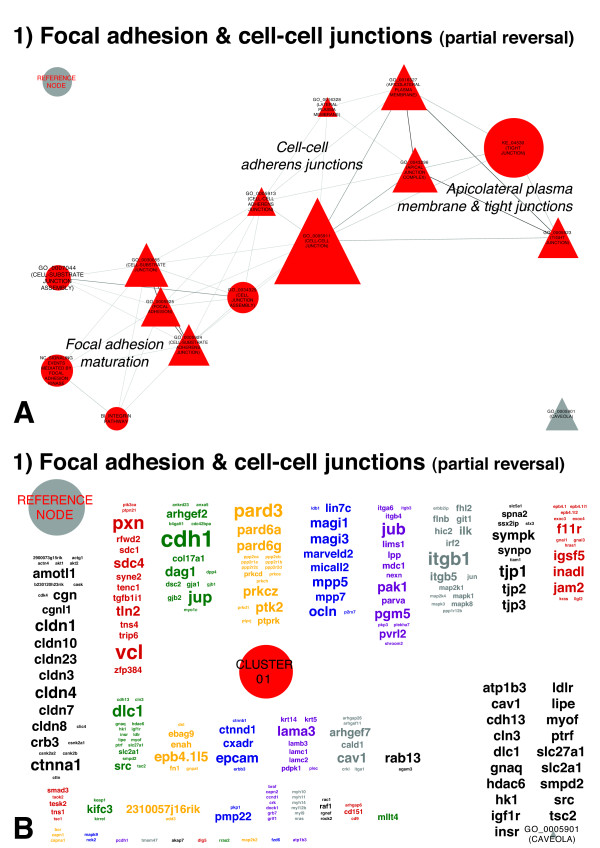
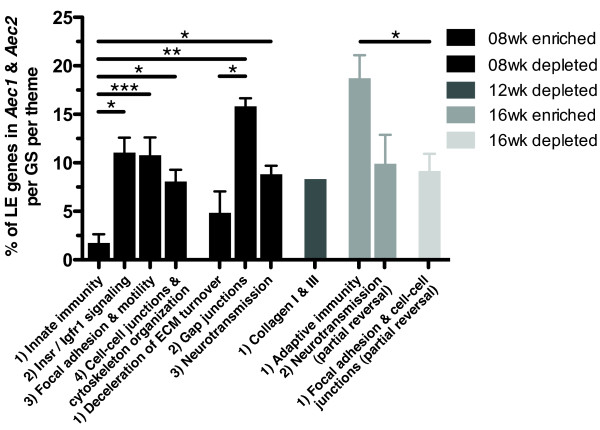
Applying these methodologies revealed extensive susceptibility loci-dependent aberrations in salivary gland homeostasis and integrity preceding onset of overt disease by a considerable amount of time. These alterations coincided with innate immune responses depending predominantly on genes located outside of the SS-predisposing loci Aec1 and Aec2. Following a period of transcriptional stability, networks mapping the onset of overt SS displayed, in addition to natural killer, T- and B-cell-specific gene patterns, significant reversals of focal adhesion, cell-cell junctions and neurotransmitter receptor-associated alterations that had prior characterized progression from pre- to subclinical disease.
This data-driven methodology advances unbiased assessment of global datasets an allowed comprehensive interpretation of complex alterations in biological states. Its application delineated a major involvement of the targeted organ during the emergence of experimental SS.
我们对自身免疫的理解很大程度上偏向于明显疾病和慢性炎症的晚期阶段。然而,为了确定其病因、早期和隐匿性疾病阶段,并阐明其分子基础,定义自身免疫性疾病发生过程中靶向器官的作用是至关重要的。
我们以干燥综合征(SS)为例,采用风湿性自身免疫性疾病和颞部整体基因表达谱,系统地绘制了涉及唾液腺细胞外环境的生物学主题的转录景观和时间上的相互关系。研究的时间段跨越了从疾病前到亚临床再到显性疾病的发生,在自发性 SS 的明确模型,即 C57BL/6.NOD-Aec1Aec2 品系中。为了实现这一广泛的目标,我们开发了一种新的基于生物信息学的方法,该方法将全面数据分析和可视化整合到交互式网络中。后者通过将整个数据集投影到基于先验共识的知识上来计算。
应用这些方法揭示了在显性疾病发生之前,唾液腺稳态和完整性的广泛易感性基因座相关异常,其时间跨度相当长。这些改变与先天免疫反应一致,主要依赖于位于 SS 易感基因座 Aec1 和 Aec2 之外的基因。在转录稳定性的一段时间后,映射显性 SS 发作的网络显示,除了自然杀伤细胞、T 细胞和 B 细胞特异性基因模式外,还存在焦点粘连、细胞-细胞连接和神经递质受体相关变化的显著逆转,这些变化先前特征是从疾病前到亚临床疾病的进展。
这种数据驱动的方法推进了对全局数据集的无偏评估,并允许对生物状态的复杂变化进行全面解释。其应用描绘了实验性 SS 发生过程中靶向器官的主要参与。