Clinical Research Division, Fred Hutchinson Cancer Research Center, Seattle, WA 98109, USA.
Viruses. 2013 Nov 28;5(12):2946-62. doi: 10.3390/v5122946.
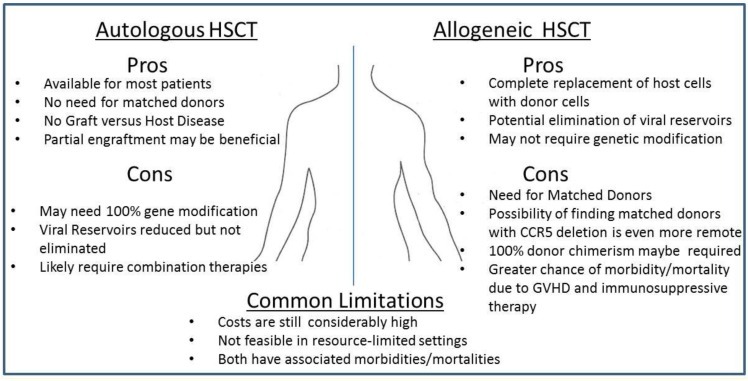
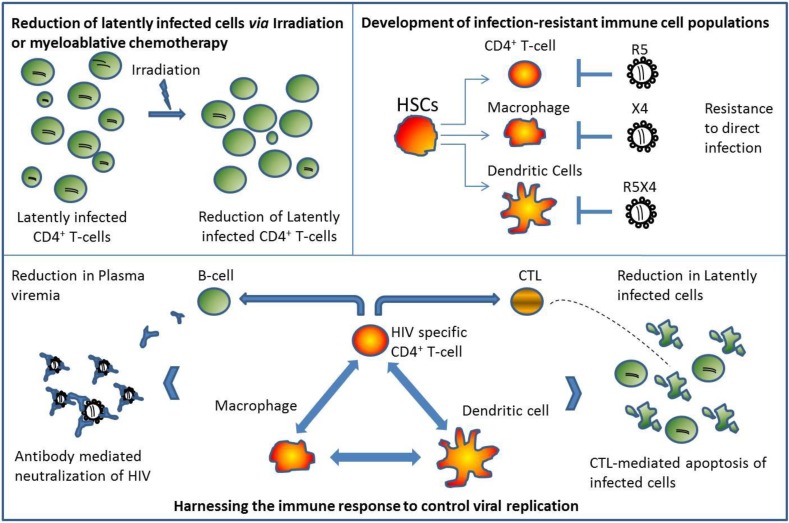
The combination of genetic modification and hematopoietic stem cell (HSC) transplantation may provide the necessary means to develop an alternative treatment option to conventional antiretroviral therapy. As HSCs give rise to all hematopoietic cell types susceptible to HIV infection, modification of HSCs is an ideal strategy for the development of infection-resistant immune cell populations. Although promising results have been obtained in multiple animal models, additional evidence is needed to convincingly demonstrate the feasibility of this approach as a treatment of HIV-1 infected patients. Here, we review the potential of HSC transplantation and the recently identified limitations of this approach. Using the Berlin Patient as a model for a functional cure, we contrast the confines of autologous versus allogeneic transplantation. Finally, we suggest that although autologous, gene-modified HSC-transplantation may significantly reduce plasma viremia, reaching the lower detection limits currently obtainable through daily HAART will remain a challenging endeavor that will require innovative combinatorial therapies.
基因修饰和造血干细胞(HSC)移植的结合可能为开发替代传统抗逆转录病毒疗法的治疗选择提供必要的手段。由于 HSCs 产生所有易受 HIV 感染的造血细胞类型,因此修饰 HSCs 是开发抗感染免疫细胞群体的理想策略。尽管在多个动物模型中已经获得了有希望的结果,但还需要更多的证据来令人信服地证明这种方法作为治疗 HIV-1 感染患者的可行性。在这里,我们回顾了 HSC 移植的潜力和该方法最近发现的局限性。我们使用柏林患者作为功能性治愈的模型,对比了自体与同种异体移植的限制。最后,我们认为,尽管自体、基因修饰的 HSC 移植可能会显著降低血浆病毒载量,但达到目前通过每日高效抗逆转录病毒治疗(HAART)可获得的更低检测限仍将是一项具有挑战性的任务,这将需要创新的组合疗法。