Instituto de Biología Molecular y Celular, Universidad Miguel Hernández, Alicante 03202, Spain.
Pharmaceuticals (Basel). 2011 Dec 27;5(1):16-48. doi: 10.3390/ph5010016.
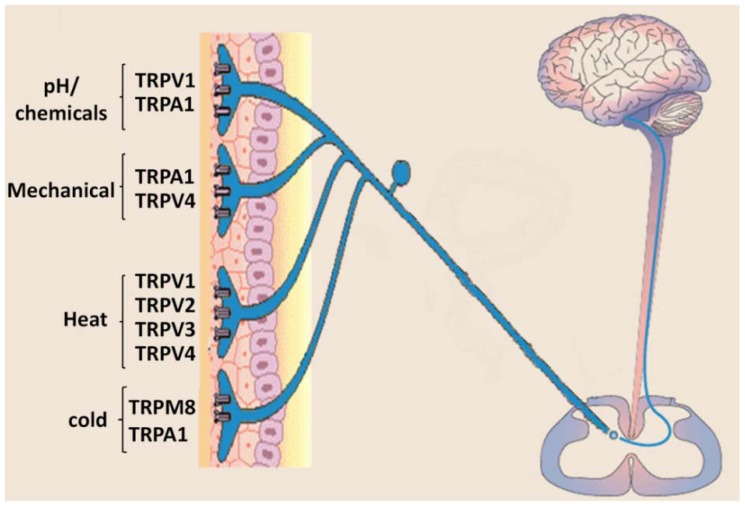
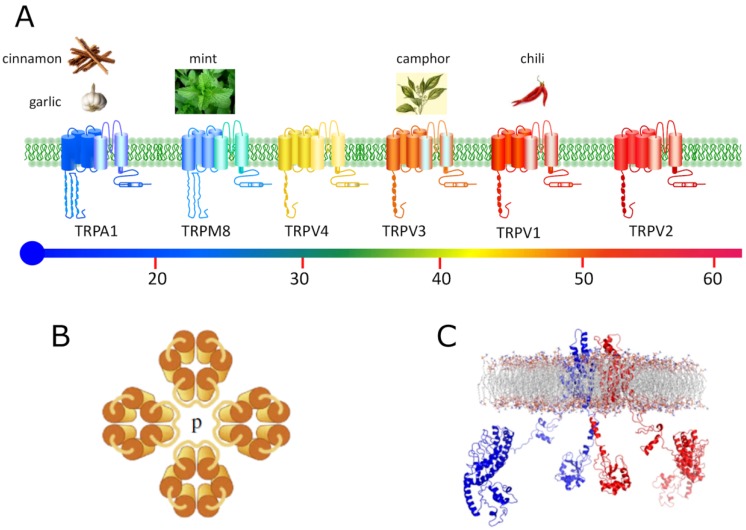
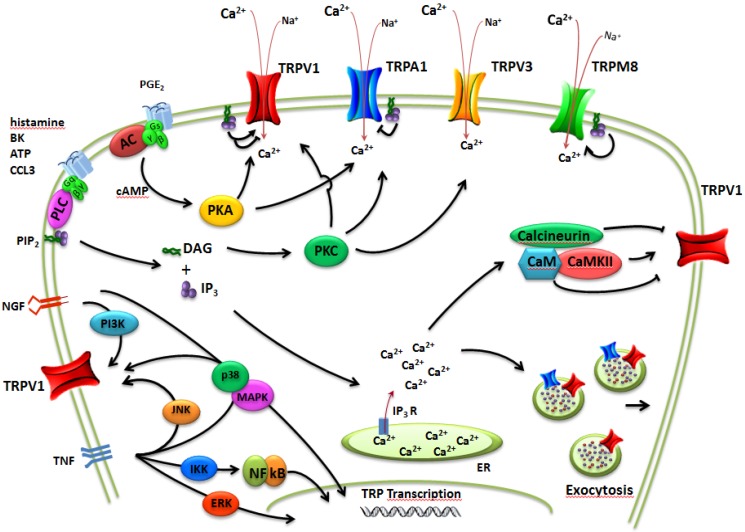
One approach to develop successful pain therapies is the modulation of dysfunctional ion channels that contribute to the detection of thermal, mechanical and chemical painful stimuli. These ion channels, known as thermoTRPs, promote the sensitization and activation of primary sensory neurons known as nociceptors. Pharmacological blockade and genetic deletion of thermoTRP have validated these channels as therapeutic targets for pain intervention. Several thermoTRP modulators have progressed towards clinical development, although most failed because of the appearance of unpredicted side effects. Thus, there is yet a need to develop novel channel modulators with improved therapeutic index. Here, we review the current state-of-the art and illustrate new pharmacological paradigms based on TRPV1 that include: (i) the identification of activity-dependent modulators of this thermoTRP channel; (ii) the design of allosteric modulators that interfere with protein-protein interaction involved in the functional coupling of stimulus sensing and gate opening; and (iii) the development of compounds that abrogate the inflammation-mediated increase of receptor expression in the neuronal surface. These new sites of action represent novel strategies to modulate pathologically active TRPV1, while minimizing an effect on the TRPV1 subpopulation involved in physiological and protective roles, thus increasing their potential therapeutic use.
开发成功的疼痛治疗方法之一是调节导致热、机械和化学疼痛刺激检测的功能失调的离子通道。这些离子通道,称为热温度敏感瞬时受体电位通道(thermoTRPs),促进被称为伤害感受器的初级感觉神经元的敏化和激活。热温度敏感瞬时受体电位通道的药理学阻断和遗传缺失已经验证了这些通道是疼痛干预的治疗靶点。几种热温度敏感瞬时受体电位通道调节剂已进展到临床开发阶段,但大多数因出现不可预测的副作用而失败。因此,仍然需要开发具有改善治疗指数的新型通道调节剂。在这里,我们回顾了当前的最新进展,并根据 TRPV1 说明了新的药理学范例,包括:(i)鉴定这种热温度敏感瞬时受体电位通道的活性依赖性调节剂;(ii)设计干扰刺激感应和门控开放涉及的蛋白质-蛋白质相互作用的别构调节剂;(iii)开发可消除神经元表面受体表达的炎症介导增加的化合物。这些新的作用部位代表了调节病理性激活的 TRPV1 的新策略,同时最大限度地减少对涉及生理和保护作用的 TRPV1 亚群的影响,从而增加其潜在的治疗用途。