Área de Bioquímica y Biología Molecular, Departamento de Biología Experimental, Facultad de Ciencias Experimentales, Ed. B3. Campus Universitario "Las Lagunillas" s/n, Universidad de Jaén, E-23071 Jaén, Spain.
J Exp Bot. 2014 Feb;65(2):527-38. doi: 10.1093/jxb/ert396. Epub 2013 Nov 28.
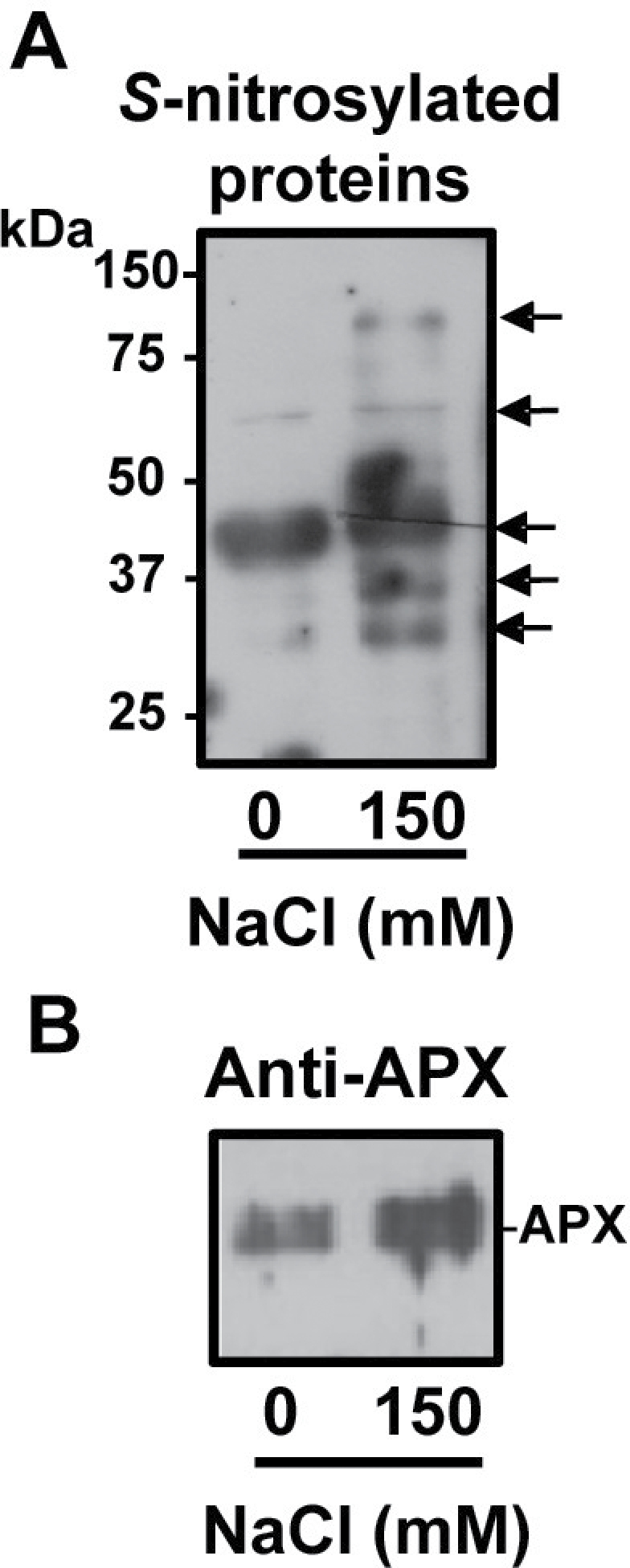
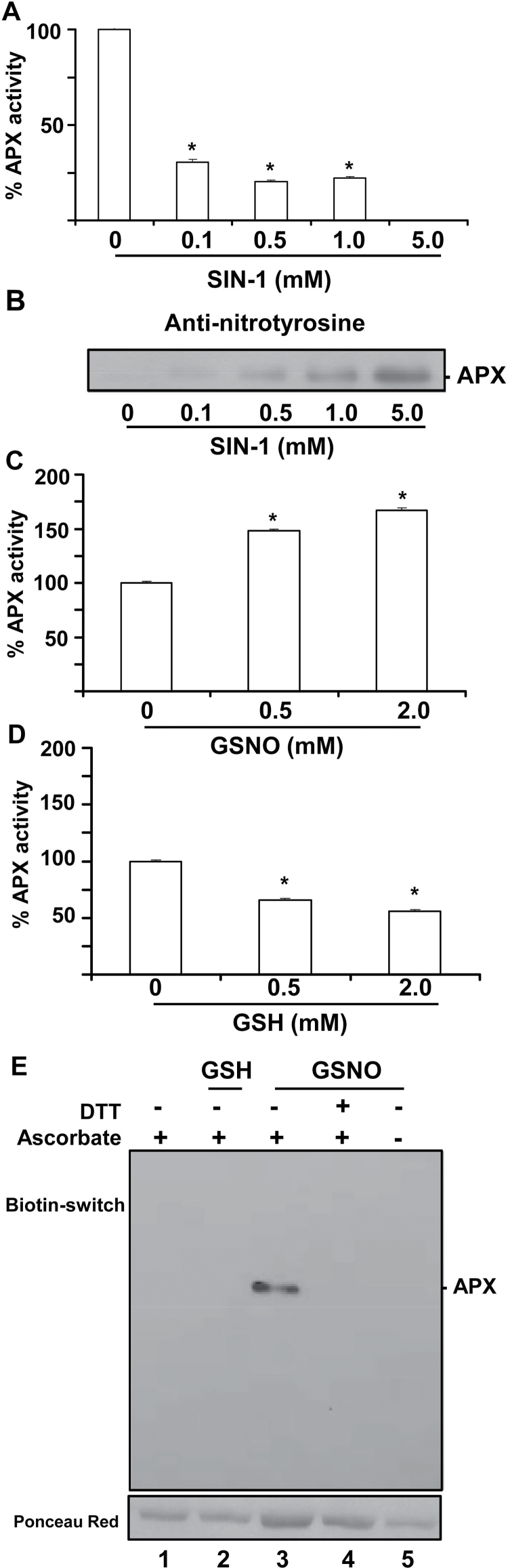
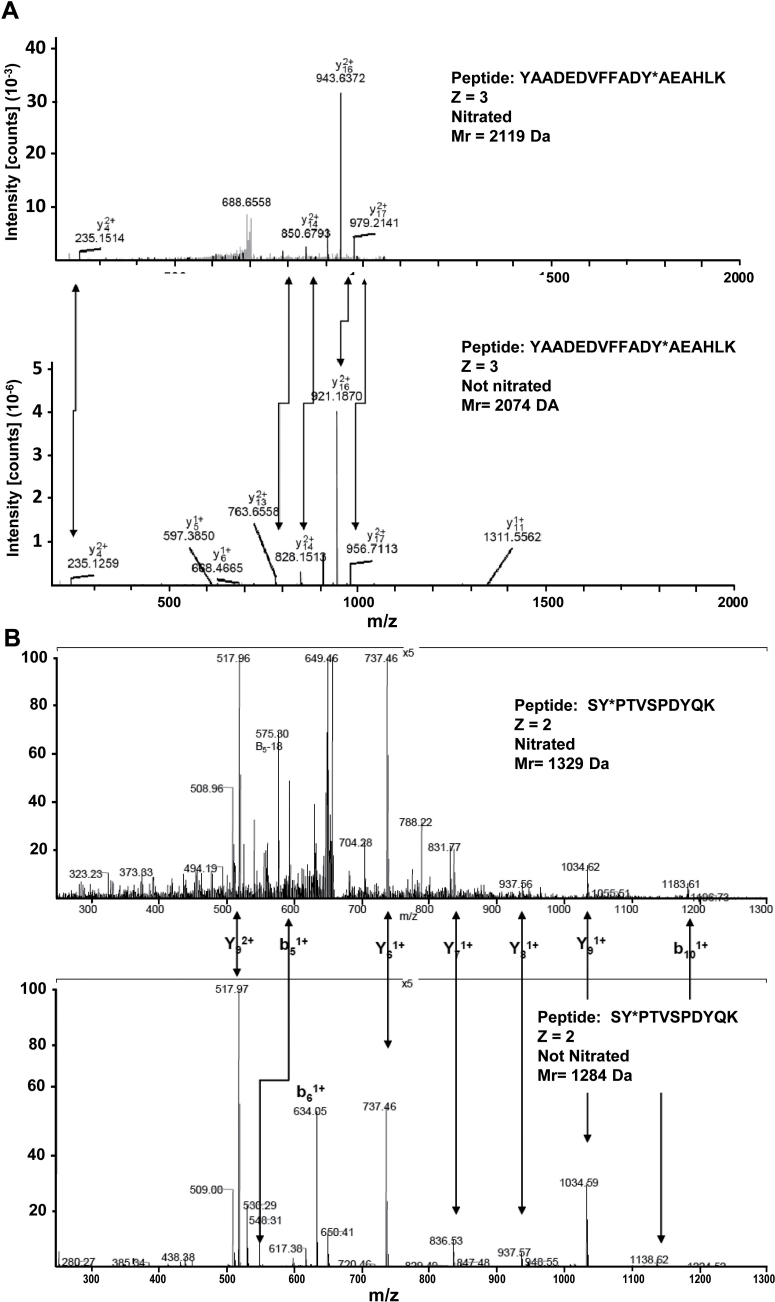
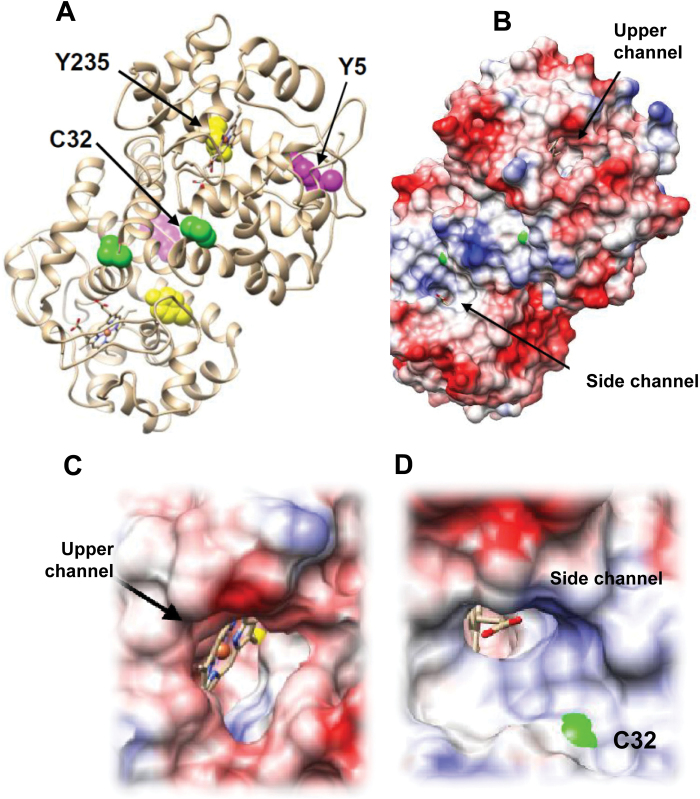
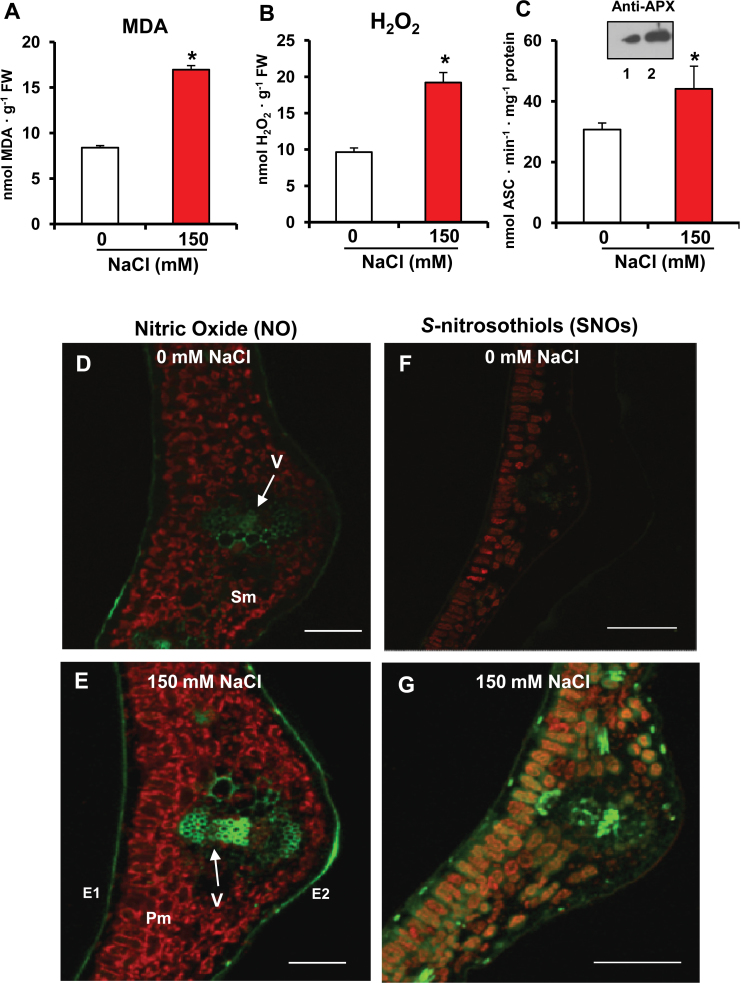
Post-translational modifications (PTMs) mediated by nitric oxide (NO)-derived molecules have become a new area of research, as they can modulate the function of target proteins. Proteomic data have shown that ascorbate peroxidase (APX) is one of the potential targets of PTMs mediated by NO-derived molecules. Using recombinant pea cytosolic APX, the impact of peroxynitrite (ONOO-) and S-nitrosoglutathione (GSNO), which are known to mediate protein nitration and S-nitrosylation processes, respectively, was analysed. While peroxynitrite inhibits APX activity, GSNO enhances its enzymatic activity. Mass spectrometric analysis of the nitrated APX enabled the determination that Tyr5 and Tyr235 were exclusively nitrated to 3-nitrotyrosine by peroxynitrite. Residue Cys32 was identified by the biotin switch method as S-nitrosylated. The location of these residues on the structure of pea APX reveals that Tyr235 is found at the bottom of the pocket where the haem group is enclosed, whereas Cys32 is at the ascorbate binding site. Pea plants grown under saline (150 mM NaCl) stress showed an enhancement of both APX activity and S-nitrosylated APX, as well as an increase of H2O2, NO, and S-nitrosothiol (SNO) content that can justify the induction of the APX activity. The results provide new insight into the molecular mechanism of the regulation of APX which can be both inactivated by irreversible nitration and activated by reversible S-nitrosylation.
由一氧化氮(NO)衍生分子介导的翻译后修饰(PTM)已成为一个新的研究领域,因为它们可以调节靶蛋白的功能。蛋白质组学数据表明,抗坏血酸过氧化物酶(APX)是由NO衍生分子介导的PTM的潜在靶点之一。使用重组豌豆胞质APX,分析了分别已知介导蛋白质硝化和S-亚硝基化过程的过氧亚硝酸盐(ONOO-)和S-和S-亚硝基谷胱甘肽(GSNO)的影响。虽然过氧亚硝酸盐抑制APX活性,但GSNO增强其酶活性。对硝化APX的质谱分析确定,Tyr5和Tyr235仅被过氧亚硝酸盐硝化为3-硝基酪氨酸。通过生物素转换法鉴定出Cys32残基发生了S-亚硝基化。这些残基在豌豆APX结构上的位置表明,Tyr235位于血红素基团所在口袋的底部,而Cys32位于抗坏血酸结合位点。在盐胁迫(150 mM NaCl)下生长的豌豆植株显示出APX活性和S-亚硝基化APX均增强,以及H2O2、NO和S-亚硝基硫醇(SNO)含量增加,这可以解释APX活性的诱导。这些结果为APX的调节分子机制提供了新的见解,APX既可以通过不可逆的硝化作用失活,也可以通过可逆的S-亚硝基化作用激活。