Russell H Morgan Department of Radiology & Radiological Sciences, Division of Interventional Radiology, Johns Hopkins University School of Medicine, 600 N, Wolfe Street, Blalock Building 340, 21287 Baltimore, MD, USA.
Mol Cancer. 2013 Dec 3;12:152. doi: 10.1186/1476-4598-12-152.
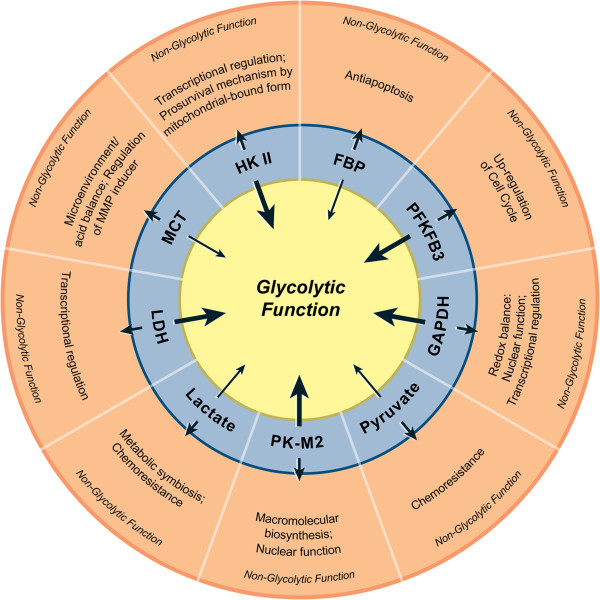
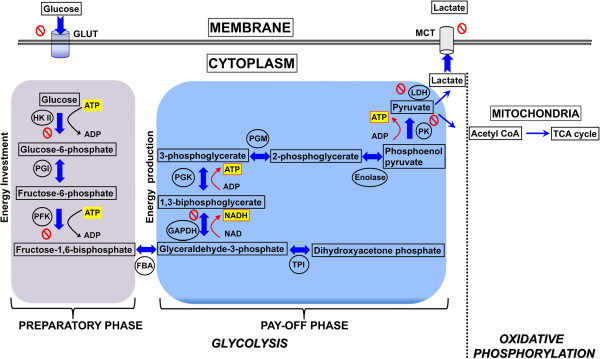
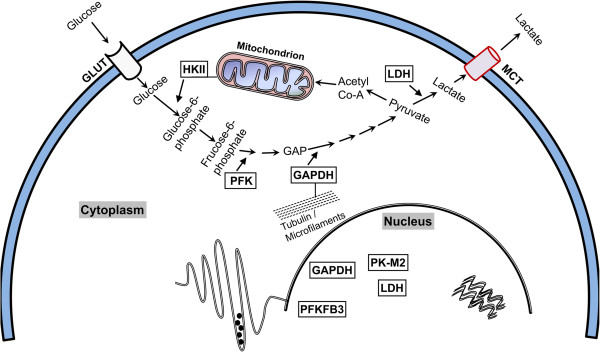
Altered energy metabolism is a biochemical fingerprint of cancer cells that represents one of the "hallmarks of cancer". This metabolic phenotype is characterized by preferential dependence on glycolysis (the process of conversion of glucose into pyruvate followed by lactate production) for energy production in an oxygen-independent manner. Although glycolysis is less efficient than oxidative phosphorylation in the net yield of adenosine triphosphate (ATP), cancer cells adapt to this mathematical disadvantage by increased glucose up-take, which in turn facilitates a higher rate of glycolysis. Apart from providing cellular energy, the metabolic intermediates of glycolysis also play a pivotal role in macromolecular biosynthesis, thus conferring selective advantage to cancer cells under diminished nutrient supply. Accumulating data also indicate that intracellular ATP is a critical determinant of chemoresistance. Under hypoxic conditions where glycolysis remains the predominant energy producing pathway sensitizing cancer cells would require intracellular depletion of ATP by inhibition of glycolysis. Together, the oncogenic regulation of glycolysis and multifaceted roles of glycolytic components underscore the biological significance of tumor glycolysis. Thus targeting glycolysis remains attractive for therapeutic intervention. Several preclinical investigations have indeed demonstrated the effectiveness of this therapeutic approach thereby supporting its scientific rationale. Recent reviews have provided a wealth of information on the biochemical targets of glycolysis and their inhibitors. The objective of this review is to present the most recent research on the cancer-specific role of glycolytic enzymes including their non-glycolytic functions in order to explore the potential for therapeutic opportunities. Further, we discuss the translational potential of emerging drug candidates in light of technical advances in treatment modalities such as image-guided targeted delivery of cancer therapeutics.
能量代谢改变是癌细胞的生化特征之一,也是“癌症的特征”之一。这种代谢表型的特点是,即使在缺氧的情况下,癌细胞也能优先依赖糖酵解(将葡萄糖转化为丙酮酸,然后产生乳酸)来产生能量,而不需要氧气。尽管糖酵解在产生三磷酸腺苷(ATP)的净效率方面不如氧化磷酸化,但癌细胞通过增加葡萄糖摄取来适应这种数学劣势,这反过来又促进了更高的糖酵解速率。除了提供细胞能量外,糖酵解的代谢中间产物还在大分子生物合成中起着关键作用,从而在营养供应减少的情况下赋予癌细胞选择性优势。越来越多的证据还表明,细胞内的 ATP 是化疗耐药性的关键决定因素。在缺氧条件下,糖酵解仍然是主要的能量产生途径,通过抑制糖酵解来使癌细胞敏感化需要使细胞内的 ATP 耗竭。总之,糖酵解的致癌调节和糖酵解成分的多方面作用突显了肿瘤糖酵解的生物学意义。因此,针对糖酵解仍然是一种有吸引力的治疗干预手段。一些临床前研究确实证明了这种治疗方法的有效性,从而为其提供了科学依据。最近的综述提供了丰富的关于糖酵解的生化靶点及其抑制剂的信息。本综述的目的是介绍糖酵解酶在肿瘤特异性中的最新研究进展,包括其非糖酵解功能,以探索治疗机会的潜力。此外,我们还讨论了新兴药物候选物在治疗方式方面的转化潜力,如针对癌症治疗的图像引导靶向药物输送等技术的进步。