Emory Genetics Laboratory, Department of Human Genetics, Emory University, 2165 N Decatur Road, Decatur, GA 30033, USA.
BMC Genet. 2013 Dec 5;14:116. doi: 10.1186/1471-2156-14-116.
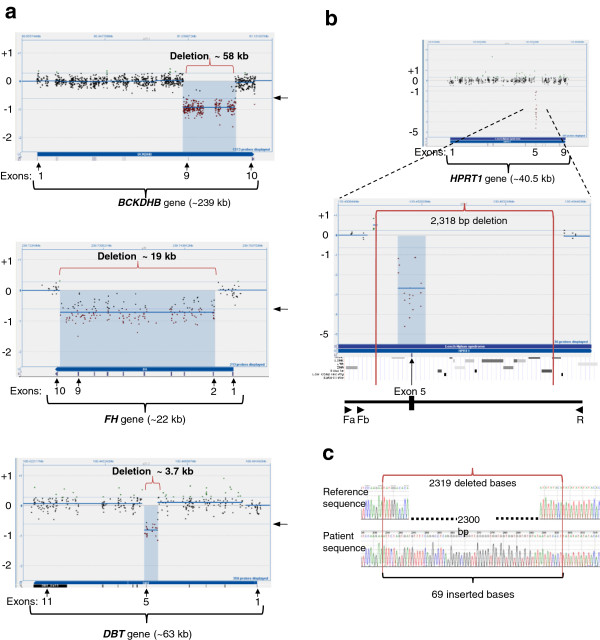
Pathogenic mutations range from single nucleotide changes to deletions or duplications that encompass a single exon to several genes. The use of gene-centric high-density array comparative genomic hybridization (aCGH) has revolutionized the detection of intragenic copy number variations. We implemented an exon-centric design of high-resolution aCGH to detect single- and multi-exon deletions and duplications in a large set of genes using the OGT 60 K and 180 K arrays. Here we describe the molecular characterization and breakpoint mapping of deletions at the smaller end of the detectable range in several genes using aCGH.
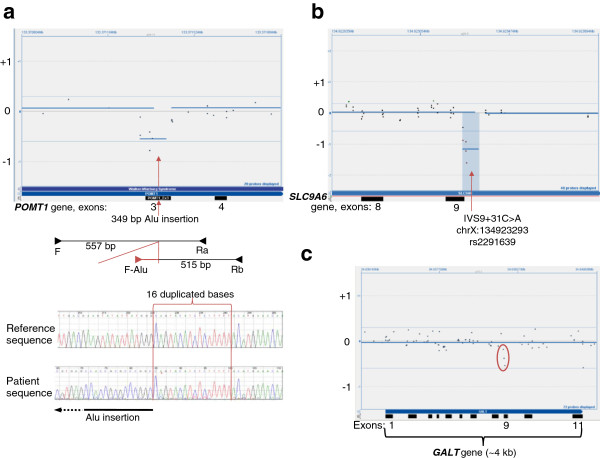
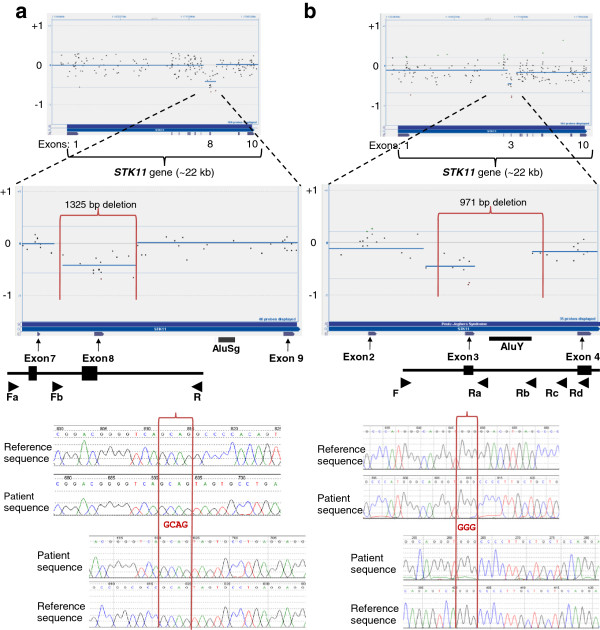
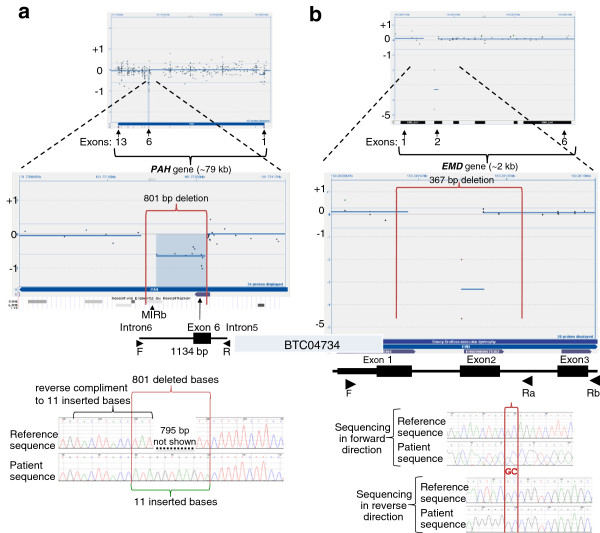
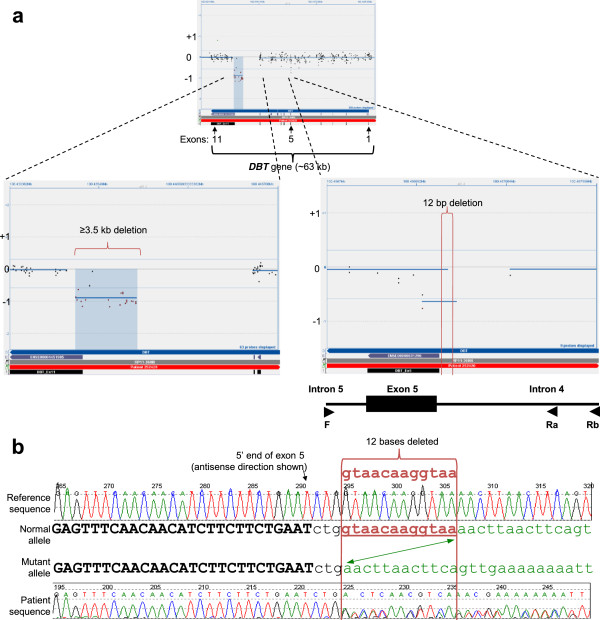
The method initially implemented to detect single to multiple exon deletions, was able to detect deletions much smaller than anticipated. The selected deletions we describe vary in size, ranging from over 2 kb to as small as 12 base pairs. The smallest of these deletions are only detectable after careful manual review during data analysis. Suspected deletions smaller than the detection size for which the method was optimized, were rigorously followed up and confirmed with PCR-based investigations to uncover the true detection size limit of intragenic deletions with this technology. False-positive deletion calls often demonstrated single nucleotide changes or an insertion causing lower hybridization of probes demonstrating the sensitivity of aCGH.
With optimizing aCGH design and careful review process, aCGH can uncover intragenic deletions as small as dozen bases. These data provide insight that will help optimize probe coverage in array design and illustrate the true assay sensitivity. Mapping of the breakpoints confirms smaller deletions and contributes to the understanding of the mechanism behind these events. Our knowledge of the mutation spectra of several genes can be expected to change as previously unrecognized intragenic deletions are uncovered.
致病突变范围从单个核苷酸变化到包含单个外显子到几个基因的缺失或重复。基因中心高密度阵列比较基因组杂交(aCGH)的使用彻底改变了基因内拷贝数变异的检测。我们使用 OGT 60K 和 180K 阵列,实施了高分辨率 aCGH 的外显子中心设计,以检测一大组基因中的单外显子和多外显子缺失和重复。在这里,我们描述了使用 aCGH 对几个基因中可检测范围较小端的缺失进行分子特征描述和断点作图。
最初实施的用于检测单至多个外显子缺失的方法能够检测到比预期小得多的缺失。我们描述的选定缺失在大小上有所不同,范围从超过 2kb 到小至 12 个碱基。其中最小的缺失只有在数据分析过程中仔细手动审查后才能检测到。对于优化方法无法检测到的小于预期检测大小的可疑缺失,我们进行了严格的跟踪,并通过基于 PCR 的调查进行了确认,以揭示该技术中基因内缺失的真实检测大小限制。假阳性缺失调用通常表现为单个核苷酸变化或插入,导致探针杂交降低,这证明了 aCGH 的敏感性。
通过优化 aCGH 设计和仔细审查过程,aCGH 可以揭示小至十几个碱基的基因内缺失。这些数据提供了有助于优化阵列设计中探针覆盖的见解,并说明了真实的检测灵敏度。断点作图证实了较小的缺失,并有助于理解这些事件背后的机制。随着先前未被识别的基因内缺失被发现,我们对几个基因的突变谱的了解预计会发生变化。