Vassalli Giuseppe
Department of Cardiology, Centre Hospitalier Universitaire Vaudois, 1011 Lausanne, Switzerland ; Molecular Cardiology Laboratory, Fondazione Cardiocentro Ticino, 6900 Lugano, Switzerland.
J Transplant. 2013;2013:761429. doi: 10.1155/2013/761429. Epub 2013 Oct 24.
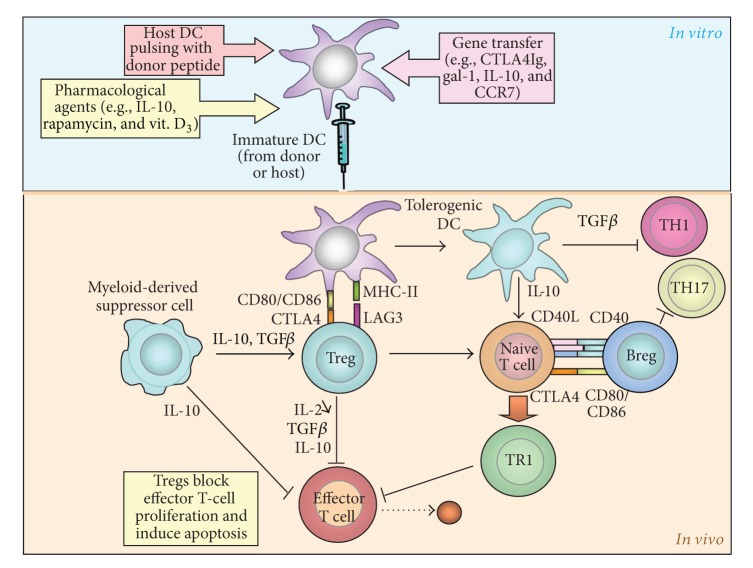
To avoid immune rejection, allograft recipients require drug-based immunosuppression, which has significant toxicity. An emerging approach is adoptive transfer of immunoregulatory cells. While mature dendritic cells (DCs) present donor antigen to the immune system, triggering rejection, regulatory DCs interact with regulatory T cells to promote immune tolerance. Intravenous injection of immature DCs of either donor or host origin at the time of transplantation have prolonged allograft survival in solid-organ transplant models. DCs can be treated with pharmacological agents before injection, which may attenuate their maturation in vivo. Recent data suggest that injected immunosuppressive DCs may inhibit allograft rejection, not by themselves, but through conventional DCs of the host. Genetically engineered DCs have also been tested. Two clinical trials in type-1 diabetes and rheumatoid arthritis have been carried out, and other trials, including one trial in kidney transplantation, are in progress or are imminent.
为避免免疫排斥反应,同种异体移植受者需要基于药物的免疫抑制,而这种方法具有显著的毒性。一种新兴的方法是免疫调节细胞的过继转移。成熟树突状细胞(DC)会将供体抗原呈递给免疫系统,引发排斥反应,而调节性DC则与调节性T细胞相互作用以促进免疫耐受。在移植时静脉注射供体或宿主来源的未成熟DC,可延长实体器官移植模型中同种异体移植物的存活时间。DC在注射前可用药物制剂处理,这可能会减弱其在体内的成熟过程。最近的数据表明,注射的免疫抑制性DC可能并非通过自身,而是通过宿主的常规DC来抑制同种异体移植排斥反应。基因工程DC也已进行了测试。针对1型糖尿病和类风湿关节炎的两项临床试验已经开展,其他试验,包括一项肾移植试验,正在进行或即将开展。