National Risk Management Research Laboratory, Air Pollution Prevention and Control Division, U,S, Environmental Protection Agency, E305-03, Durham, NC 27711, USA.
BMC Microbiol. 2013 Dec 5;13:283. doi: 10.1186/1471-2180-13-283.
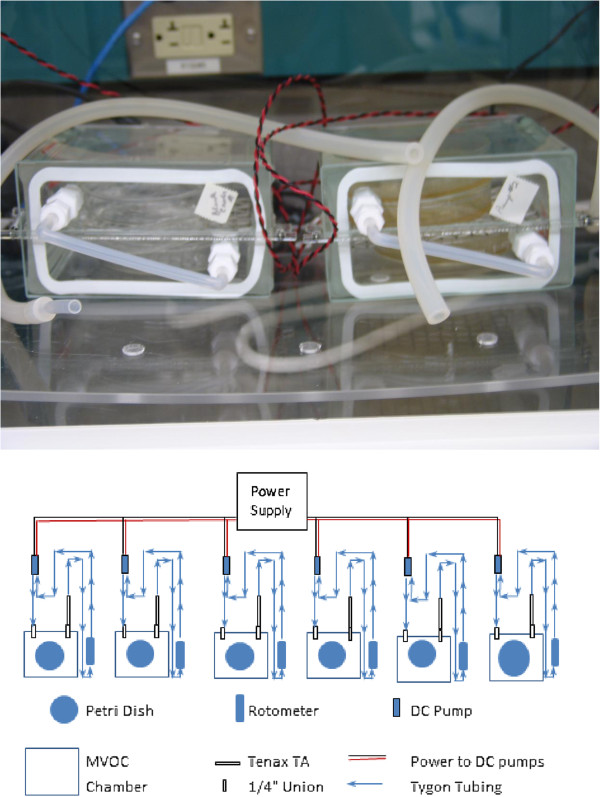
Stachybotrys chartarum is a filamentous mold frequently identified among the mycobiota of water-damaged building materials. Growth of S. chartarum on suitable substrates and under favorable environmental conditions leads to the production of secondary metabolites such as mycotoxins and microbial volatile organic compounds (MVOCs). The aim of this study was to characterize MVOC emission profiles of seven toxigenic strains of S. chartarum, isolated from water-damaged buildings, in order to identify unique MVOCs generated during growth on gypsum wallboard and ceiling tile coupons. Inoculated coupons were incubated and monitored for emissions and growth using a closed glass environmental growth chamber maintained at a constant room temperature. Gas samples were collected from the headspace for three to four weeks using Tenax TA tubes.
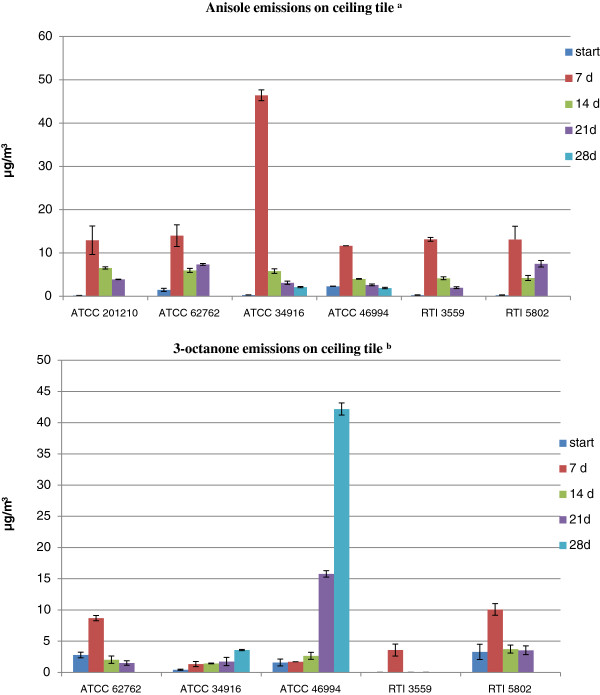
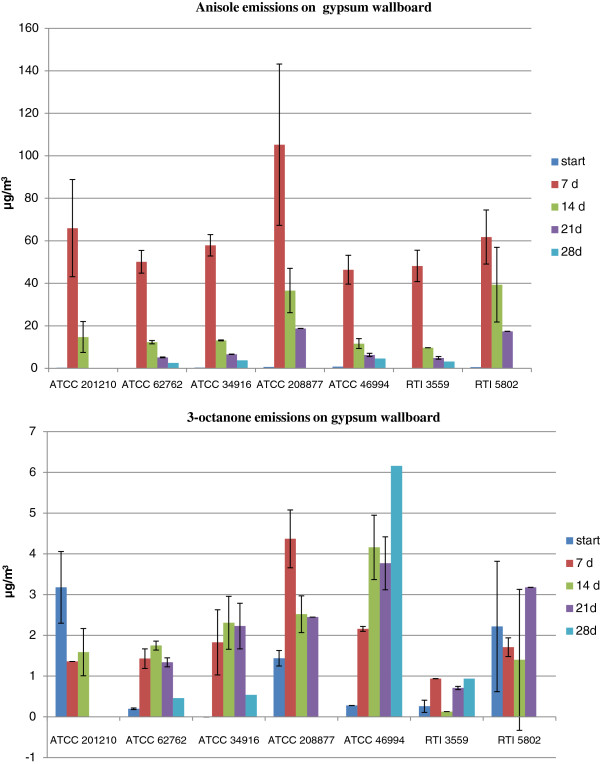
Most of the MVOCs identified were alcohols, ketones, ethers and esters. The data showed that anisole (methoxybenzene) was emitted from all of the S. chartarum strains tested on both types of substrates. Maximum anisole concentration was detected after seven days of incubation.
MVOCs are suitable markers for fungal identification because they easily diffuse through weak barriers like wallpaper, and could be used for early detection of mold growth in hidden cavities. This study identifies the production of anisole by seven toxigenic strains of Stachybotrys chartarum within a period of one week of growth on gypsum wallboard and ceiling tiles. These data could provide useful information for the future construction of a robust MVOC library for the early detection of this mold.
串珠镰刀菌是一种丝状霉菌,常存在于水损坏建筑材料的真菌群中。串珠镰刀菌在合适的基质上生长,并在有利的环境条件下,会产生霉菌毒素和微生物挥发性有机化合物(MVOCs)等次级代谢物。本研究的目的是对从水损坏建筑物中分离出的 7 株产毒串珠镰刀菌的 MVOC 排放特征进行描述,以确定在石膏墙板和天花板瓷砖试片上生长时产生的独特 MVOCs。接种试片后,在一个保持室温恒定的密闭玻璃环境生长室中进行孵育和排放及生长监测。使用 Tenax TA 管从顶空采集头样,采集时间为 3 至 4 周。
鉴定出的大多数 MVOCs 为醇类、酮类、醚类和酯类。数据显示,所有测试的串珠镰刀菌菌株在两种基质上均能产生苯甲醚(甲氧基苯)。培养 7 天后检测到最大的苯甲醚浓度。
MVOCs 是真菌鉴定的合适标志物,因为它们很容易通过壁纸等弱屏障扩散,可用于早期检测隐藏腔室中的霉菌生长。本研究在石膏墙板和天花板瓷砖上生长一周内,鉴定出了 7 株产毒串珠镰刀菌产生苯甲醚。这些数据可为未来构建用于早期检测该霉菌的强大 MVOC 文库提供有用信息。