Department of Chemistry, Kansas State University, Manhattan, KS 66506, USA.
Pharmaceutics. 2011 Aug 31;3(3):601-14. doi: 10.3390/pharmaceutics3030601.
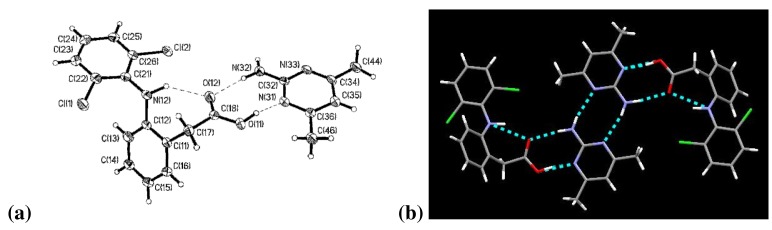
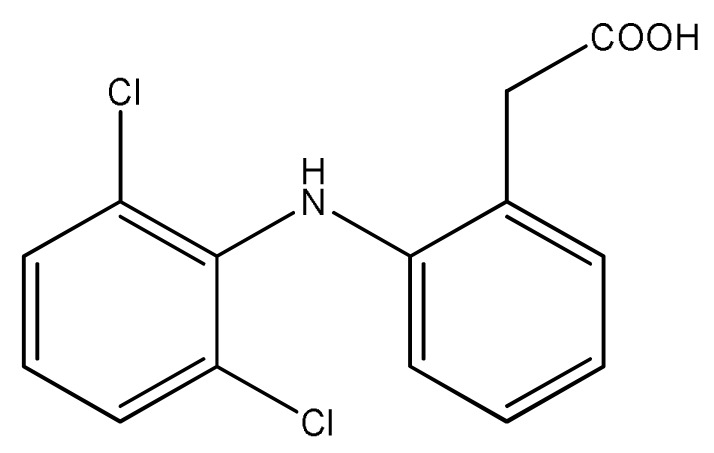
In the pharmaceutical industry, co-crystals are becoming increasingly valuable as crystalline solids that can offer altered/improved physical properties of an active pharmaceutical ingredient (API) without changing its chemical identity or biological activity. In order to identify new solid forms of diclofenac-an analgesic with extremely poor aqueous solubility for which few co-crystal structures have been determined-a range of pyrazoles, pyridines, and pyrimidines were screened for co-crystal formation using solvent assisted grinding and infrared spectroscopy with an overall success rate of 50%. The crystal structures of three new diclofenac co-crystals are reported herein: (diclofenac)∙(2-aminopyrimidine), (diclofenac)∙(2-amino-4,6-dimethylpyrimidine), and (diclofenac)∙(2-amino-4-chloro-6-methylpyrimidine).
在制药行业,共晶作为晶体固体变得越来越有价值,它们可以提供改变/改善活性药物成分 (API) 的物理性质,而不改变其化学性质或生物活性。为了确定新的固体形式的双氯芬酸 - 一种水溶性极差的镇痛药,其中很少确定共晶结构 - 用溶剂辅助研磨和红外光谱筛选了一系列吡唑,吡啶和嘧啶,总体成功率为 50%。本文报道了三种新的双氯芬酸共晶的晶体结构:(双氯芬酸)·(2-氨基嘧啶),(双氯芬酸)·(2-氨基-4,6-二甲基嘧啶)和(双氯芬酸)·(2-氨基-4-氯-6-甲基嘧啶)。