Department of Biology, New York University, New York, New York, United States of America.
PLoS Biol. 2013 Dec;11(12):e1001725. doi: 10.1371/journal.pbio.1001725. Epub 2013 Dec 3.
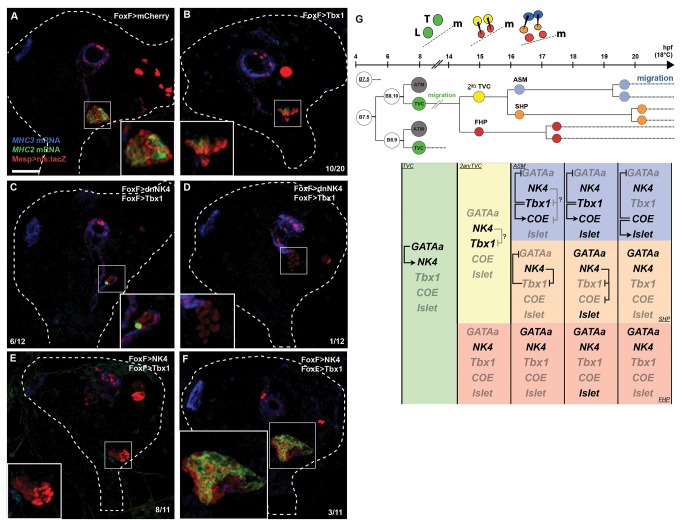
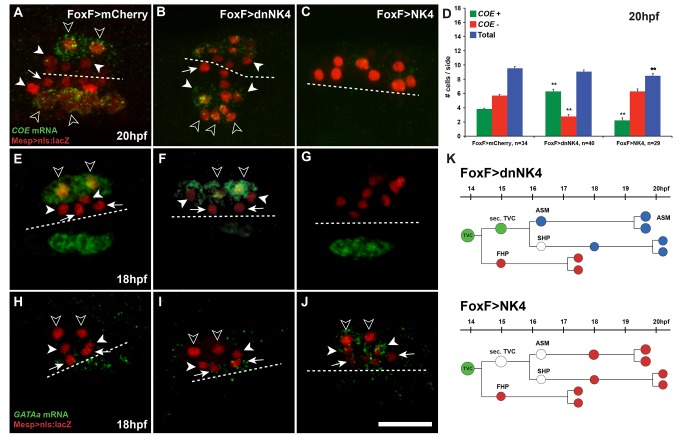
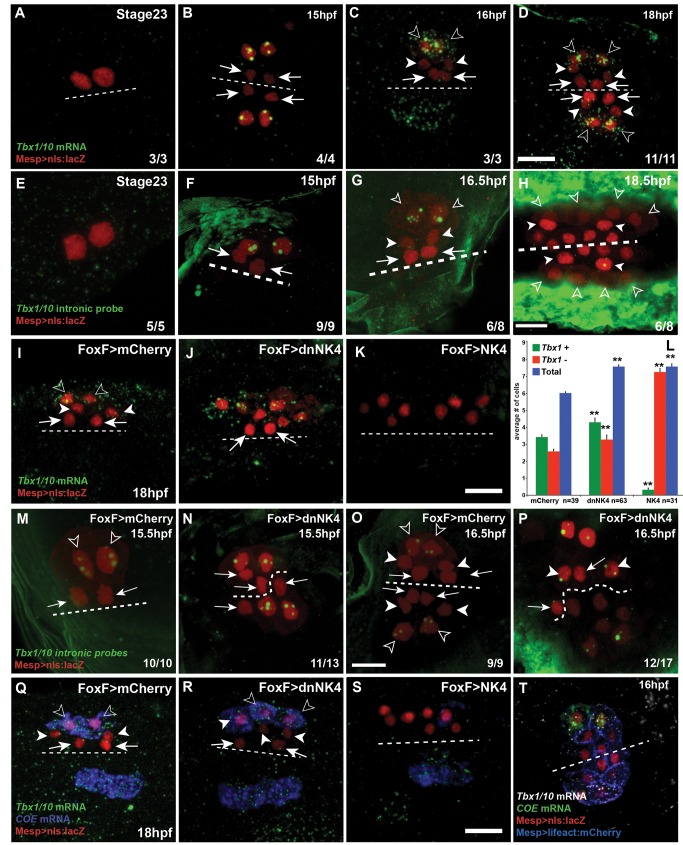
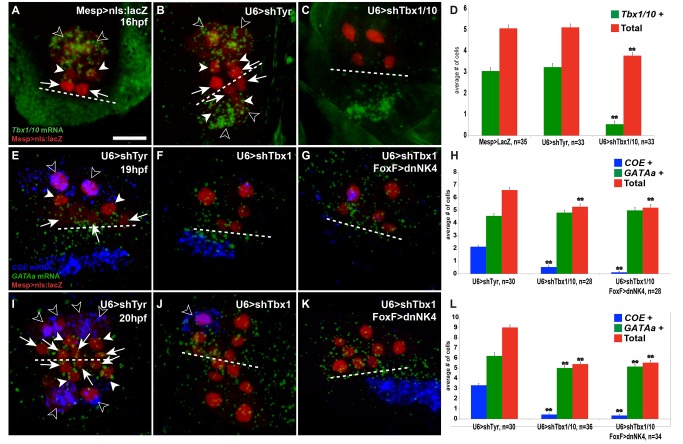
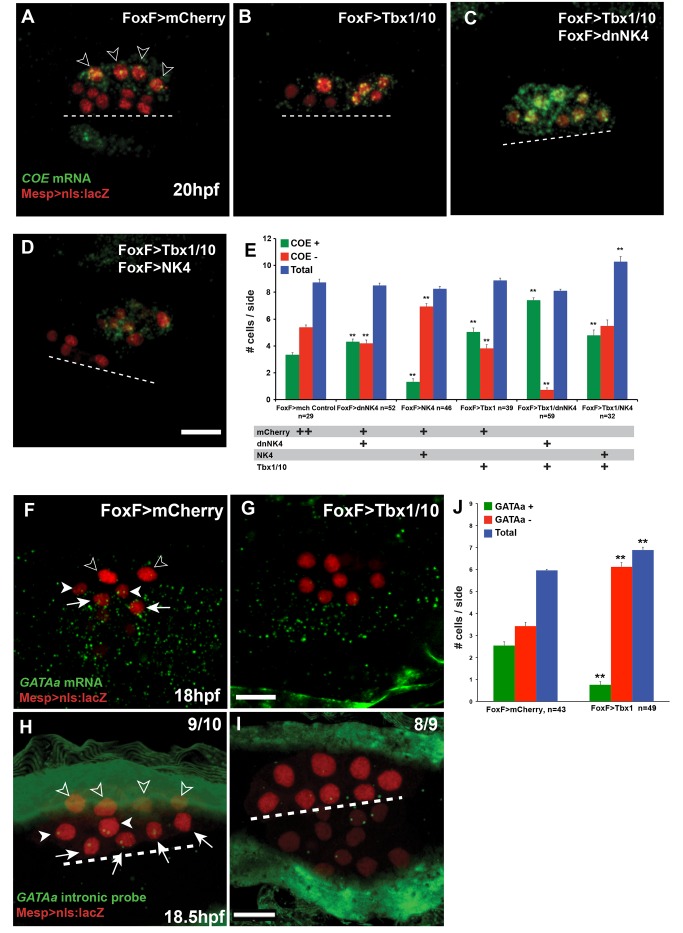
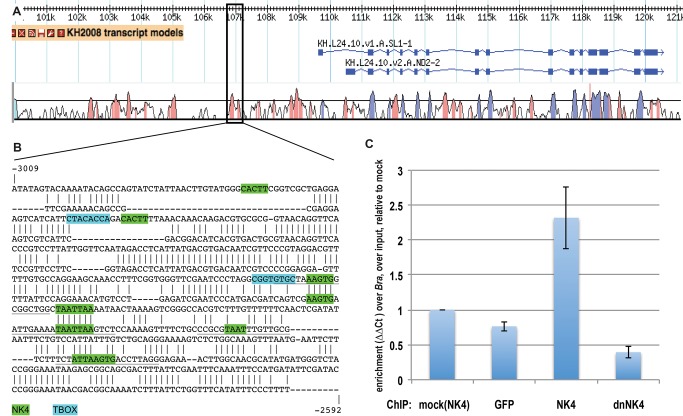
The heart and head muscles share common developmental origins and genetic underpinnings in vertebrates, including humans. Parts of the heart and cranio-facial musculature derive from common mesodermal progenitors that express NKX2-5, ISL1, and TBX1. This ontogenetic kinship is dramatically reflected in the DiGeorge/Cardio-Velo-Facial syndrome (DGS/CVFS), where mutations of TBX1 cause malformations in the pharyngeal apparatus and cardiac outflow tract. Cardiac progenitors of the first heart field (FHF) do not require TBX1 and segregate precociously from common progenitors of the second heart field (SHF) and pharyngeal muscles. However, the cellular and molecular mechanisms that govern heart versus pharyngeal muscle specification within this lineage remain elusive. Here, we harness the simplicity of the ascidian larva to show that, following asymmetric cell division of common progenitors, NK4/NKX2-5 promotes GATAa/GATA4/5/6 expression and cardiac specification in the second heart precursors by antagonizing Tbx1/10-mediated inhibition of GATAa and activation of Collier/Olf/EBF (COE), the determinant of atrial siphon muscle (ASM) specification. Our results uncover essential regulatory connections between the conserved cardio-pharyngeal factor Tbx1/10 and muscle determinant COE, as well as a mutual antagonism between NK4 and Tbx1/10 activities upstream of GATAa and COE. The latter cross-antagonism underlies a fundamental heart versus pharyngeal muscle fate choice that occurs in a conserved lineage of cardio-pharyngeal progenitors. We propose that this basic ontogenetic motif underlies cardiac and pharyngeal muscle development and evolution in chordates.
在包括人类在内的脊椎动物中,心脏和头部肌肉具有共同的发育起源和遗传基础。心脏和颅面肌肉的部分来自表达 NKX2-5、ISL1 和 TBX1 的共同中胚层祖细胞。这种胚胎亲缘关系在 DiGeorge/Cardio-Velo-Facial 综合征(DGS/CVFS)中得到了显著体现,其中 TBX1 的突变导致咽器和心脏流出道的畸形。第一心区(FHF)的心脏祖细胞不需要 TBX1,并与第二心区(SHF)和咽肌的共同祖细胞过早分离。然而,控制该谱系中心脏与咽肌特化的细胞和分子机制仍不清楚。在这里,我们利用海鞘幼虫的简单性来表明,在共同祖细胞的不对称细胞分裂之后,NK4/NKX2-5 通过拮抗 Tbx1/10 介导的 GATAa 抑制和激活 Collier/Olf/EBF(COE),促进第二心前体细胞中的 GATAa/GATA4/5/6 表达和心脏特化,COE 是心房虹吸管肌肉(ASM)特化的决定因素。我们的结果揭示了保守的心-咽因子 Tbx1/10 和肌肉决定因子 COE 之间的重要调节联系,以及 NK4 和 Tbx1/10 活性在上游的 GATAa 和 COE 之间的相互拮抗。这种相互拮抗是发生在保守的心-咽祖细胞谱系中的基本心脏与咽肌命运选择的基础。我们提出,这种基本的个体发生模式是脊索动物心脏和咽肌发育和进化的基础。