CNRS, Laboratoire de Biologie du Développement de Villefranche Sur-mer (LBDV), Sorbonne Université, Paris, France.
Molecular, Cellular and Developmental Biology, University of California, UCEN Rd., Santa Barbara, CA, 93106, USA.
Sci Rep. 2022 Jul 23;12(1):12620. doi: 10.1038/s41598-022-16656-8.
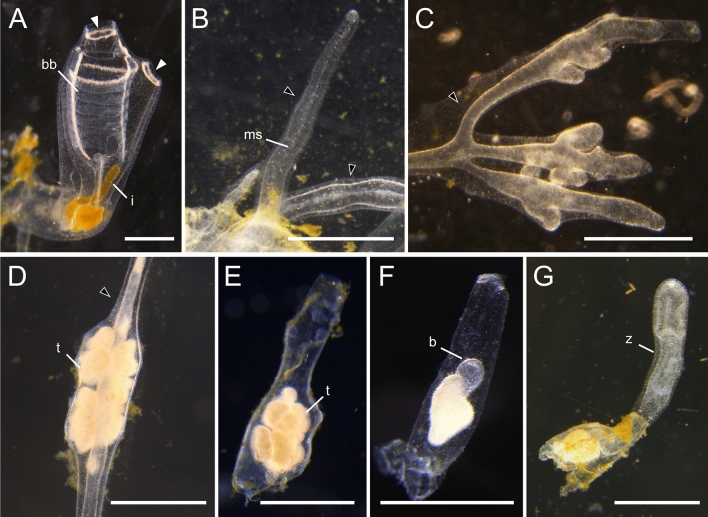
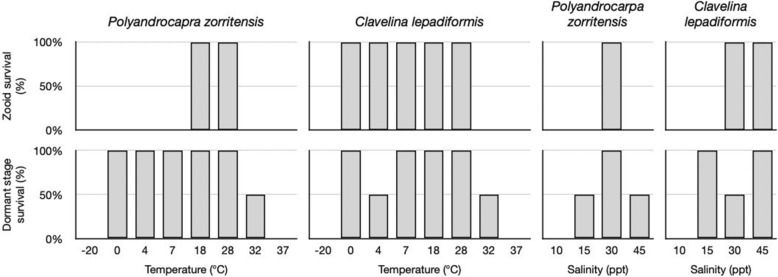
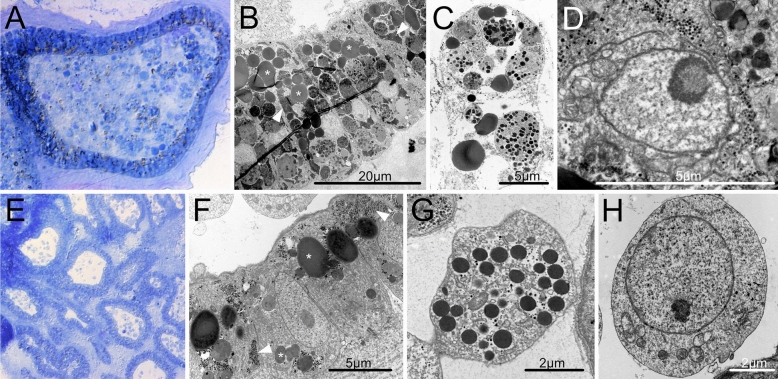
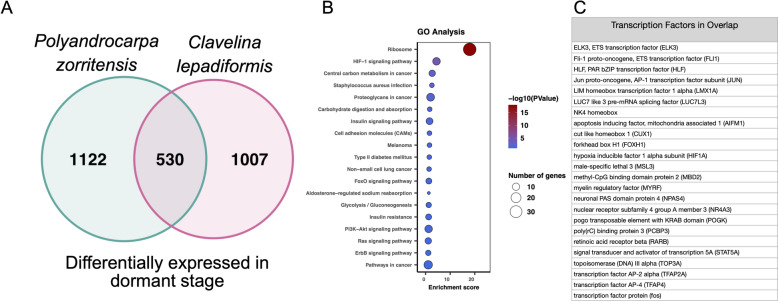
Many asexually-propagating marine invertebrates can survive extreme environmental conditions by developing dormant structures, i.e., morphologically simplified bodies that retain the capacity to completely regenerate a functional adult when conditions return to normal. Here, we examine the environmental, morphological, and molecular characteristics of dormancy in two distantly related clonal tunicate species: Polyandrocarpa zorritensis and Clavelina lepadiformis. In both species, we report that the dormant structures are able to withstand harsher temperature and salinity conditions compared to the adults. The dormant structures are the dominant forms these species employ to survive adverse conditions when the zooids themselves cannot survive. While previous work shows C. lepadiformis dormant stage is present in winters in the Atlantic Ocean and summers in the Mediterranean, this study is the first to show a year-round presence of P. zorritensis dormant forms in NW Italy, even in the late winter when all zooids have disappeared. By finely controlling the entry and exit of dormancy in laboratory-reared individuals, we were able to select and characterize the morphology of dormant structures associated with their transcriptome dynamics. In both species, we identified putative stem and nutritive cells in structures that resemble the earliest stages of asexual propagation. By characterizing gene expression during dormancy and regeneration into the adult body plan (i.e., germination), we observed that genes which control dormancy and environmental sensing in other metazoans, notably HIF-α and insulin signaling genes, are also expressed in tunicate dormancy. Germination-related genes in these two species, such as the retinoic acid pathway, are also found in other unrelated clonal tunicates during asexual development. These results are suggestive of repeated co-option of conserved eco-physiological and regeneration programs for the origin of novel dormancy-germination processes across distantly related animal taxa.
许多进行无性繁殖的海洋无脊椎动物可以通过形成休眠结构来在极端环境条件下生存,即形成形态简化的身体,当环境恢复正常时,这些身体保留完全再生成功能成年个体的能力。在这里,我们研究了两种亲缘关系较远的克隆被囊动物物种(Polyandrocarpa zorritensis 和 Clavelina lepadiformis)休眠的环境、形态和分子特征。在这两个物种中,我们报告休眠结构能够承受比成年个体更恶劣的温度和盐度条件。当幼体本身无法生存时,休眠结构是这些物种用来在不利条件下生存的主要形式。虽然之前的工作表明 Clavelina lepadiformis 的休眠阶段存在于大西洋的冬季和地中海的夏季,但这项研究首次表明,P. zorritensis 的休眠形式在意大利西北部全年存在,甚至在冬季晚期所有幼体都消失时也是如此。通过精细控制实验室培养个体的休眠和退出,我们能够选择和描述与它们转录组动态相关的休眠结构的形态。在这两个物种中,我们在类似于无性繁殖早期阶段的结构中发现了潜在的干细胞和营养细胞。通过在休眠和向成年体型再生(即萌发)过程中描述基因表达,我们观察到控制休眠和环境感应的基因在其他后生动物中,特别是 HIF-α 和胰岛素信号基因,在被囊动物休眠中也有表达。这两个物种中的萌发相关基因,如视黄酸途径,在其他无亲缘关系的克隆被囊动物的无性发育过程中也有发现。这些结果表明,在不同亲缘关系的动物类群中,保守的生态生理和再生程序被反复采用,以产生新的休眠-萌发过程。