Centre for Prions and Protein Folding Diseases, University of Alberta, Edmonton, Canada.
PLoS One. 2013 Dec 2;8(12):e81776. doi: 10.1371/journal.pone.0081776. eCollection 2013.
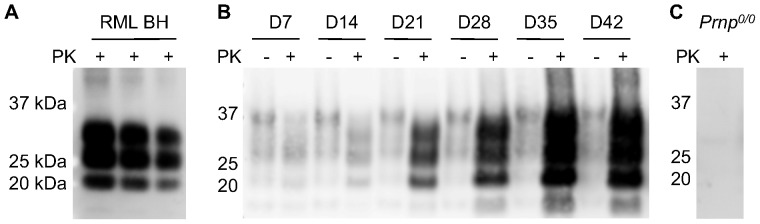
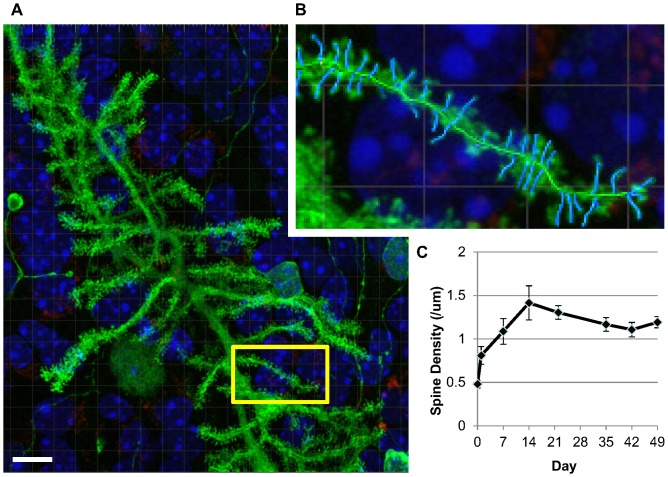
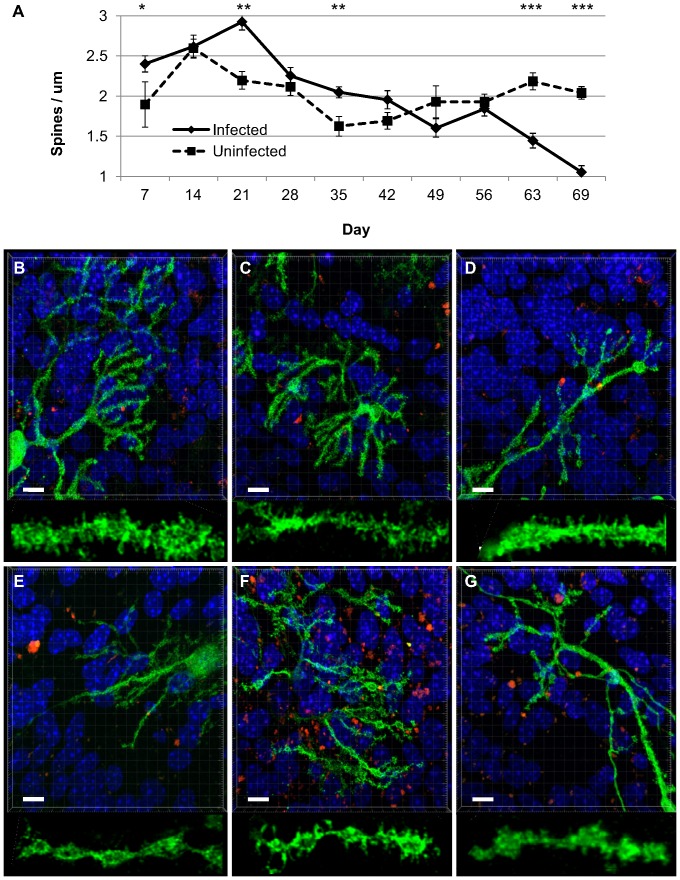
Prion diseases are infectious neurodegenerative diseases associated with the accumulation of protease-resistant prion protein, neuronal loss, spongiform change and astrogliosis. In the mouse model, the loss of dendritic spines is one of the earliest pathological changes observed in vivo, occurring 4-5 weeks after the first detection of protease-resistant prion protein in the brain. While there are cell culture models of prion infection, most do not recapitulate the neuropathology seen in vivo. Only the recently developed prion organotypic slice culture assay has been reported to undergo neuronal loss and the development of some aspects of prion pathology, namely small vacuolar degeneration and tubulovesicular bodies. Given the rapid replication of prions in this system, with protease-resistant prion protein detectable by 21 days, we investigated whether the dendritic spine loss and altered dendritic morphology seen in prion disease might also develop within the lifetime of this culture system. Indeed, six weeks after first detection of protease-resistant prion protein in tga20 mouse cerebellar slice cultures infected with RML prion strain, we found a statistically significant loss of Purkinje cell dendritic spines and altered dendritic morphology in infected cultures, analogous to that seen in vivo. In addition, we found a transient but statistically significant increase in Purkinje cell dendritic spine density during infection, at the time when protease-resistant prion protein was first detectable in culture. Our findings support the use of this slice culture system as one which recapitulates prion disease pathology and one which may facilitate study of the earliest stages of prion disease pathogenesis.
朊病毒病是一种传染性神经退行性疾病,与蛋白酶抗性朊病毒蛋白的积累、神经元丧失、海绵状改变和星形胶质细胞增生有关。在小鼠模型中,树突棘的丧失是体内最早观察到的病理变化之一,发生在大脑中首次检测到蛋白酶抗性朊病毒蛋白后的 4-5 周。虽然有朊病毒感染的细胞培养模型,但大多数模型不能重现体内观察到的神经病理学变化。只有最近开发的朊病毒器官型切片培养测定法被报道会发生神经元丧失和朊病毒病理学的某些方面的发展,即小空泡变性和管状囊泡体。鉴于该系统中朊病毒的快速复制,在 21 天内可检测到蛋白酶抗性朊病毒蛋白,我们研究了朊病毒病中所见的树突棘丧失和树突形态改变是否也可能在该培养系统的寿命内发展。事实上,在 tga20 小鼠小脑切片培养物中感染 RML 朊病毒株后,首次检测到蛋白酶抗性朊病毒蛋白的 6 周后,我们发现感染培养物中的浦肯野细胞树突棘显著丧失,树突形态改变,与体内所见相似。此外,我们发现感染期间浦肯野细胞树突棘密度短暂但具有统计学意义的增加,此时在培养物中首次检测到蛋白酶抗性朊病毒蛋白。我们的研究结果支持使用该切片培养系统来重现朊病毒病病理学,并可能有助于研究朊病毒病发病机制的早期阶段。