Kim Sollip, Park Young-Min
Department of Laboratory Medicine, Ilsan Paik Hospital, Inje University College of Medicine, Goyang, Republic of Korea.
PLoS One. 2013 Dec 2;8(12):e82749. doi: 10.1371/journal.pone.0082749. eCollection 2013.
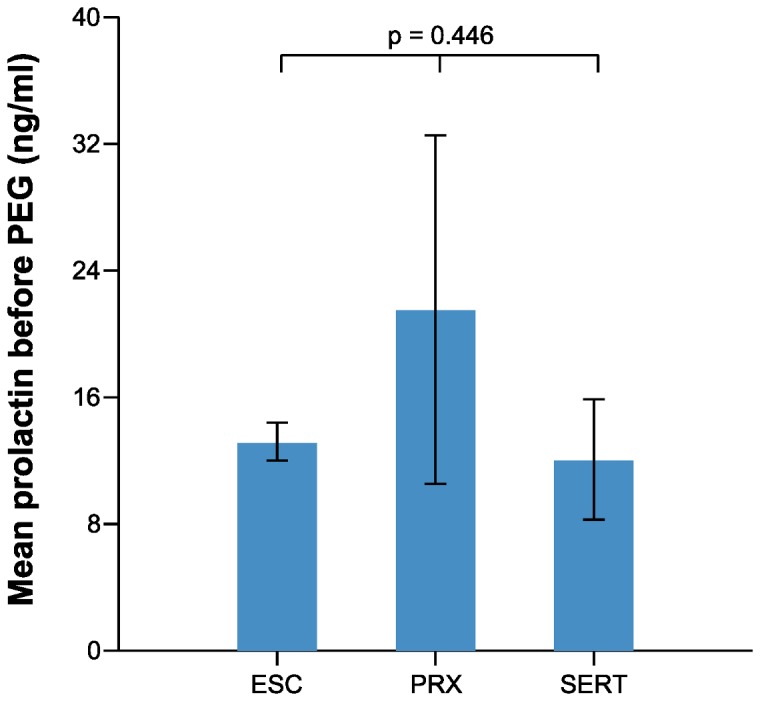
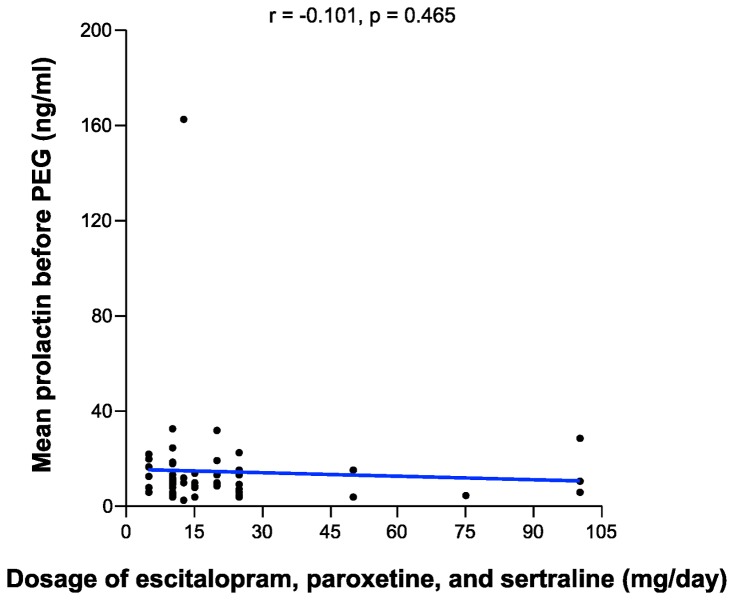
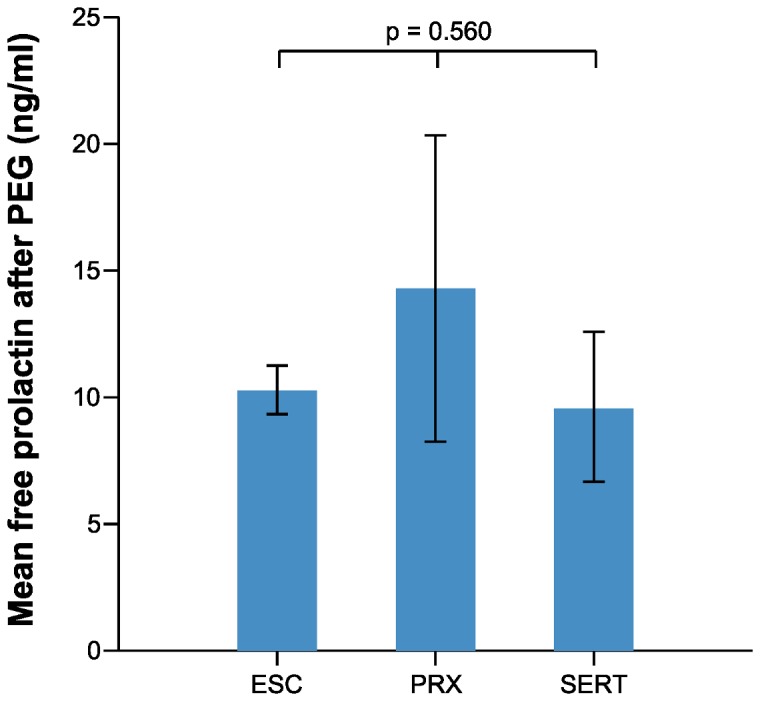
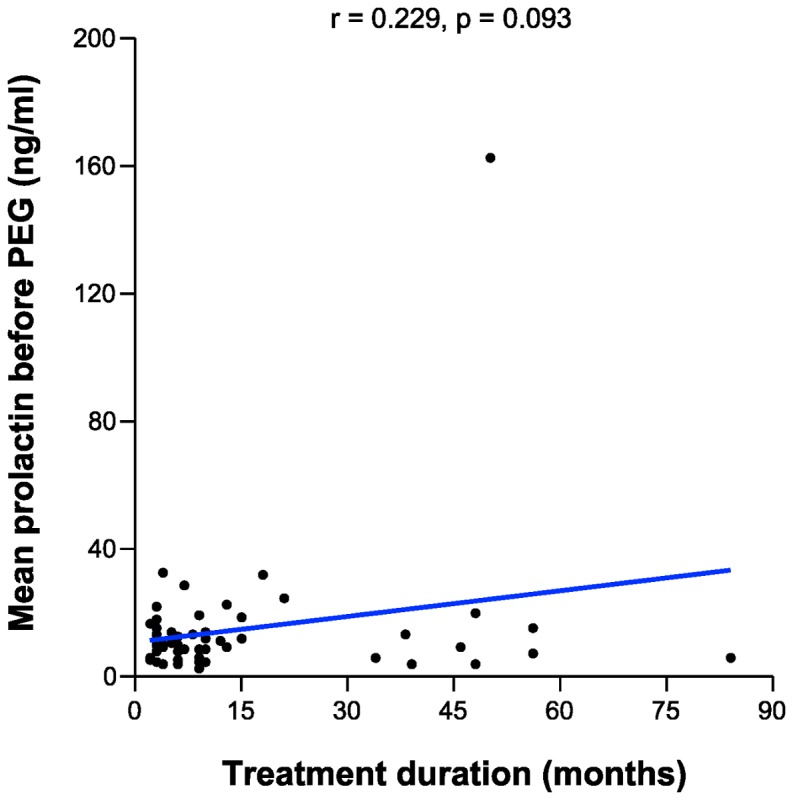
Clinical trials evaluating the rate of short-term selective serotonin-reuptake inhibitor (SSRI)-induced hyperprolactinemia have produced conflicting results. Thus, the aim of this study was to clarify whether SSRI therapy can induce hyperprolactinemia and macroprolactinemia. Fifty-five patients with major depressive disorder (MDD) were enrolled in this study. Serum prolactin and macroprolactin levels were measured at a single time point (i.e., in a cross-sectional design). All patients had received SSRI monotherapy (escitalopram, paroxetine, or sertraline) for a mean of 14.75 months. Their mean prolactin level was 15.26 ng/ml. The prevalence of patients with hyperprolactinemia was 10.9% for 6/55, while that of patients with macroprolactinemia was 3.6% for 2/55. The mean prolactin levels were 51.36 and 10.84 ng/ml among those with hyperprolactinemia and a normal prolactin level, respectively. The prolactin level and prevalence of hyperprolactinemia did not differ significantly within each SSRI group. Correlation analysis revealed that there was no correlation between the dosage of each SSRI and prolactin level. These findings suggest that SSRI therapy can induce hyperprolactinemia in patients with MDD. Clinicians should measure and monitor serum prolactin levels, even when both SSRIs and antipsychotics are administered.
评估短期选择性5-羟色胺再摄取抑制剂(SSRI)诱发高催乳素血症发生率的临床试验结果相互矛盾。因此,本研究的目的是阐明SSRI治疗是否会诱发高催乳素血症和巨催乳素血症。55名重度抑郁症(MDD)患者参与了本研究。在单一时间点(即横断面设计)测量血清催乳素和巨催乳素水平。所有患者均接受SSRI单一疗法(艾司西酞普兰、帕罗西汀或舍曲林),平均治疗时间为14.75个月。他们的平均催乳素水平为15.26 ng/ml。高催乳素血症患者的患病率为6/55,即10.9%,而巨催乳素血症患者的患病率为2/55,即3.6%。高催乳素血症患者和催乳素水平正常患者的平均催乳素水平分别为51.36和10.84 ng/ml。各SSRI组内催乳素水平和高催乳素血症患病率无显著差异。相关性分析显示,每种SSRI的剂量与催乳素水平之间无相关性。这些发现表明,SSRI治疗可诱发MDD患者出现高催乳素血症。临床医生即使在同时使用SSRI和抗精神病药物时,也应测量和监测血清催乳素水平。