Glöckner Gernot, Heinze Ivonne, Platzer Matthias, Held Christoph, Abele Doris
Institute for Biochemistry I, Medical Faculty, University of Cologne, Köln and Leibniz-Institute of Freshwater Ecology and Inland Fisheries, IGB, Berlin, Germany.
PLoS One. 2013 Dec 2;8(12):e82857. doi: 10.1371/journal.pone.0082857. eCollection 2013.
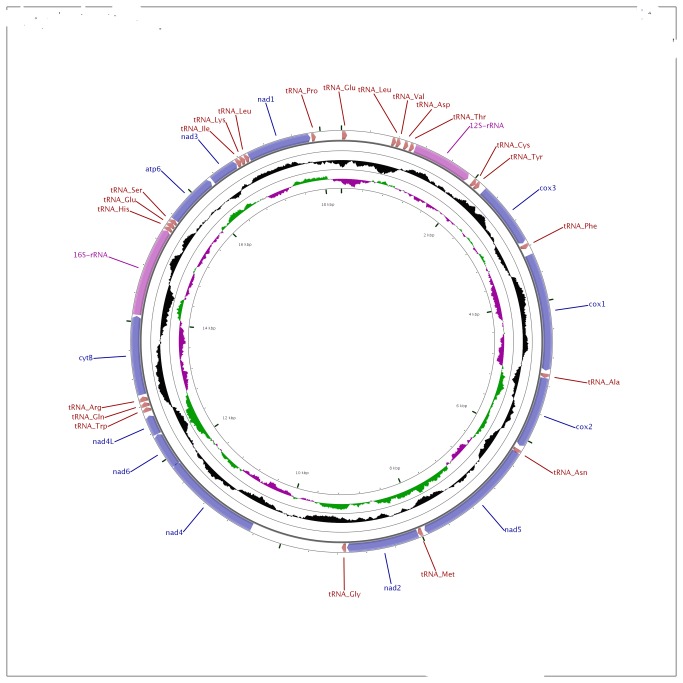
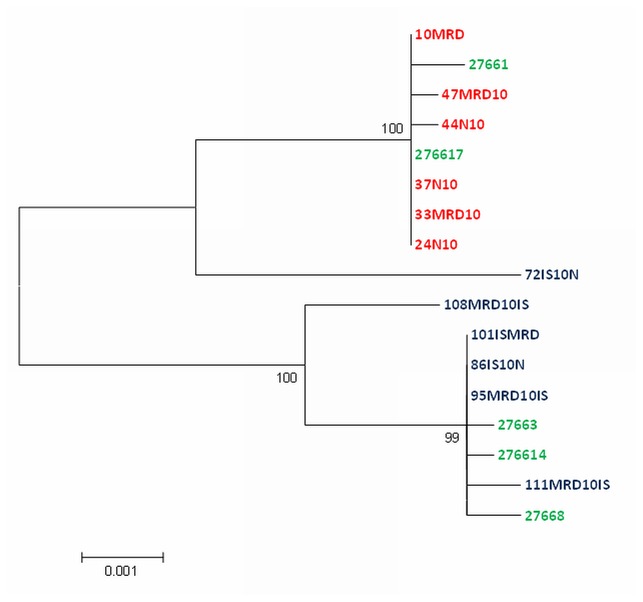
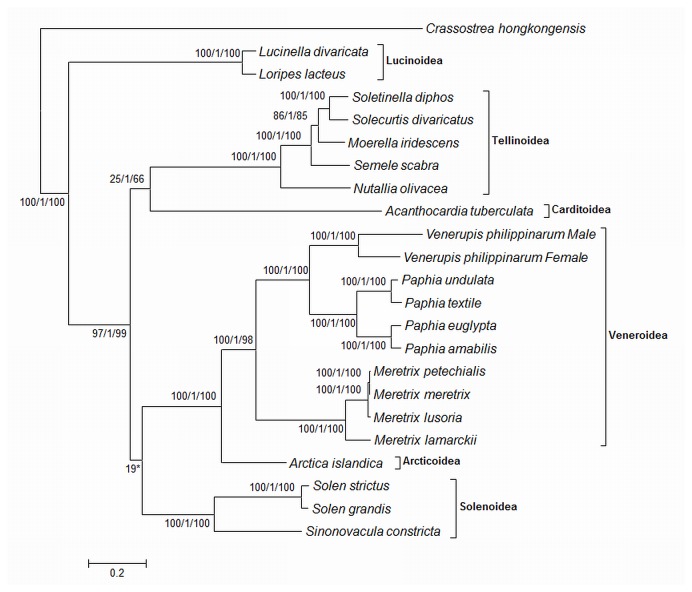
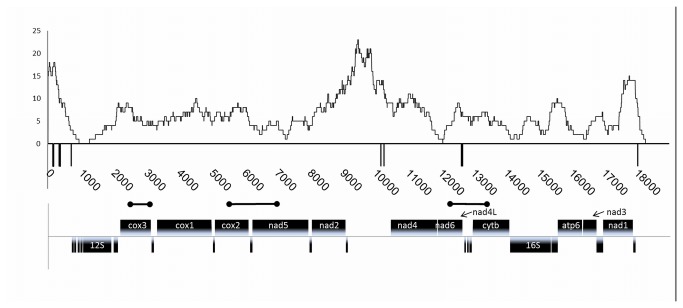
Arctica islandica is known as the longest-lived non-colonial metazoan species on earth and is therefore increasingly being investigated as a new model in aging research. As the mitochondrial genome is associated with the process of aging in many species and bivalves are known to possess a peculiar mechanism of mitochondrial genome inheritance including doubly uniparental inheritance (DUI), we aimed to assess the genomic variability of the A. islandica mitochondrial DNA (mtDNA). We sequenced the complete mitochondrial genomes of A. islandica specimens from three different sites in the Western Palaearctic (Iceland, North Sea, Baltic Sea). We found the A. islandica mtDNA to fall within the normal size range (18 kb) and exhibit similar coding capacity as other animal mtDNAs. The concatenated protein sequences of all currently known Veneroidea mtDNAs were used to robustly place A. islandica in a phylogenetic framework. Analysis of the observed single nucleotide polymorphism (SNP) patterns on further specimen revealed two prevailing haplotypes. Populations in the Baltic and the North Sea are very homogenous, whereas the Icelandic population, from which exceptionally old individuals have been collected, is the most diverse one. Homogeneity in Baltic and North Sea populations point to either stronger environmental constraints or more recent colonization of the habitat. Our analysis lays the foundation for further studies on A. islandica population structures, age research with this organism, and for phylogenetic studies. Accessions for the mitochondrial genome sequences: KC197241 Iceland; KF363951 Baltic Sea; KF363952 North Sea; KF465708 to KF465758 individual amplified regions from different speciemen.
冰岛北极蛤被认为是地球上寿命最长的非群居后生动物物种,因此越来越多地被作为衰老研究的新模型进行研究。由于线粒体基因组与许多物种的衰老过程相关,并且已知双壳贝类拥有独特的线粒体基因组遗传机制,包括双亲单亲遗传(DUI),我们旨在评估冰岛北极蛤线粒体DNA(mtDNA)的基因组变异性。我们对来自西古北区三个不同地点(冰岛、北海、波罗的海)的冰岛北极蛤标本的完整线粒体基因组进行了测序。我们发现冰岛北极蛤的mtDNA在正常大小范围内(18 kb),并且与其他动物的mtDNA具有相似的编码能力。所有目前已知的帘蛤超科mtDNA的串联蛋白质序列被用于在系统发育框架中稳固地定位冰岛北极蛤。对进一步标本上观察到的单核苷酸多态性(SNP)模式的分析揭示了两种主要的单倍型。波罗的海和北海的种群非常同质,而从中收集到特别长寿个体的冰岛种群是最多样化的。波罗的海和北海种群的同质性表明要么是更强的环境限制,要么是该栖息地最近才被殖民。我们的分析为进一步研究冰岛北极蛤的种群结构、用这种生物进行的年龄研究以及系统发育研究奠定了基础。线粒体基因组序列登录号:KC197241(冰岛);KF363951(波罗的海);KF363952(北海);KF465708至KF465758(来自不同标本的个体扩增区域)。