Department of Pathophysiology of Ageing and Civilization Diseases, Poznań University of Medical Sciences, Długa 1/2 Str., 61-848, Poznań, Poland.
Department of Hypertensiology, Poznań University of Medical Sciences, Długa 1/2 Str., 61-848, Poznań, Poland.
Cell Mol Life Sci. 2021 Feb;78(4):1275-1304. doi: 10.1007/s00018-020-03658-w. Epub 2020 Oct 9.
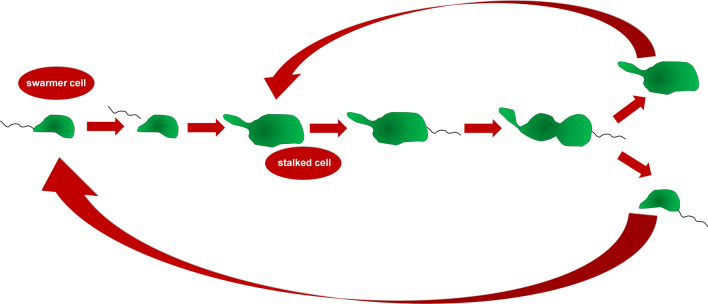
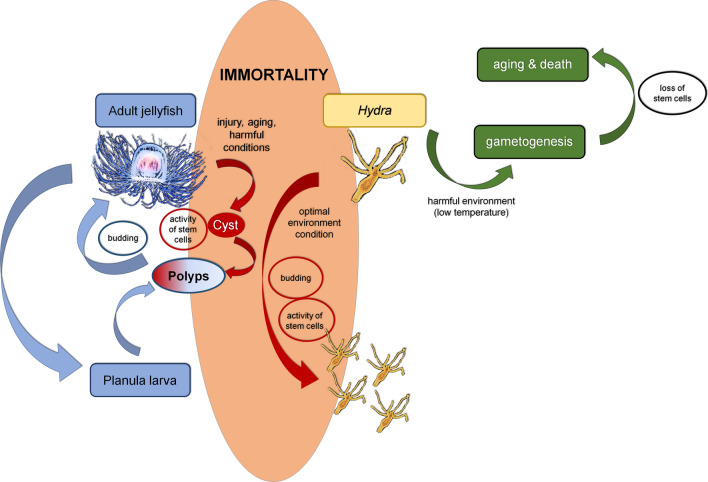
Research on the evolutionary and mechanistic aspects of aging and longevity has a reductionist nature, as the majority of knowledge originates from experiments on a relatively small number of systems and species. Good examples are the studies on the cellular, molecular, and genetic attributes of aging (senescence) that are primarily based on a narrow group of somatic cells, especially fibroblasts. Research on aging and/or longevity at the organismal level is dominated, in turn, by experiments on Drosophila melanogaster, worms (Caenorhabditis elegans), yeast (Saccharomyces cerevisiae), and higher organisms such as mice and humans. Other systems of aging, though numerous, constitute the minority. In this review, we collected and discussed a plethora of up-to-date findings about studies of aging, longevity, and sometimes even immortality in several valuable but less frequently used systems, including bacteria (Caulobacter crescentus, Escherichia coli), invertebrates (Turritopsis dohrnii, Hydra sp., Arctica islandica), fishes (Nothobranchius sp., Greenland shark), reptiles (giant tortoise), mammals (blind mole rats, naked mole rats, bats, elephants, killer whale), and even 3D organoids, to prove that they offer biogerontologists as much as the more conventional tools. At the same time, the diversified knowledge gained owing to research on those species may help to reconsider aging from a broader perspective, which should translate into a better understanding of this tremendously complex and clearly system-specific phenomenon.
衰老和长寿的进化和机制方面的研究具有还原论的性质,因为大多数知识都源自相对较少的系统和物种的实验。细胞、分子和遗传衰老(衰老)属性的研究就是很好的例子,这些研究主要基于一小部分体细胞,尤其是成纤维细胞。反过来,在生物体水平上对衰老和/或长寿的研究主要以黑腹果蝇、线虫(秀丽隐杆线虫)、酵母(酿酒酵母)和高等生物(如老鼠和人类)的实验为代表。尽管有许多其他衰老系统,但它们只占少数。在这篇综述中,我们收集并讨论了大量关于衰老、长寿,甚至在一些有价值但使用较少的系统(包括细菌(新月柄杆菌、大肠杆菌)、无脊椎动物(水螅、北极冰鱼)、鱼类(新鳄嘴鱼、格陵兰鲨鱼)、爬行动物(巨型陆龟)、哺乳动物(盲鼹鼠、裸鼹鼠、蝙蝠、大象、虎鲸),甚至 3D 类器官)中衰老研究的最新发现,以证明它们为生物老年学家提供的价值不亚于更传统的工具。同时,由于对这些物种的研究而获得的多样化知识可能有助于从更广泛的角度重新审视衰老,这应该有助于更好地理解这一极其复杂且明显具有系统特异性的现象。