Chattha Kuldeep S, Kandasamy Sukumar, Vlasova Anastasia N, Saif Linda J
The Food Animal Health Research Program, Department of Veterinary Preventive Medicine, Ohio Agricultural Research and Development Center, The Ohio State University, Wooster, Ohio, United States of America.
PLoS One. 2013 Dec 2;8(12):e82966. doi: 10.1371/journal.pone.0082966. eCollection 2013.
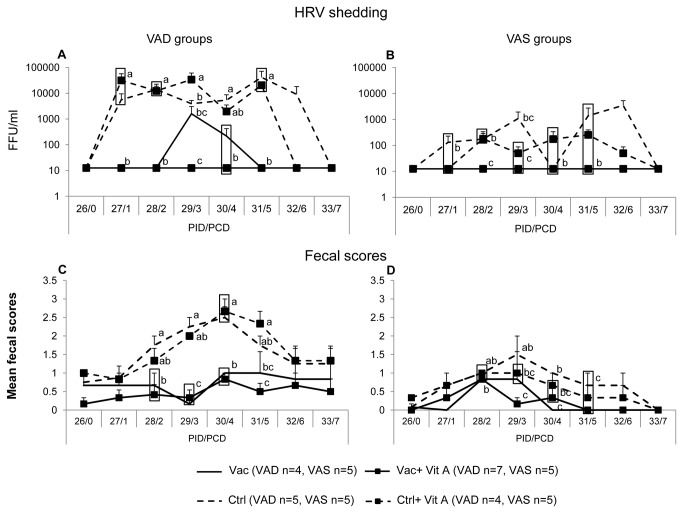
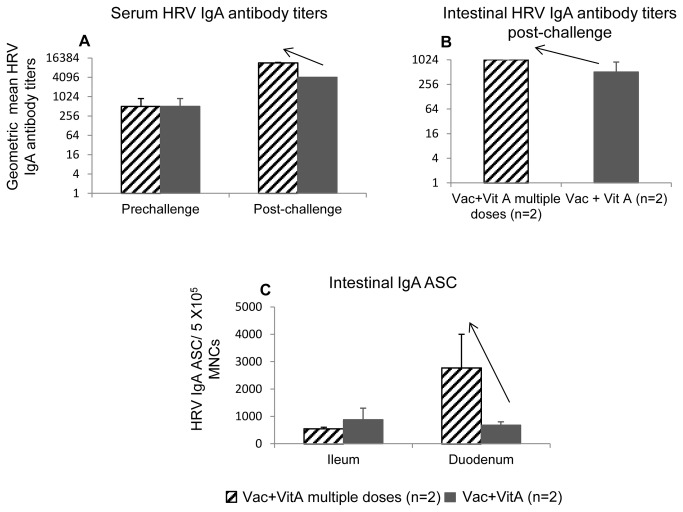
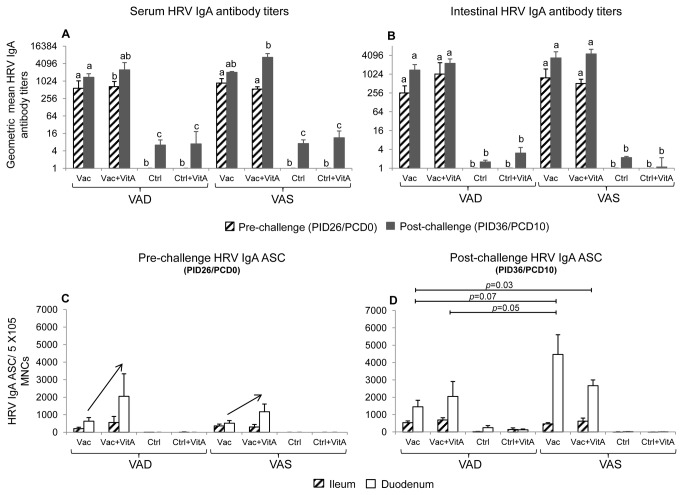
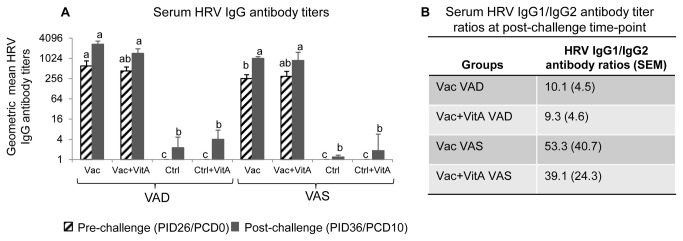
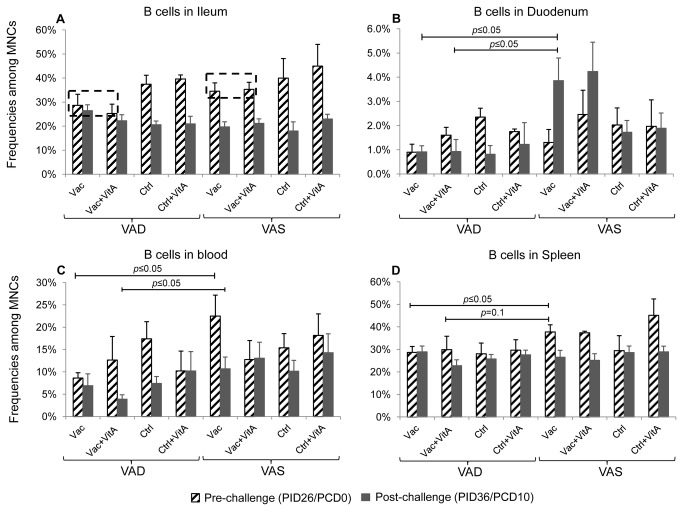
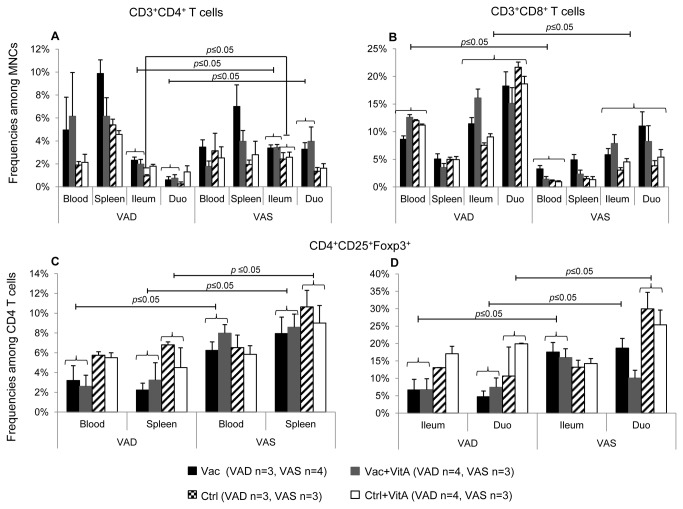
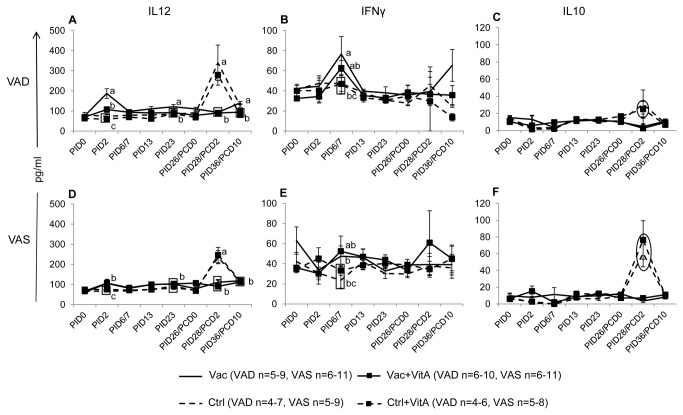
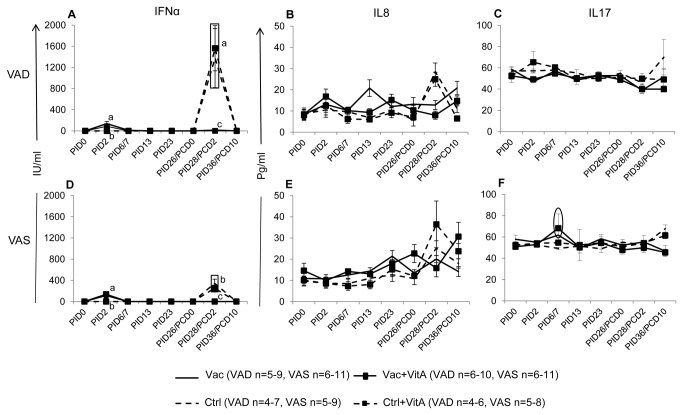
Rotaviruses (RV) are a major cause of gastroenteritis in children. Widespread vitamin A deficiency is associated with reduced efficacy of vaccines and higher incidence of diarrheal infections in children in developing countries. We established a vitamin A deficient (VAD) gnotobiotic piglet model that mimics subclinical vitamin A deficiency in children to study its effects on an oral human rotavirus (HRV) vaccine and virulent HRV challenge. Piglets derived from VAD and vitamin A sufficient (VAS) sows were orally vaccinated with attenuated HRV or mock, with/without supplemental vitamin A and challenged with virulent HRV. Unvaccinated VAD control piglets had significantly lower hepatic vitamin A, higher severity and duration of diarrhea and HRV fecal shedding post-challenge as compared to VAS control pigs. Reduced protection coincided with significantly higher innate (IFNα) cytokine and CD8 T cell frequencies in the blood and intestinal tissues, higher pro-inflammatory (IL12) and 2-3 fold lower anti-inflammatory (IL10) cytokines, in VAD compared to VAS control pigs. Vaccinated VAD pigs had higher diarrhea severity scores compared to vaccinated VAS pigs, which coincided with lower serum IgA HRV antibody titers and significantly lower intestinal IgA antibody secreting cells post-challenge in the former groups suggesting lower anamnestic responses. A trend for higher serum HRV IgG antibodies was observed in VAD vs VAS vaccinated groups post-challenge. The vaccinated VAD (non-vitamin A supplemented) pigs had significantly higher serum IL12 (PID2) and IFNγ (PID6) compared to vaccinated VAS groups suggesting higher Th1 responses in VAD conditions. Furthermore, regulatory T-cell responses were compromised in VAD pigs. Supplemental vitamin A in VAD pigs did not fully restore the dysregulated immune responses to AttHRV vaccine or moderate virulent HRV diarrhea. Our findings suggest that that VAD in children in developing countries may partially contribute to more severe rotavirus infection and lower HRV vaccine efficacy.
轮状病毒(RV)是导致儿童肠胃炎的主要原因。在发展中国家,普遍存在的维生素A缺乏与疫苗效力降低以及儿童腹泻感染发病率升高有关。我们建立了一种维生素A缺乏(VAD)的无菌仔猪模型,该模型模拟儿童亚临床维生素A缺乏情况,以研究其对口服人轮状病毒(HRV)疫苗和强毒力HRV攻击的影响。将源自VAD母猪和维生素A充足(VAS)母猪的仔猪口服减毒HRV或进行模拟处理,同时给予或不给予补充维生素A,然后用强毒力HRV进行攻击。与VAS对照猪相比,未接种疫苗的VAD对照仔猪肝脏维生素A水平显著降低,腹泻的严重程度和持续时间更高,攻击后HRV粪便排毒情况更严重。与VAS对照猪相比,VAD猪的先天(IFNα)细胞因子和血液及肠道组织中CD8 T细胞频率显著更高,促炎(IL12)细胞因子高2 - 3倍,抗炎(IL10)细胞因子低2 - 3倍,这与保护作用降低同时出现。与接种疫苗的VAS猪相比,接种疫苗的VAD猪腹泻严重程度评分更高,这与前一组攻击后血清IgA HRV抗体滴度较低以及肠道IgA抗体分泌细胞显著减少一致,表明记忆反应较低。攻击后,在VAD与VAS接种组中观察到血清HRV IgG抗体有升高趋势。与接种疫苗的VAS组相比,接种疫苗的VAD(未补充维生素A)猪血清IL12(PID2)和IFNγ(PID6)显著更高,表明在VAD条件下Th1反应更高。此外,VAD猪的调节性T细胞反应受损。VAD猪补充维生素A并未完全恢复对减毒HRV疫苗失调的免疫反应,也未减轻强毒力HRV腹泻。我们的研究结果表明,发展中国家儿童的VAD可能部分导致更严重的轮状病毒感染和更低的HRV疫苗效力。