Food Animal Health Research Program, Department of Veterinary Preventive Medicine, Ohio Agricultural Research and Development Center, The Ohio State University, Wooster, OH 44691, USA.
J Immunol. 2013 Sep 1;191(5):2446-56. doi: 10.4049/jimmunol.1300678. Epub 2013 Aug 5.
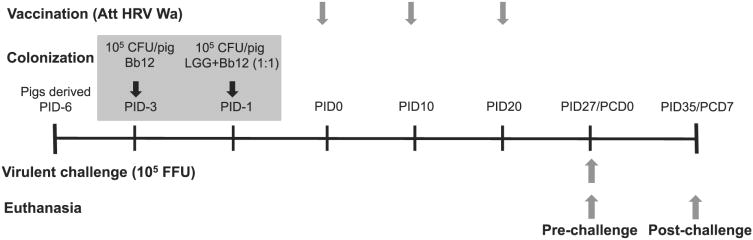
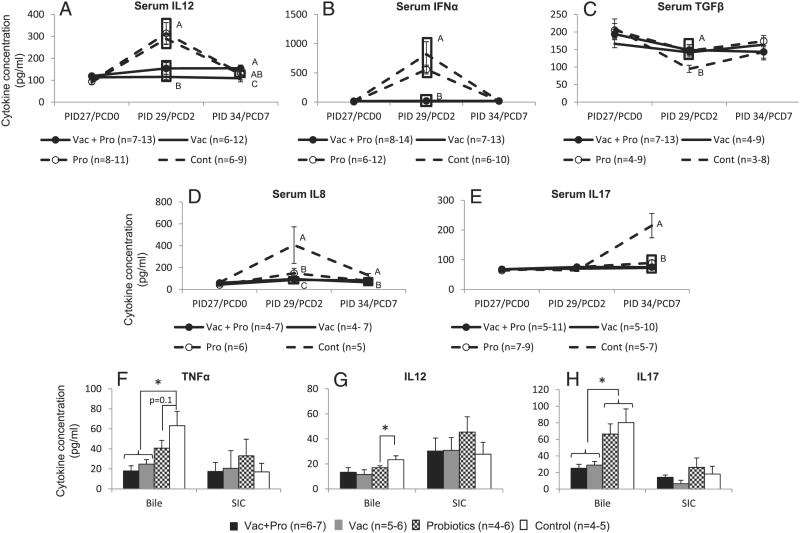
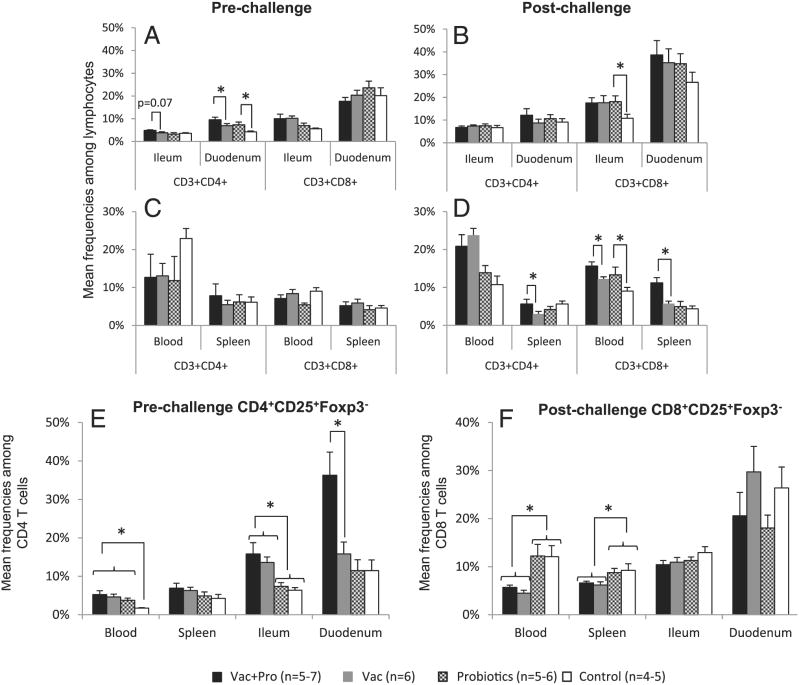
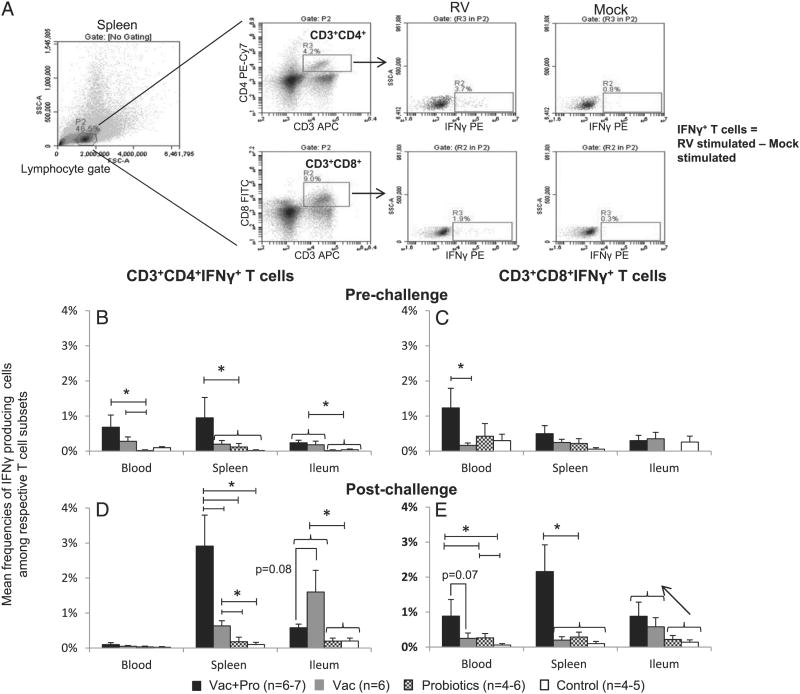
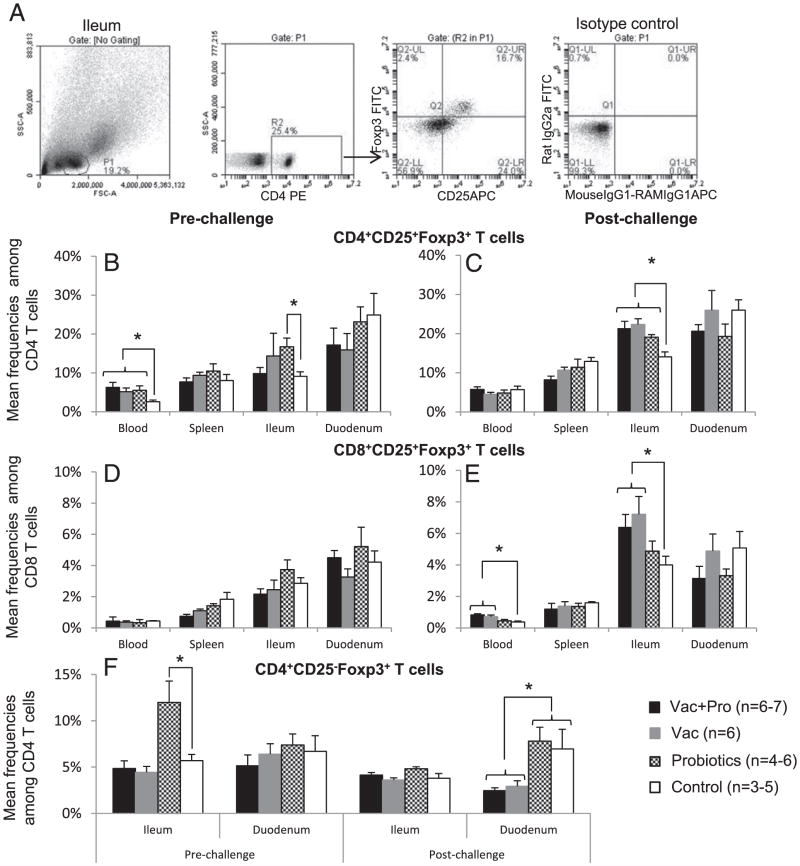
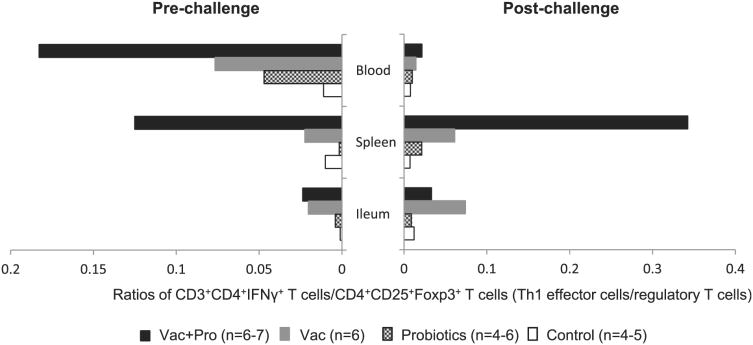
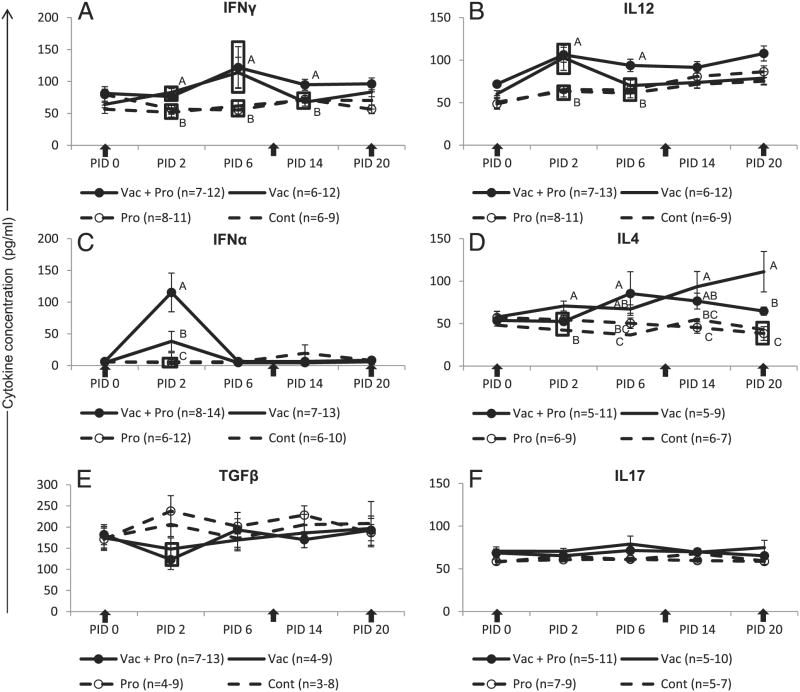
Rotaviruses (RVs) are a leading cause of childhood diarrhea. Current oral vaccines are not effective in impoverished countries where the vaccine is needed most. Therefore, alternative affordable strategies are urgently needed. Probiotics can alleviate diarrhea in children and enhance specific systemic and mucosal Ab responses, but the T cell responses are undefined. In this study, we elucidated the T cell and cytokine responses to attenuated human RV (AttHRV) and virulent human RV (HRV) in gnotobiotic pigs colonized with probiotics (Lactobacillus rhamnosus strain GG [LGG] and Bifidobacterium lactis Bb12 [Bb12]), mimicking gut commensals in breastfed infants. Neonatal gnotobiotic pigs are the only animal model susceptible to HRV diarrhea. Probiotic colonized and nonvaccinated (Probiotic) pigs had lower diarrhea and reduced virus shedding postchallenge compared with noncolonized and nonvaccinated pigs (Control). Higher protection in the Probiotic group coincided with higher ileal T regulatory cells (Tregs) before and after challenge, and higher serum TGF-β and lower serum and biliary proinflammatory cytokines postchallenge. Probiotic colonization in vaccinated pigs enhanced innate serum IFN-α, splenic and circulatory IFN-γ-producing T cells, and serum Th1 cytokines, but reduced serum Th2 cytokines compared with noncolonized vaccinated pigs (Vac). Thus, LGG+Bb12 induced systemic Th1 immunostimulatory effects on oral AttHRV vaccine that coincided with lower diarrhea severity and reduced virus shedding postchallenge in Vac+Pro compared with Vac pigs. Previously unreported intestinal CD8 Tregs were induced in vaccinated groups postchallenge. Thus, probiotics LGG+Bb12 exert divergent immunomodulating effects, with enhanced Th1 responses to oral AttHRV vaccine, whereas inducing Treg responses to virulent HRV.
轮状病毒(RV)是导致儿童腹泻的主要原因。目前的口服疫苗在最需要疫苗的贫困国家效果不佳。因此,迫切需要替代的、负担得起的策略。益生菌可以缓解儿童腹泻,并增强特定的全身和黏膜 Ab 反应,但 T 细胞反应尚未明确。在这项研究中,我们阐明了在定植益生菌(鼠李糖乳杆菌 GG [LGG]和双歧杆菌 Bb12 [Bb12])的无菌猪中,减毒人轮状病毒(AttHRV)和毒力人轮状病毒(HRV)的 T 细胞和细胞因子反应,模拟了母乳喂养婴儿肠道共生菌。定植益生菌的无菌猪是唯一易感人轮状病毒腹泻的动物模型。与未定植益生菌且未接种疫苗的猪(对照组)相比,定植益生菌且未接种疫苗的猪(益生菌组)腹泻和病毒脱落减少。益生菌组的保护率更高,与挑战前后回肠调节性 T 细胞(Tregs)更高,以及挑战后血清 TGF-β更高、血清和胆汁促炎细胞因子更低有关。与未定植疫苗接种的猪(Vac)相比,疫苗接种猪的益生菌定植增强了先天血清 IFN-α、脾和循环 IFN-γ产生的 T 细胞以及血清 Th1 细胞因子,但降低了血清 Th2 细胞因子。因此,LGG+Bb12 对口服 AttHRV 疫苗产生了系统的 Th1 免疫刺激作用,与 Vac+Pro 相比,Vac 猪的腹泻严重程度更低,病毒脱落减少。在接种组中,还报告了未报道的肠道 CD8 Tregs。因此,益生菌 LGG+Bb12 对口服 AttHRV 疫苗产生了不同的免疫调节作用,增强了对口服 AttHRV 疫苗的 Th1 反应,同时诱导了对毒力 HRV 的 Treg 反应。